Men forced to wear shorts to work sparking accusations from women of 'leg hair harassment'
•Men in Japan are being forced to wear shorts to work, leading to accusations of "leg hair harassment" from female colleagues.
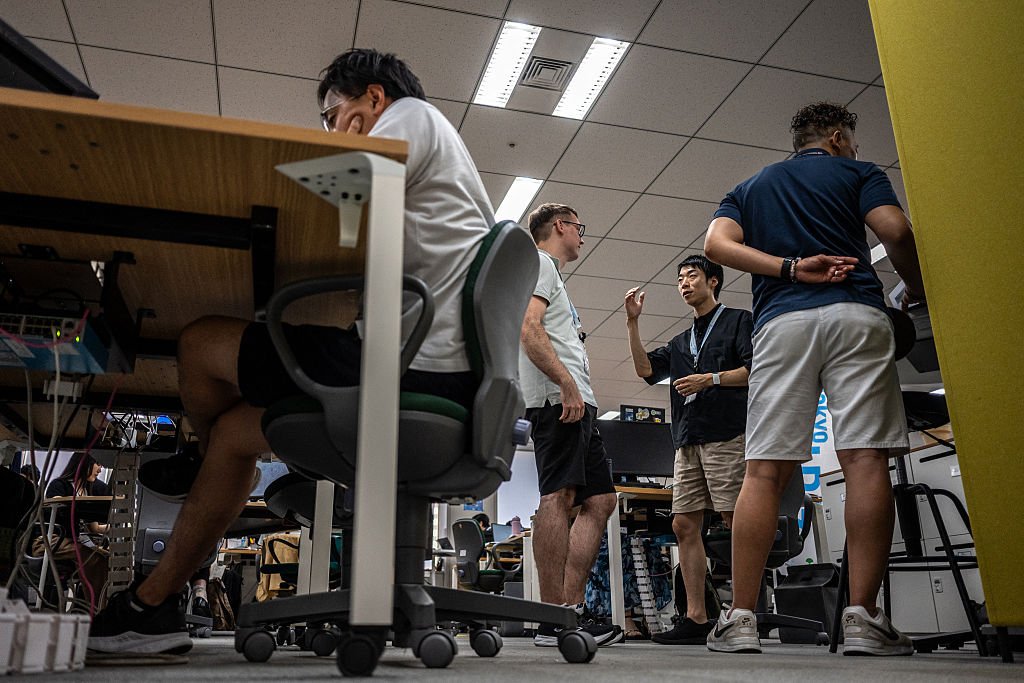
•The Tokyo Metropolitan Government is encouraging company employees to ditch their usual suit and tie for more casual attire, featuring t-shirts, trainers and shorts.Japan's weather agency issued heats...
•TRENDING Stories Videos Your Say The Governor of the Japanese capital, Yuriko Koike, introduced "Tokyo Cool Biz" in April, hoping to expand on her signature cool down initiative which has now bec...
هذا الخبر من GB News. خبر يقدم أدوات ذكاء اصطناعي للتلخيص والترجمة والاستماع.
المصدر: GB News | Source: GB NewsMen in Japan are being forced to wear shorts to work, leading to accusations of "leg hair harassment" from female colleagues.
The Tokyo Metropolitan Government is encouraging company employees to ditch their usual suit and tie for more casual attire, featuring t-shirts, trainers and shorts.
Japan's weather agency issued heatstroke alerts for much of the country, forecasting a second straight day of "kokushobi", literally meaning "brutally hot day", with temperatures expected to reach 40C in Kumagaya, north of Tokyo.
Authorities urged residents to use air conditioning liberally, hydrate regularly, avoid spending long hours outdoors and ditch the traditional suit and tie attire.
TRENDINGStoriesVideosYour SayThe Governor of the Japanese capital, Yuriko Koike, introduced "Tokyo Cool Biz" in April, hoping to expand on her signature cool down initiative which has now become a widely recognised annual summer tradition.
However, not everyone in Japan is open to the more lax office uniform policy.
A poll by Gorilla Clinic found 53.5 per cent of Japanese workers opposed wearing shorts to work in the summer, while 46.5 per cent were in favour of the new recommendation.
The reason most people who were against the poll gave, for both men and women, was the concern over body shape and body hair.
Commentators have argued the policy is unfair to women since they are still expected to wear tights when showing a part of their legs.
A few women describe the experience of "leg hair harassment" or a term coined online as "sunehara", referring to the discomfort of being forced to see their male colleague's leg hair.
Tokyo Metropolitan Government environmental official Noboru Watanabe told the BBC: "We want to give people more options in the severe heat, not tell them what to wear.
"There should be no issue as long as the work attire is not offensive to anyone."
LATEST DEVELOPMENTS
- Japanese parliament passes major new bill amid succession crisis
- British teenager makes professional sumo debut in Japan after remarkable journey
- Japan exporting lethal weapons for first time since end of World War Two
Ms Koike first brought in the summer wardrobe shift as the national Environment Minister in 2005, launching a national energy-saving campaign called "Cool Biz" to encourage company workers to opt for short-sleeve shirts.
Then-prime minister Junichiro Koizumi was often seen in public without wearing a tie or jacket, helping to spread the message.
After the devastating Tohoku earthquake and tsunami in March 2011, which led to the deaths of 19,759 people, the Government launched the "Super Cool Biz" which expanded the guidelines to help reduce energy use.
Clothes with built-in fans, disposable wet towels, UV and heat-blocking umbrellas, and portable handheld fans have been popular and sold in shops across Japan.
Japan has experienced increasingly severe summers in recent years, with the country recording its all-time high temperature of 41.8C last year.
Even before this week's extreme heat, 4,580 people were taken to hospital between July 6 and 12, including seven who later died, according to the latest data available from the Fire and Disaster Management Agency.
The weather agency this year introduced the "kokushobi" category for days when temperatures reach 40C or higher, reflecting the growing frequency of extreme heat.
More than 100,000 people were taken to hospital for heatstroke during the 2025 summer season, according to Tokyo data.
Our Standards: The GB News Editorial Charter


ملاحظة تحريرية | Editorial Note: نُشر هذا المقال في الأصل بواسطة GB News. خبر (Khabr) هي منصة إعلامية أردنية مرخّصة تعمل بالذكاء الاصطناعي. نضيف قيمة تحريرية من خلال: تحليل ذكي للأخبار، ملخصات تلقائية، رواية صوتية بالذكاء الاصطناعي، ترجمة متعددة اللغات، وتدقيق الحقائق. هدفنا جعل الأخبار أكثر وضوحاً وسهولةً للقارئ العربي.
This article was originally published by GB News. Khabr is a licensed Jordanian AI-powered news platform (Registration #82086). We add editorial value through: AI-powered news analysis, automated summaries, AI audio narration, multi-language translation (Arabic, English, French, Turkish), and AI fact-checking. Our mission is to make news more accessible and understandable for Arabic-speaking audiences worldwide.