Mars could have supported life after rivers of magma discovered by Oxford scientists
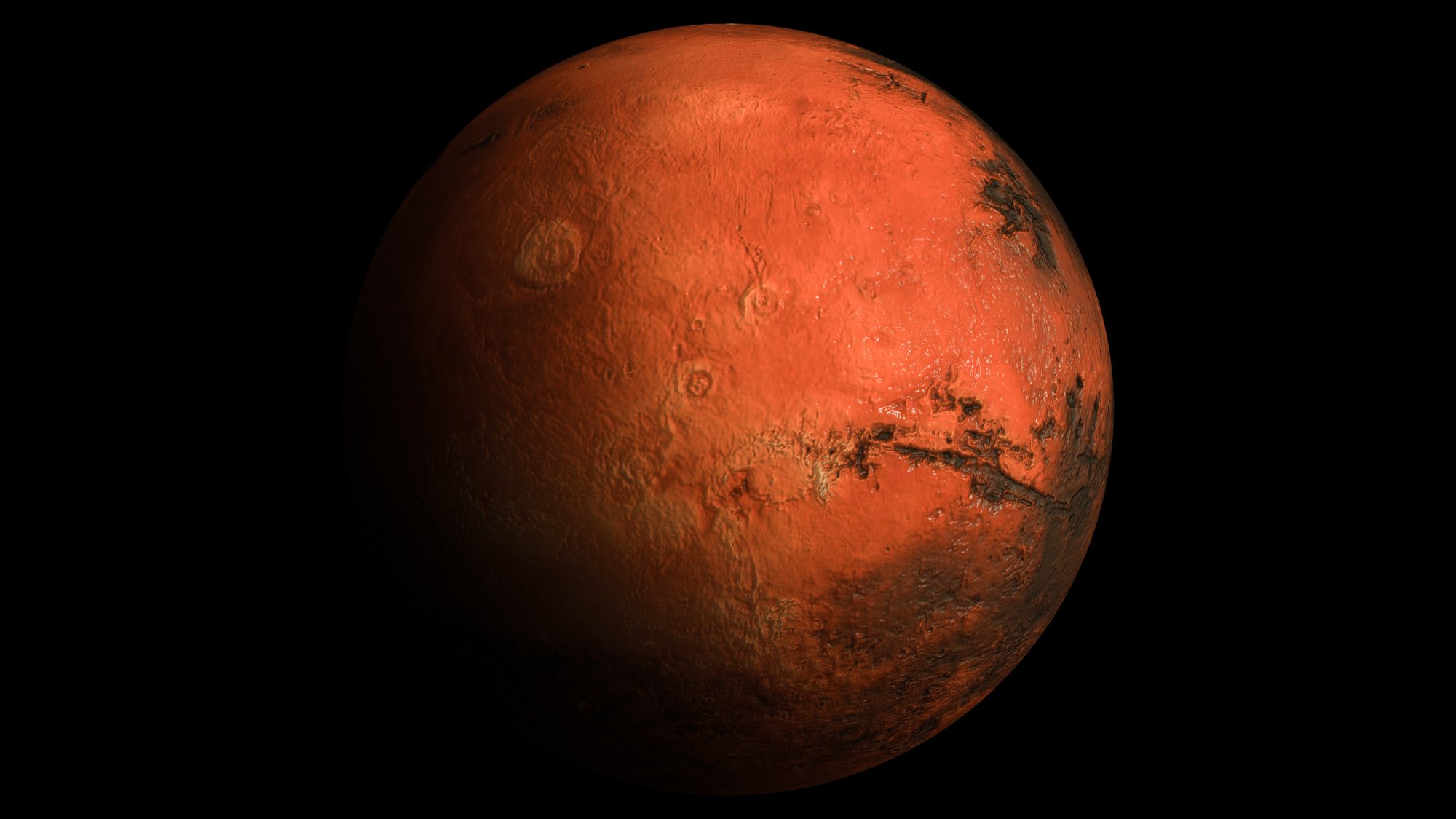
•British scientists have uncovered evidence vast rivers of molten rock once surged beneath the Martian surface.The research team at the University of Oxford analysed seismic data collected by Nasa's In...
•TRENDING Stories Videos Your Say It also broadens the range of planets across the cosmos that could potentially have been habitable, challenging long-held assumptions about what makes a planet ca...
•However, the new findings paint a markedly different picture — one of a sophisticated, interconnected volcanic plumbing network running beneath the crust.Such a system would have been capable of produ...
هذا الخبر من GB News. خبر يقدم أدوات ذكاء اصطناعي للتلخيص والترجمة والاستماع.
المصدر: GB News | Source: GB NewsBritish scientists have uncovered evidence vast rivers of molten rock once surged beneath the Martian surface.
The research team at the University of Oxford analysed seismic data collected by Nasa's InSight lander.
The spacecraft detected waves generated by meteorite strikes and quakes on the red planet, according to findings published in Nature Astronomy.
Their unexpected discovery significantly strengthens the case Mars may once have harboured conditions suitable for life.
TRENDINGStoriesVideosYour SayIt also broadens the range of planets across the cosmos that could potentially have been habitable, challenging long-held assumptions about what makes a planet capable of supporting living organisms.
The Oxford researchers focused their attention on an enigmatic boundary detected roughly 15 miles beneath the planet's surface.
Their analysis concluded this feature was most plausibly created by magma accumulating at depth and extending laterally across distances spanning hundreds, possibly thousands, of miles.
Until now, the prevailing view held that Martian volcanoes sat above straightforward, self-contained magma chambers.
However, the new findings paint a markedly different picture — one of a sophisticated, interconnected volcanic plumbing network running beneath the crust.
Such a system would have been capable of producing a chemically diverse crust, with the ability to recycle crucial elements through geological processes.
These processes could have generated and sustained both an atmosphere and oceans on the Martian surface — functions previously believed to require plate tectonics, the geological mechanism that drives continental movement on Earth.
LATEST DEVELOPMENTS
- 'Fireball' meteorite that smashed into family home contains ingredients of alien life
- Major breakthrough in hunt for life outside our solar system as scientists spot 'Earth-like' planet
- Astronomers make sweet discovery that offers clue to origin of life
The implications extend well beyond Mars.
Planets elsewhere in the universe that lack tectonic plate activity have traditionally been ruled out as potential hosts for life.
But this research suggests such worlds warrant fresh consideration, as interconnected volcanic systems may offer an alternative pathway to habitability.
The discovery effectively expands the catalogue of planets scientists should investigate when searching for environments where life might once have taken hold.
Lead author Dr Tobermory Mackay-Champion said: “We've traditionally assumed that volcanism on Mars was relatively simple compared to that on Earth.
"But this discovery suggests the planet could sustain massive, long-lived magmatic systems capable of evolving and reprocessing molten rock throughout the crust. Because these systems are known to generate large metal deposits, Mars may hold significantly more near-surface mineral wealth than previously recognised – boosting its potential for future mining, crewed missions and eventually, permanent settlements.”
Co-author Associate Professor Jon Wade added: “One of the big questions in planetary science is whether Earth is unique.
"If Mars could develop this kind of complex crust without plate tectonics, then maybe the conditions needed for habitability can emerge on more planets than we realised, including those previously dismissed based on size or their apparent lack of tectonic activity.”
Our Standards: The GB News Editorial Charter

ملاحظة تحريرية | Editorial Note: نُشر هذا المقال في الأصل بواسطة GB News. خبر (Khabr) هي منصة إعلامية أردنية مرخّصة تعمل بالذكاء الاصطناعي. نضيف قيمة تحريرية من خلال: تحليل ذكي للأخبار، ملخصات تلقائية، رواية صوتية بالذكاء الاصطناعي، ترجمة متعددة اللغات، وتدقيق الحقائق. هدفنا جعل الأخبار أكثر وضوحاً وسهولةً للقارئ العربي.
This article was originally published by GB News. Khabr is a licensed Jordanian AI-powered news platform (Registration #82086). We add editorial value through: AI-powered news analysis, automated summaries, AI audio narration, multi-language translation (Arabic, English, French, Turkish), and AI fact-checking. Our mission is to make news more accessible and understandable for Arabic-speaking audiences worldwide.