Lessons from the Iran war
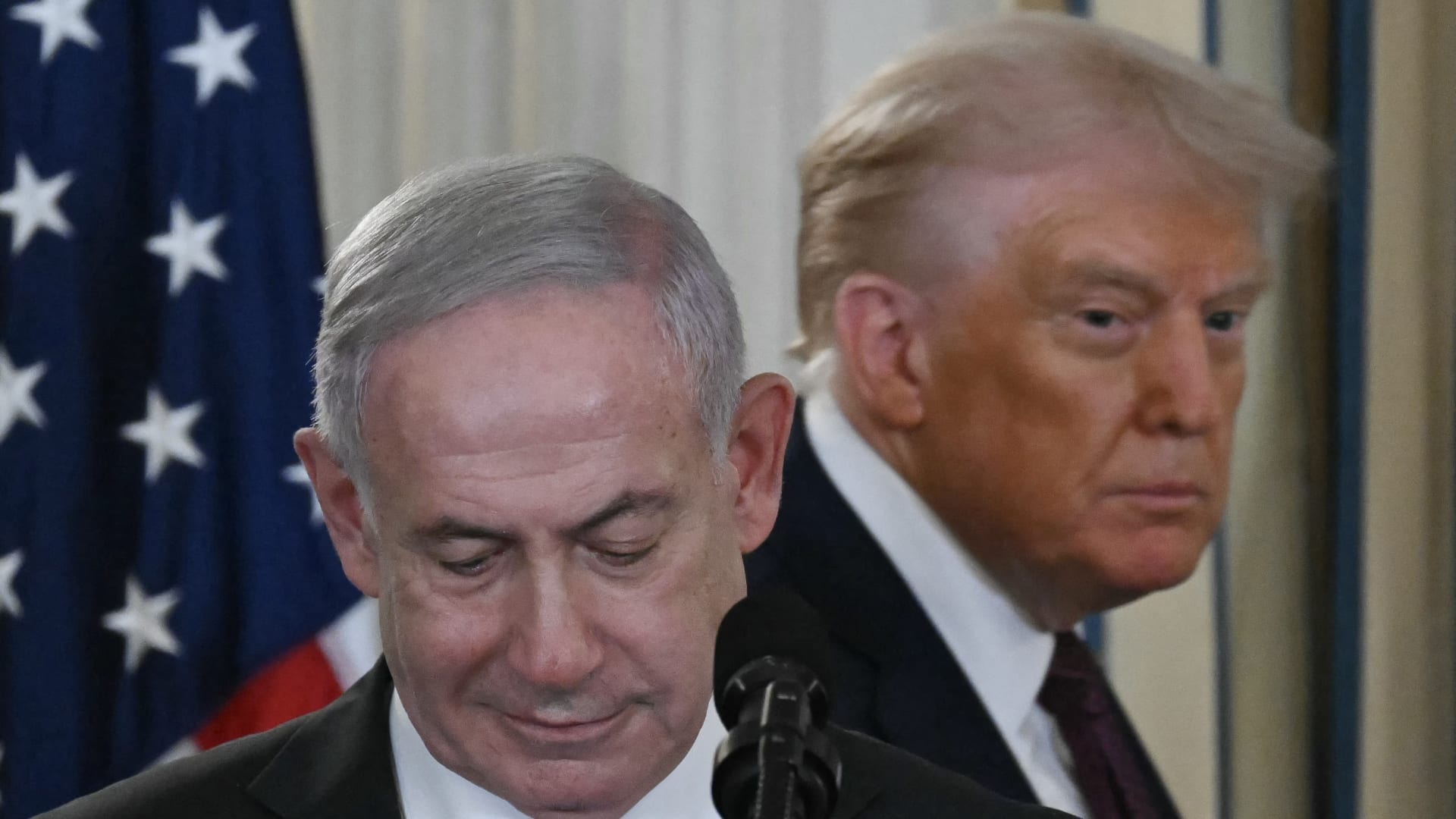
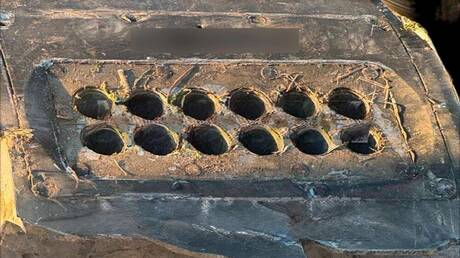
Even as the US-Israel's Iran war hurtles along – haltingly or otherwise, with intermittent prospects of peace – some lessons have already gained permanence. Wars can often be ended early. They rarely are. Quitting is mistaken for losing. And so conflict persists – driven by hubris, false bravado and misplaced ego. Till Pakistan, acting as the elder, stepped into the ongoing Iran war. The first lesson, therefore, is simple: wars are not your back-alley scuffles or weekend jaunts. They are too serious a business to be left to juvenile instincts or political impulse. Generals and professionals must be heard. It isn't too far back when a general in India told his prime minister that he would not go to war at the time the prime minister thought was ripe; he needed nine months to prepare his forces to begin an offensive against an enemy that was outnumbered, strategically wrong-footed and logistically disconnected from his base. The general was right. When he finally launched nine months later, he won his prime minister a new country. Listen to your generals. Next. Tactical and operational brilliance can never make up for strategic misconception. Guns, planes and rockets are not a playtime arsenal; these reflect decades of hard work and investment in resources. When the real stuff rains down, people lose their lives and families their hearth and homes. It is blood and treasure, not banter and playfulness. But that only adults in the room will know. If there are no adults, the blood and the resource, and the pain inflicts relentlessly. Lesson two: always have an adult in the room, be clear why you want to expend resources and lives, and know when to stop. When going to war, know your enemy. This does not only restrict to his military potential, make-up, or expertise, or battle experience, but its civilisation, its social and psychological make-up, and its historical antecedence. That helps to know how resilient the nation is, how hardy and impenetrable the mindset is, how well educated they are as a society, and how anchored they are in their civilisational identity. Nations with a deep sense of identity bounce back to their exceptionalism in the shortest measure. It will help you gauge whether gains are at all possible and when you must stop to avoid entering the stage of diminishing returns. It also helps you to cut your losses. A source expended without gain is a source lost. Also, a correlation of force alone isn't enough to predict victory or its absence. A combination of the area, terrain, population size, scientific base, and the inviolability of an ingrained intuition to desist acquiescence or submission would make war a different beast. The American way of war is annihilation, a complete overhaul of the enemy forces, lands and their people. Yet, when facing a nation of such collective attributes, a different war will emerge. Vietnam, Afghanistan, and now Iran should be a lesson for future American leadership to respect the environment more than their capacity to 'obliterate'. Trump and his team failed to comprehend this basic principle of gauging the enemy. Know thy enemy better and completely before you step out to war with it. There is, however, a most dominant, abiding lesson from the war: Geography is the master of strategy. The earlier this gets ingrained, the easier it will be for strategists to marry their ends to their means. And, to know what means can work to deliver what ends. More generically, it helps to determine what kind of war will ensue. For example, drones from Iran cannot become a factor over the mainland USA. For example, the US will need three times as large a force as it has now to overwhelm and occupy Iran completely. It was thus quite clear that a full-scale ground invasion of Iran was impossible, as would any chance of seeing swarms of drones over Washington, DC. The only weapons available to contend with drones in the American inventory were the THAAD and the PAC-3. Outlandish, true, but the wars that each side was fighting were different, with different means. Israel and the Gulf Sheikhdoms would now seek more appropriate countermeasures against the disruption and nuisance of drones. These are deterministic elements which shape a war. If you know the war which you will fight, you can attain your objectives more efficiently, or be realistic about the objectives. If the US and Israel have relied heavily on their air power, it was realistic and sensible. They aimed to inflict pain and punishment on Iran thousands of miles away. Airpower was the most efficient means to achieve that aim. If they wished to push Iran back for years in its path to social and economic development, air power was their chosen tool. While the Navy or its Fifth Fleet might have enhanced the effectiveness of air power, their contribution would be considered less valuable in cost-benefit and risk assessments. Primary reliance on air power and its related support functions, such as ISR with drones and logistical backing, would take precedence in any calculus. Similarly, Iran, which did not have an air force to begin with and a Navy barely worthy of mention, would necessarily only contend with drones and missiles in its inventory. If Israel and the US could drop bombs of heavy tonnage on Iran, all it could do in return was use the payload its missiles could carry to Israel. Which, in the instance, was a 500 kg high-explosive-incendiary warhead. If it needed to penetrate bunkers, it had to fall back on the hypersonic missiles, which had to be necessarily few because of cost. Had Iran had an equal-capability air force, it would have certainly used it to face off the US-Israeli air threat. In its absence, it had negligible defensive capability but tried making up for it by using missiles and drones in an 'eye for an eye' offensive exchange. Similarly, there is an unnecessary hullabaloo on drone warfare, and its misplaced and superfluous doctrinal impact. Euphoric triumphalism of an underdog cannot necessarily conflate with a perceived doctrinal innovation. In Iran's case, it was a desperate resort to a resource handicap. When Mohammad Ali, the boxer, was in the twilight of his career, worn and tiring a bit – no more with the 'sting of the bee' – yet with the spirit for the 'one last hurrah,' his biggest asset was to show how many blows he could take. He would invite the opponent to punch him, then do his 'razzle-dazzle' and win it on points. Victory is not defined by the ability to absorb the final punch or to inflict the last blow, but by the wisdom to disengage before endurance becomes attrition. Quitting with finesse, rather than clinging to conflict, is what ultimately shapes history.المصدر: Express Tribune | Source: Express Tribune
ملاحظة تحريرية | Editorial Note: نُشر هذا المقال في الأصل بواسطة Express Tribune. خبر (Khabr) هي منصة إعلامية أردنية مرخّصة تعمل بالذكاء الاصطناعي. نضيف قيمة تحريرية من خلال: تحليل ذكي للأخبار، ملخصات تلقائية، رواية صوتية بالذكاء الاصطناعي، ترجمة متعددة اللغات، وتدقيق الحقائق. هدفنا جعل الأخبار أكثر وضوحاً وسهولةً للقارئ العربي.
This article was originally published by Express Tribune. Khabr is a licensed Jordanian AI-powered news platform (Registration #82086). We add editorial value through: AI-powered news analysis, automated summaries, AI audio narration, multi-language translation (Arabic, English, French, Turkish), and AI fact-checking. Our mission is to make news more accessible and understandable for Arabic-speaking audiences worldwide.