Lawless in Gaza
•International law promises a bulwark against barbarism, or a better world, or both.
•Does it provide either, especially when we allow it to focus our attention on the inhumanity of violent warfare?
•It goes without saying that, in the minds of millions, “Gaza” – the place and the word – stands for such inhumanity.
هذا الخبر من نيو ستيتسمان. خبر يقدم أدوات ذكاء اصطناعي للتلخيص والترجمة والاستماع.
المصدر: نيو ستيتسمان | Source: نيو ستيتسمانInternational law promises a bulwark against barbarism, or a better world, or both. Does it provide either, especially when we allow it to focus our attention on the inhumanity of violent warfare? It goes without saying that, in the minds of millions, “Gaza” – the place and the word – stands for such inhumanity. That is, in part, the effect of new legal frameworks. It is worth asking, how have they affected our politics?
Within days of the brutal Hamas attack on 7 October 2023, Israel’s military response loomed. An evacuation order was issued on 13 October to Palestinians in northern Gaza, where the Israeli Defense Forces entered 27 October. In this ominous interval in mid-October, the leaders of the United States and other transatlantic powers declared their fealty to Israel’s case, emphasising its right to self-defence. They observed in almost the same breath that, if there were limits to that response, they were in how the campaign ought to be waged. Not whether the onslaught would come or when it must end was in play; the humanity of the enterprise was what would matter. “Look,” Joe Biden explained on October 19, “President Netanyahu and I discussed again, yesterday, the critical need for Israel to operate by the laws of war. That means protecting civilians in combat as best they can.”
The laws of war were mentioned. In the classic distinction, there were no jus ad bellum constraints of note on Israel; its resort to force was justified, apparently without limits. There was, however, the jus in bello – constraints on the conduct of hostilities. If anything, American leaders were more consistent in this calm before the storm of violence. In opposition, Keir Starmer, on an 11 October interview on LBC, at first said Israel was within its rights to cut off electricity and water, faced pushback for doing so, immediately clarifying in a somewhat misleading statement that the right he had meant to assign Israel was merely that of self-defence. “We stand with Israel and her right to defend herself against the terrorists of Hamas,” he clarified in the House of Commons on October 23. ‘We stand,” he added, “for international law.” In this, these politicians accepted happily the idea that liberal states may have to fight unsought wars in their own defence; what mainly matters, therefore, is how they fight them.
Barack Obama had pioneered, I think, this combination: a posture in which states may well enjoy substantial latitude in their own defence, but in which, as compensation, it is of the utmost importance that they avoid brutality, especially death and injury to civilians, or any resort to illicit tactics in fighting combatants, or mistreating them (at worst, torturing them) if they are captured. Obama first offered this combination in his immortal Nobel peace prize lecture in 2009; in 2023, he did so again, in support of the policies of his former vice president. “Israel has a right to defend its citizens against such wanton violence, and I fully support President Biden’s call for the United States to support our long-time ally in going after Hamas,” Obama wrote in a 23 October Medium post. “But,” he added, “we should also be clear that how Israel prosecutes this fight against Hamas matters. It matters – as President Biden has repeatedly emphasised – that Israel’s military strategy abides by international law, including those laws that seek to avoid, to every extent possible, the death or suffering of civilian populations.”
I’d like to put this combination in some historical and moral perspective, before examining how it predetermined so much collective discourse about Israel’s assault on Gaza – and what we should say about the politics of law in consequence. Throughout I’ll try to compare current events to the war on terror, which first got me thinking about our attempt to humanise war: how we turned to international law to perform that service, and how our conflicts about war have come to be reorganised in the spirit of these commitments.
The basic worry I voiced – one I learned has haunted the attempt to humanise war through law from the start – is that making a practice less brutal could have collateral and undesirable effects. This risk presupposed a new moral agenda in human affairs, premised on the rejection of ancient and much modern war. Austrian writer Hermann Broch observed a century ago that “the bourgeois, like the Roman, built world empires and war machines. But he was neither a Nero nor a Borgia. For that he considered himself too humane, and to a certain degree even was.” That humanity posed a new set of risks of its own, ones that dawned on observers in the 19th century, though I believe they only began to be incurred the late 20th.
I’ve previously discussed Count Leo Tolstoy as the greatest explorer of these possibilities, so allow me to pivot to his great successor at the turn of the 20th century, the Austrian noblewoman Bertha von Suttner. She scored a smash hit with her internationally bestselling attack on war, Die Waffen nieder, in 1889, to the point that she was rumoured to be in the running to win the very first Nobel prize for peace, in 1901. She had, after all, worked for Alfred Nobel, and by some accounts inspired the prize. Two years before, she had attended the Hague Conference of 1899 and afterwards was scandalised to witness a peace negotiation devolve into the mere attempt to make war less brutal and costly in the modern world. “You do not humanise war, you condemn it,” a fellow peace activist explained. Suttner ended up winning her Nobel Peace Prize in 1905 – becoming the second woman to win any Nobel, after Marie Curie.
When the first Nobel Peace winners were announced in 1901, Suttner flew into a fury, and not only because she didn’t get one. The very first co-winner was Henry Dunant, who was honoured in his dotage for having launched the modern laws of humane war, helping spark the first Geneva Convention of 1864, which protected wounded soldiers. The point of the prize, Suttner complained, wasn’t making carnage less grisly and offensive, but mobilising to keep war from breaking out in the first place, or stopping it once it started. She sought Dunant out and begged him to come out as a friend of peace.
Still, there is this great irony. Suttner’s anxieties that prettifying and sanitising war would perpetuate it, and Tolstoy’s before her, and those of others after her, came too early. The main body of the laws of war, drafted by militaries or signed off on by them, was not about making war less humane. And the experience of the First World War did finally lead states to prioritise a law and politics of peace, culminating in the United Nations Charter in 1945 – faulty though it has always been. Suttner was the great prophetess of that agenda.
That was then. In recent decades politicians, warriors, humanitarians, and millions of ordinary people deprioritised not having wars in the name of precisely the combination of expansive notions of self-defence, with demonstrative and heartfelt promises to keep war cleaner, with which I began. It was no accident that Obama, in his own Nobel Peace Prize address decades later, disavowed pacifist Martin Luther King, Jr, and embraced and name-checked none other than Henry Dunant, the first US president ever to do so.
Before I turn to any analysis of Gaza with this moral and legal framework in mind, I do need to pause, to ward off – or try to – the objection that my approach to these questions is going to seem morally obtuse, legally nihilistic or both. I know it will seem to some like arguing about the fine points of cookery in the presence of the starving – literally. But it’s always going to seem too early or too late to engage in this kind of analysis; which means we may miss the chance ever to conduct it. One way to put what I’m after is in the framework of that Oxford philosopher, JL Austin, who insisted that we care as much about what language does as what it says. And I so propose we examine the performative force of international law claims – the range of their effects – without getting hung up too much on whether claims are constatively true.
In thinking about law, we have to abandon the conventional and usually hypocritical pose that law consists of rules that are obeyed or violated. Rather we should regard it as a form of politics, over which there is ongoing struggle. No disrespect is meant, but lawyers themselves are not the best people to consult on this feature of their craft. Their philosophers acknowledge, that the law can have areas of unclarity. Yet lawyers themselves enjoy no other power than the pretence that the political outcomes they seek are already commanded in the law, reducing the frequent ambiguities, conflicts, and gaps in the rules to secure their own relevance, and allowing what they want to happen to be redescribed as what the law demands. Lawyers are the last people to ask to divulge that their interpretations are political strategies. Nor are they alone, for many find it opportune in our world, by choice or faute de mieux, to advance their goals by claiming the law already requires them.
If we never ask openly what people are doing with the law prospectively, and drop the lie that properly interpreting its pre-existing meaning is all that is involved, we do not obtain the distance to ask: Is the strategy of pursuing goals through legalistic politics achieving its ends? Are there better strategies? Are there better ends? You will say: But doesn’t the law clearly prohibit immorality, and isn’t ignoring the fact obtuse? Actually no: for the most part, the law licenses much immorality too. Nor is my framework nihilistic. It’s not my fault that many of our laws must have been made to be given their meaning in ongoing interpretive struggle. By accident or intention, rulemakers open the terrain of struggle on which legal strife proceeds. That the meaning of law can be resolved at times is no objection to this picture, unless the suggestion is that the political strife that one or another law prompted – the prohibition of genocide for example – was itself no factor in the resolution. Consensus is achieved all the time in the law, not because it was already in the law, but because one set of its interpreters prevailed on the terrain of struggle. What has happened in our most recent round of political struggle around international law?
But if we apply this way of thinking to the laws of war, so-called international humanitarian law, we can certainly insist that certain things are or were clear. Without evasion or pretence, Hamas openly flouted the laws of war that forbids killing non-combatants or taking hostages; the instigators of those crimes will not face accountability not because they were innocent of the violations but because Israel killed them. Israel, it is tempting to say, flouted the law just as clearly and almost as openly. Surely there has been some potentially large set of incontestable violations – but the whole question is not just who controls interpretation, but who sets the boundaries of legitimate interpretation, distinguishing clarity from contestability. That dynamic, too, is one we would miss as public debate rages if we content ourselves with highlighting the clear violations, important as that is. And in the remaining zone of contestability, there were and always will be two sides: those doing permissive interpretation and those doing restrictive interpretation. If it’s clear that it’s illegal to target non-combatants, it’s a matter for interpretative struggle how much collateral damage is allowed, what counts as harm disproportionate to expected military advantage, and so forth.
The same is true for many other rules. And this basic divide between permissive and restrictive maps onto the divide between what Professor David Luban has called the two cultures of international humanitarian law – the military and humanitarian communities of practice, each of which has its own lawyers, outlets, websites, and so forth. It also clearly tracks a divide between global north and global south – since when governments take positions, it is not as if each and all of them are unanimously on the side of permissive interpretations (at least when they are not fighting). It has long been true that the global south has pushed restrictive interpretations, after having been the main force in the making of modern international humanitarian law after centuries of victimhood in the imperial violence of northern actors.
As a result, I propose we keep at bay the easy exit from political analysis that Israel just violated the laws of war, that it engaged in what one excellent report dubs “humanitarian camouflage” – meaning Israel merely purported to follow the law but interpreted itself into compliance. But that’s the point, isn’t it? Law is made to be interpreted. To the best of my knowledge Hamas offered no legal apologetics for the 7 October attack and hostage-taking – there have been some moral apologetics for its acts – but it is of the essence that, as Craig Jones has shown, Israel historically led the way in claiming to humanise the conduct of its forces through offering to follow rules. If it was all a lie, we miss the point that the law is made to be broken but also interpreted. Excellent examples of this include the rise of dual use doctrine which many states insist allows them to strike otherwise prohibited targets which have civilian and military applications in different contexts, or alterations of the rules of engagement to allow compliance with proportionality rules in warfare while killing more civilians. Both have essentially defined the conduct of the Gaza war.
Finally, I am ready to turn to ask in broad strokes how we can assess the outcome to date of the regulation of conflict by international laws of conduct, which automatically meant debates about compliance and violation, against the backdrop of a consensus that cruelty in warfare, especially if it slips into genocide, ranks high on the list of what is morally outrageous, or is supposed to be.
I explore three categories of effect. The first and perhaps most immediate is the possibility that the law helps legitimate the war it transforms, or, given enough convincing violation, saps legitimacy from a war or even from the state that conducts it. The second is the classic concern of Suttner and Tolstoy: war we demand to be more humane is rendered harder to contain and end in virtue of our success. The third concerns displacement or distraction or, in another vocabulary, opportunity cost. Where else could and should the focus of our moral and political attention have fallen or fall now, compared to where our understandable obsession with inhumanity has taken us?
The legitimation story of the laws of war is fascinating because of its novelty. The laws of war, in retrospect, did legitimate the evolution of the war on terror, led by my country (America) with this one as a junior partner (thank you). Obama came into office in 2009, benefiting from an impulse for peace that led to his rapid anointment with the Nobel, but also promising and providing a torture-free war on terror instead. Debatably but fascinatingly, he quieted opposition, even when critics alleged that it was far simpler to comply with the humanising laws of war (than under George W Bush) when you capture no one, and simply kill them by drone attack or special forces raids instead. The New York Times observed, just the other day, that it worked. After all, many supporters of the government and state in question went along, accepting the moral bargain that more compliance with laws of war, feigned or real, immunised the war itself from close scrutiny, even when some of those same critics denounced the latitudinarian claims of self-defence under international law that made the war increasingly expansive.
Here is how the newspaper put it in retrospect: Obama’s “administration attempted to shift the war on terror away from the Bush-era counterinsurgencies and into a more amorphous, drone-centric program of counterterrorism. Critics have long contended that this was a perverse consequence of mounting concern over the civil liberties violations of the Bush years: a replacement of black sites and Guantánamo detentions with ghostly assassinations by increasingly autonomous airborne machines, the particulars of which would remain far from the view, and consciences, of the president’s supporters. It was a bargain that many of those supporters were tacitly willing to accept. Polls during Obama’s presidency found that even as large majorities of Americans opposed staying in Afghanistan, most also approved of the administration’s drone strikes — even when a plurality of respondents couldn’t name the countries being targeted.” That is a classic, if disturbing, example of legitimation.
I don’t think anyone can doubt now – Israelis least of all – that the reverse occurred in the Gaza war. Even as it invoked dual use doctrine, complained about human shields, relaxed its rules of engagement, and worse, Israel’s politicians and lawyers in the military professed themselves exasperated that the search for legitimation through law wasn’t working. “Israeli military officials are frustrated,” the Times reported amid the controversies, “that critics do not see that this war is being waged to secure Israel’s existence, but fought within the letter of international law”. The conclusion that it wasn’t perceived to be was no doubt because of the gravity and scope of the real violations, but also because of an equally undoubted strategy to delegitimate the war or the state or both through casting harsh light on their brutality.
It’s a momentous fact. The point of law is in theory to permit and prohibit, but its most potent role – in a domain in which there is mostly self-enforcement by states of standards they interpret themselves – lies in legitimation. Gaza probably tops the list of conflicts in which focus on brutality of various kinds sapped the moral credibility of the war or the state or both, at least in the eyes of millions, probably billions. I agree, here at least, with Michael Walzer’s old observation about an earlier episode of bombardment and counterinsurgency. “The war cannot be won,” Walzer wrote of the Vietnam war, “because the only available strategy involves a war against civilians… The war against them is an unjust struggle that can only be carried on unjustly.” To which I am adding that dramatising the latter in 2023-5 convinced a global audience that the former was undeniable.
The discourse around genocide in our time buttresses such conclusions. Of course, that crime is defined in the Genocide Convention as at best adjacent to the laws of war; its prohibitions apply fully as much to peacetime. Even in a war, the possibility of genocide implicates not just the fate of civilians but why combatants are being fought, and in what spirit. But for our purposes, the debate around genocide of our time – not really a debate, with one side stating it was happening as a matter of fact and the other incredulous – undeniably abetted the general concern with civilian death, and aid and food denial, in sapping the Gaza war and the state conducting it of legitimation. It worked. “Israel alone”, blared the cover of the Economist the other week.
It is certainly true that there must have been some concerned about whether genocide was or wasn’t occurring out of the intrinsic merits of either proposition. But more were playing out a strategy of turning to law as politics. We can see this clearly in South Africa’s provisional measures litigation at the International Court of Justice, which reflected the jurisdictional accident that this one venue could provide any kind of immediate legal remedy in the midst of emergency, compared to self-enforcement or the International Criminal Court pursuing any charges, no matter where the ICJ ends up (probably years from now) when its definitive judgement rolls around. Indeed, the provisional measures decision of 26 January 2024 spiked an unusual level of enthusiasm that mobilising around international law can make a quick and successful difference. But if that is so, it is not so much because of any immediate effect of the ruling as because of the stakes of the debate around it for the legitimacy of the war or state conducting it. It was most pivotal in this regard that the accused state bases its own legitimacy on genocide, to the point its defenders could disavow the moral significance of the charge, even as they insisted they were not guilty of it.
All this brings me to the second class of effects. Was this war nonetheless perpetuated in any way by the laws of war and their near-monopolisation of the focal point for global public attention? After all, if a war ends, it doesn’t much matter whether those who end it succeed in directly showing that it is unjust or illegal, or merely in showing that the conduct of hostilities are. Walzer’s point was that often how wars are fought are referenda on whether they were ever justified. But are they perpetuated even so?
It’s a little distressing in this regard, but of great importance, that American officials openly urged Israel to fight more humanely not just for the sake of legitimation but for the perpetuation it can bring. That was the lesson they had learned after 9/11 – wouldn’t Israel want to take it on board? “The less judicious Israel is, and the greater the Palestinian death toll,” one news item on American policymakers concluded, “the more quickly pressure will build on its leaders to end the military operation. A more targeted campaign, U.S. officials tell them, could go on for longer and do more sustained damage to Hamas’s military wing.”
For all the potential long-term consequences of delegitimation, it does appear that Israel adjusted its conduct at least somewhat in the short-term heat of opprobrium over the conduct of its war. I don’t want to assert this strongly, for counting death and injury is hard, and a full military history of the Gaza campaign would have to be established – but it certainly appears to be the case that the Gaza war was characterised by decreasing violence. The first four months of bombardment were worst, with nearly half of the overall death toll so far inflicted then; the subsequent era, however excessive and gargantuan the horror, was at decelerated speed in comparison. That shift happened well before the ICJ’s provisional measures judgment for whatever that’s worth.
We do not know the future, of course. Gaza amid ceasefire remains a horrifying wasteland; but for all we know we have lived through another episode in what Israelis and non-Israelis alike have called “mowing the lawn” – occasional outbursts of increased violence amid steady-state enmity that may itself qualify as a larger war. This is the principal reason we can helpfully distinguish between delegitimation and perpetuation – the laws of war could allow for a blow to the reputation of state without necessarily arresting its fighting, or may even have allowed its relatively more humane continuation indefinitely. Delegitimation of a war amid its perpetuation is another outcome of our Gaza experience, and it doesn’t appear set to change soon.
Which leads me to my last category. Were there, or are there, alternatives or at least other possibilities that the laws of war displace, distract from, or postpone? Even if you believe – I do – that there has been little chance of recourse so far to alternative political possibilities, it is always incumbent on us to ask ourselves: Were there ones we missed? Are there now?
To start within international law, there was next to no serious discussion of what rights to self-defence states have when they cite armed attacks in justification of military response. The most obvious casualty of the era of legally humanising war through a new jus in bello has always been the jus ad bellum, and the same has been true in the Gaza war. This aphasia is probably the biggest missed opportunity, in strict legal terms, of our time. I can’t say that more emphasis in public on when and how far and long states enjoy the right to resort to force at all would make the world better than it is; all we know is that the world is terrible in its absence, even since the problem of how wars are fought began to predominate instead just a few decades ago.
Then there is the galling irony is that it was left not to Joe Biden and his transatlantic partners to reach a ceasefire, however fictitious it has been. It was left to Donald Trump. I haven’t talked at all about how the Gaza war has figured in the domestic politics of various places, including potentially help bring Trump to power again. That’s a big topic for Americans and for anyone who cares about the future of its Democratic party. But we can speculate for the sake of everywhere else, and Gaza itself, about whether a critical error was made in so prioritising clean self-defence for several years that Biden and his team, and their transatlantic allies, missed chances for ceasefire themselves.
But we should also turn the critical tables on ourselves. It was palpably clear in the midst of the atrocious campaign that the nub of Western policy involved a vision of regional order – what you might call the theology of “normalisation”. Certainly for American diplomats and policymakers such as Antony Blinken or Brett McGurk, whatever was objectionable about Gaza was so primarily because it threatened an Israeli-Saudi deal that would allow the degradation of Iranian power in the region. Yes, there would need to be some attention to the fate of Palestine, such figures assumed – but it was going to be hostage to what Saudis would require and Israelis would tolerate to continue towards their pact to confront Iran.
Debatable a vision as this may have been in 2023-5, with liberal internationalists across the Atlantic effectively taking onboard the agenda of the Abraham Accords of Trump’s first term, it is significant that they did connect their concern for moderation of the Gaza war to a broader political vision. And Israel’s successes in the assault on Hezbollah in Lebanon in 2023-4 and the fall of Bashar al-Assad in Syria in 2025, alongside the decimation of so much of Hamas’s leadership and rank and file – and then, after Trump returned, the Twelve Day War against Iran itself in 2025 – meant a great many could look with glowing approval on the prospect of a regional powershift. Gaza was sad, but the setback for Iran was stupendous.
In contrast, those who focalised strictly on the brutal violence in Gaza had very little to say about any of these matters, generally passing over them in silence, failing to integrate their focus in a broader one about regional order. Did they have another proposal, assuming they didn’t favour Iranian power? If so, they said almost nothing about it. I believe this was a grievous mistake because they left themselves open to the charge they were naifs who didn’t understand the epic struggle for regional mastery of the moment. Things look different now, of course, after the failure of outright American-Israeli attempt at regime change in Iran. But the point stands about what got displaced or disregarded in the otherwise honourable concern with the morality and law of wartime violence.
Finally, let me cite the worst casualty of the era of humanising war: quite simply, peace movements and projects. And while it’s easy to be facile about this, we can legitimately ask where the peace is for Gaza, and complain that, once again, it is Trump who is left to parody its existence with his “peace board”, with no powerful alternative on offer.
I’ve often compared the depictions of atrocity in the explosive Abu Ghraib photographs of 2004 to their avatars in the heartrending images of the My Lai massacre in the Vietnam war, which went viral in 1969. Yet they were politically opposite in their effects. The proof of atrocity of the Vietnam war added fuel to the fire of an existing and intense peace movement, popular across the Atlantic. The reverse occurred after the Iraq invasion. Debates about detention and torture were supercharged by the Abu Ghraib revelations, but in the absence of a sustained peace cause, leaving that opening for Obama to innovate a torture-free war on terror.
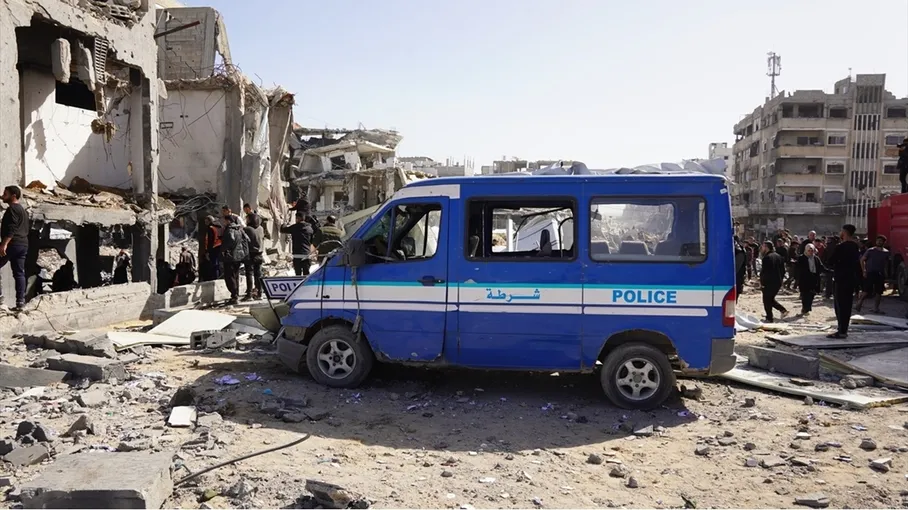
Amid the rubble of Gaza, there is now a third model. The consciousness of legal atrocity in Gaza has thoroughly undermined not just the war’s cause, but its agents and supporters. Yet in the absence of peace movements and plans, it is not clear what difference that makes. It suggests the indispensability of constant pressure and plans for political alternatives, which have been condemned to be either abstract or marginal. We cannot leave them there.
It may be that the era of consensus around at least paying lip service to the agenda of making war more humane is ending. The best evidence for this, alas, is the embarrassing and sulphurous American defense or war secretary, Mr Pete Hegseth, who polemicised precisely against humanising war in his earlier life in his book, The War on Warriors, and has pursued some a vision of effective killing in office. “Lethality-maxxing”, one U.S. government X account shamefully put it.
But I would not get ahead of ourselves. A broader mainstream in the US military and certainly the UK military fully accepts the dictates of the law. True, others are attempting to follow Israel in accepting them but loosening their constraints to make the “large-scale combat operations” they see coming more tractable. Yet the change in our conscience that led to more humanitarian expectations in war is deeply ingrained, and is not going to be undone in a day or a year or a decade. And either way we ultimately have to justify our own focus and priorities – our continuing privileging the humanisation of warfare. I have questioned it today for all its genuine virtues, anxious of its neglected vices.
As professor and Palestinian activist, Noura Erakat, has written, the only real issue is whether and how law makes a political difference, compared to other alternatives. “The law is the sail,” she writes in her important book Justice for Some: Law and the Question of Palestine, “where you go is the wind, and that wind is politics and power.” If the law improves outcomes, she says forthrightly, it should be embraced – but when not, not. Stow the sail when it is not taking you in a good direction, hoist it when it might, and, Erakat adds, “stitch a new sail when possible”.
But is dramatising infractions of the laws of war the right wind to catch, and what if you are becalmed as oppression and violence continue? Humanitarian rules are, of course, a good thing on their own. If enough people care about them, including the possibility of genocide, a dramatisation of them can even function as an anti-war politics by other means. But the solutions such humanitarianism has provided politically are slight to date. They reflect a minimal ethics in a tragic world, with no promise in themselves for anything better, as cycles of vengeful rage continue. For such reasons, I would embellish Erakat’s analogy. If law is a sail, sometimes you need to build a political motor for your boat, to overcome the prevailing winds. And, of course, you have to know where you are going, above all with concrete visions for peace amid physical violence and legal strife. Perhaps that is what we lack.
A version of this essay was first delivered as the Cyril Foster Lecture at Oxford University on 7 May. It has been edited for length and clarity.
[Further reading: The Palestine hunger striker standing for election]
ملاحظة تحريرية | Editorial Note: نُشر هذا المقال في الأصل بواسطة نيو ستيتسمان. خبر (Khabr) هي منصة إعلامية أردنية مرخّصة تعمل بالذكاء الاصطناعي. نضيف قيمة تحريرية من خلال: تحليل ذكي للأخبار، ملخصات تلقائية، رواية صوتية بالذكاء الاصطناعي، ترجمة متعددة اللغات، وتدقيق الحقائق. هدفنا جعل الأخبار أكثر وضوحاً وسهولةً للقارئ العربي.
This article was originally published by نيو ستيتسمان. Khabr is a licensed Jordanian AI-powered news platform (Registration #82086). We add editorial value through: AI-powered news analysis, automated summaries, AI audio narration, multi-language translation (Arabic, English, French, Turkish), and AI fact-checking. Our mission is to make news more accessible and understandable for Arabic-speaking audiences worldwide.