King Alfred the Great's long-lost remains 'found in car park' in 'omen' for England
•The long-lost remains of King Alfred the Great have been located in a Winchester car park, a leading researcher has claimed.
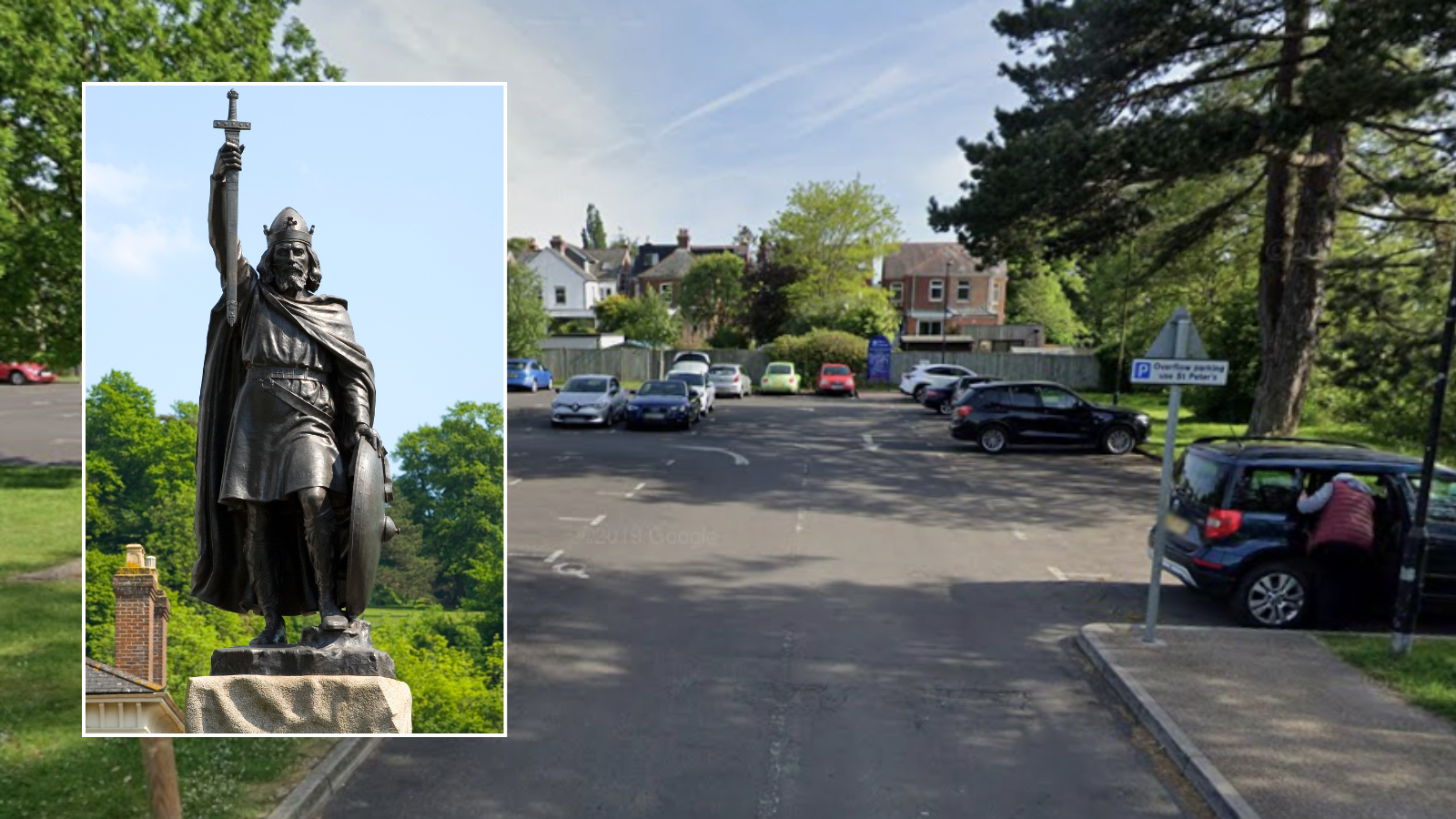
•Graham Phillips, a 72-year-old historian from Birmingham, believes the bones of the legendary Anglo-Saxon king rest under River Park, a car park in the Hampshire city where Alfred both died and was or...
•TRENDING Stories Videos Your Say Earlier that year, a surprise Norse assault had driven the king into retreat into the fields of Somerset, where he assembled an army which ultimately compelled th...
هذا الخبر من GB News. خبر يقدم أدوات ذكاء اصطناعي للتلخيص والترجمة والاستماع.
المصدر: GB News | Source: GB NewsThe long-lost remains of King Alfred the Great have been located in a Winchester car park, a leading researcher has claimed.
Graham Phillips, a 72-year-old historian from Birmingham, believes the bones of the legendary Anglo-Saxon king rest under River Park, a car park in the Hampshire city where Alfred both died and was originally laid to rest.
The timing has not escaped Mr Phillips, who sees parallels between Alfred's historic triumph over Viking invaders and England's impending clash with Erling Haaland's Norway in Miami.
Alfred the Great secured his place in English history through his decisive victory against Viking forces at the Battle of Edington in 878.
He is the only King of England to earn the epithet "the Great".
TRENDINGStoriesVideosYour SayEarlier that year, a surprise Norse assault had driven the king into retreat into the fields of Somerset, where he assembled an army which ultimately compelled the invaders to surrender.
He would then reclaim Wessex, then London, and earn recognition as King of the Anglo-Saxons, establishing the groundwork for the unified England of which his grandson Aethelstan would become the first king.
After his death in 899, Alfred's remains embarked on a complicated journey through history.
They were interred at Winchester Cathedral, before being transferred to Hyde Abbey in 1110 - which was later demolished during Henry VIII's dissolution of the monasteries in 1539.
Bones believed to belong to Alfred were unearthed at the abbey site in 1866 and subsequently reburied at St Bartholomew's Church.
But carbon dating conducted by archaeologists in 2013 revealed these bones came from roughly two centuries after Alfred's death.
Mr Phillips embarked on his own investigation and made a breakthrough last summer whilst examining documents at Cambridge University.
He uncovered an article penned by historian Henry Howard in the journal Archaeologia in 1800.
ARCHAEOLOGY - READ THE LATEST:
- Archaeology mystery of skeleton 'belonging' to fouth musketeer may never be solved due to blunder
- Archaeologists uncover 'massive biblical structure' in hunt for Ark of the Covenant
- First dinosaur fossil from Antarctica found in drawer after lying forgotten for 40 years
The document revealed that when a prison was built next to to the site in 1788, the graves were converted into a garden for the warden's residence.
Crucially, Mr Howard's account detailed how prisoners relocated the bones and included a map showing their new location.
"I am 100 per cent confident the car park site is where the bones were, and I'm confident they are there now," he told The Sun.
"I think it's a good omen ahead of England's match against Norway.
"We may have finally found Alfred's remains so is this a sign we can win the World Cup."
The historian is calling for archaeologists to undertake a non-invasive geophysical survey using a ground-penetrating radar.
The same technique was used to successfully locate Richard III's remains in a Leicester car park in 2012.
Mr Phillips' research was featured on Wednesday night in an episode of Weird Britain on Blaze TV.
Our Standards: The GB News Editorial Charter


ملاحظة تحريرية | Editorial Note: نُشر هذا المقال في الأصل بواسطة GB News. خبر (Khabr) هي منصة إعلامية أردنية مرخّصة تعمل بالذكاء الاصطناعي. نضيف قيمة تحريرية من خلال: تحليل ذكي للأخبار، ملخصات تلقائية، رواية صوتية بالذكاء الاصطناعي، ترجمة متعددة اللغات، وتدقيق الحقائق. هدفنا جعل الأخبار أكثر وضوحاً وسهولةً للقارئ العربي.
This article was originally published by GB News. Khabr is a licensed Jordanian AI-powered news platform (Registration #82086). We add editorial value through: AI-powered news analysis, automated summaries, AI audio narration, multi-language translation (Arabic, English, French, Turkish), and AI fact-checking. Our mission is to make news more accessible and understandable for Arabic-speaking audiences worldwide.