Kevin Warsh would be one of the wealthiest Fed chairs ever and says he ‘lived the American Dream.’ Here’s what he wants for the central bank
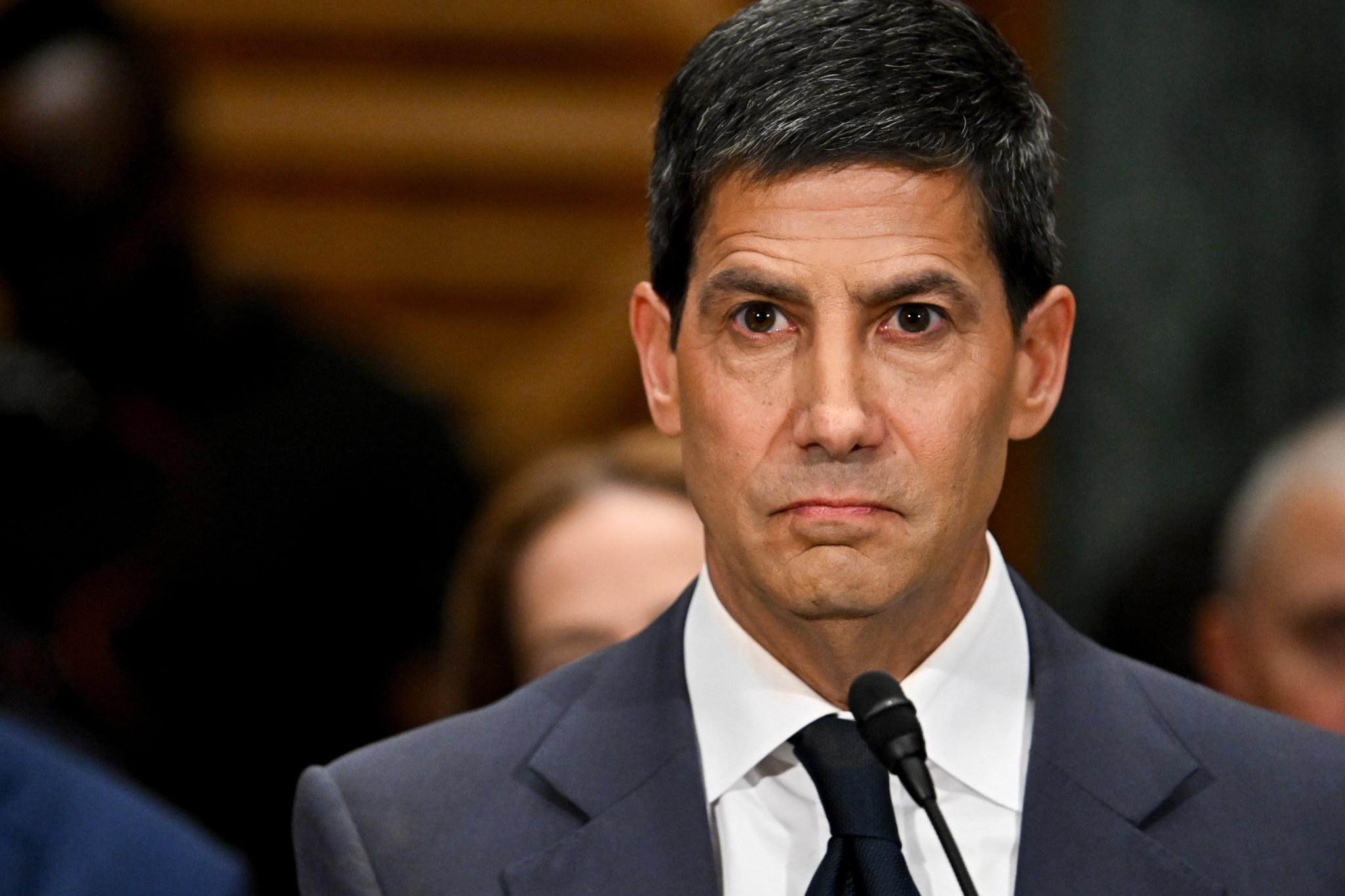
•Two sides of Kevin Warsh were presented to the world at his Senate Banking Committee hearing this morning.
•From the Republicans, a “battle-tested” economist, ready to step into the role of Federal Reserve chairman in his “finest hour” at a turning point for the economy. From the Democrats, Warsh is...
•To confirm him, Senator Elizabeth Warren said, was to vote for catastrophe, leading the central bank down a path to erosion of its independence. Markets and investors care little for the storie...
هذا الخبر من فورتشن العربية. خبر يقدم أدوات ذكاء اصطناعي للتلخيص والترجمة والاستماع.
المصدر: فورتشن العربية | Source: فورتشن العربيةTwo sides of Kevin Warsh were presented to the world at his Senate Banking Committee hearing this morning. From the Republicans, a “battle-tested” economist, ready to step into the role of Federal Reserve chairman in his “finest hour” at a turning point for the economy.
From the Democrats, Warsh is a “sock puppet”—both for Donald Trump in the White House and for Wall Street CEOs. To confirm him, Senator Elizabeth Warren said, was to vote for catastrophe, leading the central bank down a path to erosion of its independence.
Markets and investors care little for the stories spun by politicians. They wanted to hear from the man himself, who just revealed a personal fortune of more than $100 million, making him one of, if not the, wealthiest candidates to ever seek the top central banker’s chair.
A former Fed Governor himself, for Warsh landing the role of leading the central bank would be the summit. He said he’d “lived the American Dream,” telling the committee: “I’ve been the luckiest, most blessed, fortunate person with the greatest teachers. I was a kid from upstate New York in public schools, and I had an opportunity to serve after 9/11.
“I was walking with a friend of mine … away from a building near the site of the tragedy, I was walking up Fifth Avenue, and I thought to myself: ‘What am I doing?’ So I committed myself to public service then.”
The why for Warsh is clear, but investors are more concerned about the how. The chairman-nominee’s take is clear: Monetary policy must be independent of politics (Wall Street, DC, and investors breathe a sigh of relief), but the central bank must earn that autonomy. And the Federal Open Market Committee (FOMC) hasn’t helped itself in that matter.
Warsh’s opening remarks, shared with Fortune ahead of the hearing, focused on his commitment to Federal Reserve independence, which he declared “essential.” Inflation is a choice made by the Fed, he added, a decision which it must bear stoically and without complaint—despite criticism.
Still on the outside of the central bank, Warsh wasted no time in critiquing the work of the current incumbents. During and after the pandemic, the Fed “missed its mark,” Warsh said, and the U.S. economy is “still dealing with the legacy of policy errors.”
“Once you let inflation take hold, it’s harder and more expensive to bring down,” Warsh added. “Fundamental policy reforms are needed to fix it.”
Some of that reform comes down to using tools “differently,” he said, be it with interest rates or the balance sheet. New communications are also needed, he added, a notion of no surprise (albeit a little unpopular) to analysts.
Warsh has long been a critic of the Fed’s overcommunication (advocating for a chairman who would “stay in his lane”) and believes that forecasting tools such as the dot plot serve only as a stick to beat the FOMC with if it changes its mind. It’s a mantle more recently adopted by Treasury Secretary Scott Bessent, who has been calling for a “back seat” Fed.
Forward guidance is “part of the reason why, after making mistakes, [those mistakes] were compounded,” Warsh said, “If the Fed were to wait until it gets into a meeting to make a decision, [it] can stop compounding errors.”
Some economists are inclined to agree. As Thierry Wizman, global FX and rates strategist at Macquarie Group, told Fortune this week: “The Fed operated well before the dot plot was invented,” he said, referring to the chart published by the Fed four times a year that shows where each of its top policymakers expect short-term interest rates to head. One of the most closely watched tools in central banking communications, Wizman argued that nevertheless, “before each individual was asked to put their own dots and [put] their own projections into the summary of economic projections. No one really can say that the Fed was not operating well before then. In fact, it’s hard to make a case that it was operating better or worse.”
Wizman added: “It’s very possible that with less communication or more coherent communication … you might get a more transparent, clearer, Fed, a more transparent and clearer outlook on the economy and what the Fed is thinking.”
The rates question
The leading question for many, both on the committee and on Wall Street, is what, if anything, Warsh has promised the Oval Office in order to land the chairman nomination.
Trump made it clear only a dovish individual would land the nomination, leading many to speculate that Warsh had committed to easing in order to garner the president’s support.
On any promises made to the White House, Warsh was clear: “The president never once asked me to commit to any particular interest rate decision, period. Nor would I ever agree to do so if he had, but he never did.
“I was honored he nominated me. Like everyone else in the committee, in the world, I’ve heard his view on interest rates. It sounded very similar to me to every other president in economic history that I’ve studied.”
When asked not about how he would vote in his first FOMC meetings, but on how he rationalizes a dovish stance in an environment of sticky inflation, Warsh pointed to both the potential of AI and the tools more widely available to the Fed: both rates and the balance sheet. These two factors should be working in “constant cross purposes,” he argued.
As Fortune previously reported, Warsh wants to reduce the balance sheet, currently standing at $6.7 trillion, and conveniently delivers a neat argument for rate cuts. As professor Yiming Ma, of Columbia University’s Business School explained in a conversation with Fortune in February: “People often think: ‘Oh, economic conditions, inflation expectations, and unemployment are determining interest rates,’ and the size of the balance sheet is like, whatever.
“But in practice, hiking interest rates is [economic] tightening, and reducing the size of the central bank’s balance sheet is also a form of tightening [because it also raises rates]. And it’s hard to estimate the extent of that interaction, but you can think broadly that if the size of the Fed’s balance sheet is smaller, there is less liquidity in the system, and that is going to reduce inflationary pressure. So in a way, one can afford a lower interest rate with a smaller balance sheet.”
The millionaire snag
Warsh’s opening speech focused on the titans of his professional and personal journey: Billionaire investor Stan Druckenmiller, who gave him a “seat at the table” over 15 years of working together, of former Secretary of State and Treasury George Shultz, a “friend and mentor” he first met while studying at Stanford.
A joking apology was also issued to his wife, heiress and businesswoman Jane Lauder, who, two decades after Warsh’s committee hearing as governor, once again sat behind her husband in his quest for a role at the Fed. Therein lies the problem: Warsh told Senators on the committee that he would sell “virtually” all of the assets from his considerable personal fortune if he were confirmed.
Senator Warren asked if Warsh would share how these are sold and where the funds would be stored, explaining: “I’m sure you understand that the public might question your motives if, for example, billionaire Stanley Druckenmiller, who you honoured in your opening statement, and who makes a living guessing what the Fed will do next, cuts you a massive check for $100 million.”
Warsh responded: “It sounds like your fight might not be with me, but the Office of Government Ethics. I’ve come to full agreement with them and have agreed to divest all of those assets.”
Senator John Kennedy returned to the topic: “If you don’t sell them, we’ll know, and the ethics folks will know, right?”
“Yes, I’d be in violation of the ethics agreement if I refuse to sell them,” Warsh added.
This story was originally featured on Fortune.com
ملاحظة تحريرية | Editorial Note: نُشر هذا المقال في الأصل بواسطة فورتشن العربية. خبر (Khabr) هي منصة إعلامية أردنية مرخّصة تعمل بالذكاء الاصطناعي. نضيف قيمة تحريرية من خلال: تحليل ذكي للأخبار، ملخصات تلقائية، رواية صوتية بالذكاء الاصطناعي، ترجمة متعددة اللغات، وتدقيق الحقائق. هدفنا جعل الأخبار أكثر وضوحاً وسهولةً للقارئ العربي.
This article was originally published by فورتشن العربية. Khabr is a licensed Jordanian AI-powered news platform (Registration #82086). We add editorial value through: AI-powered news analysis, automated summaries, AI audio narration, multi-language translation (Arabic, English, French, Turkish), and AI fact-checking. Our mission is to make news more accessible and understandable for Arabic-speaking audiences worldwide.