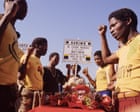
Justice denied: why families of apartheid victims are still searching for answers
المصدر: The Guardian World | Source: The Guardian WorldStruggle for justice symbolises limitations of Truth and Reconciliation Commission, whose hearings began 30 years ago
Darkness had fallen on 27 June 1985 when Fort Calata, Matthew Goniwe, Sicelo Mhlauli and Sparrow Mkonto set off on the 150-mile drive back from a meeting of anti-apartheid activists in the South African city of Port Elizabeth, now known as Gqeberha. They never made it home.
About an hour into their journey, as the road wound north from the coast towards their home town of Cradock (now called Nxuba), the four men were pulled over by three white security police officers. They were handcuffed and driven back towards Gqeberha.
Continue reading...
ملاحظة تحريرية | Editorial Note: نُشر هذا المقال في الأصل بواسطة The Guardian World. خبر (Khabr) هي منصة إعلامية أردنية مرخّصة تعمل بالذكاء الاصطناعي. نضيف قيمة تحريرية من خلال: تحليل ذكي للأخبار، ملخصات تلقائية، رواية صوتية بالذكاء الاصطناعي، ترجمة متعددة اللغات، وتدقيق الحقائق. هدفنا جعل الأخبار أكثر وضوحاً وسهولةً للقارئ العربي.
This article was originally published by The Guardian World. Khabr is a licensed Jordanian AI-powered news platform (Registration #82086). We add editorial value through: AI-powered news analysis, automated summaries, AI audio narration, multi-language translation (Arabic, English, French, Turkish), and AI fact-checking. Our mission is to make news more accessible and understandable for Arabic-speaking audiences worldwide.