Japan parliament pass major new bill in 70-year first amid succession crisis
•Japan's parliament approved a landmark amendment to the Imperial House Law last Friday, marking the first revision to the statute's core text in more than seven decades.The upper chamber passed the bi...
•TRENDING Stories Videos Your Say Prime Minister Sanae Takaichi, the nation's first female leader, is opposed to allowing women to inherit the crown.The new legislation now proceeds through remain...
•Emperor Naruhito's sole child continues to be excluded from the succession entirely.LATEST ROYAL NEWSPrince George 'following in King Charles and Prince William's footsteps' as milestone birthday appr...
هذا الخبر من GB News. خبر يقدم أدوات ذكاء اصطناعي للتلخيص والترجمة والاستماع.
المصدر: GB News | Source: GB NewsJapan's parliament approved a landmark amendment to the Imperial House Law last Friday, marking the first revision to the statute's core text in more than seven decades.
The upper chamber passed the bill on July 17, driven by growing anxiety over a shrinking pool of male successors to the Chrysanthemum Throne.
Currently, there are three eligible male heirs - two of whom have already reached their sixties or beyond.
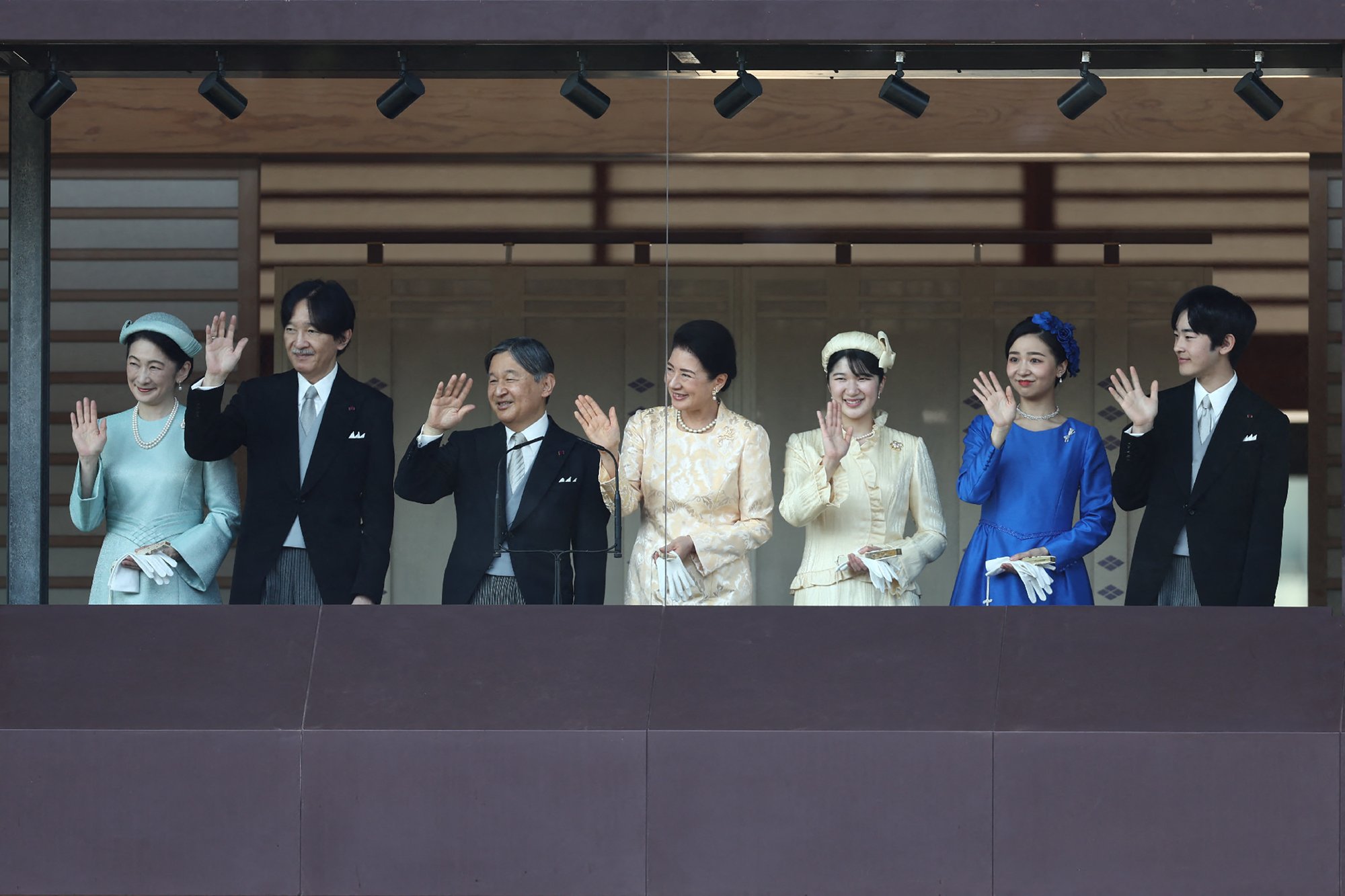
Emperor Naruhito and Empress Masako have one daughter, Princess Aiko, though females are prohibited from becoming emperor - a development only coming into place in 1889.
TRENDINGStoriesVideosYour SayPrime Minister Sanae Takaichi, the nation's first female leader, is opposed to allowing women to inherit the crown.
The new legislation now proceeds through remaining legal formalities before taking effect, having already secured approval in the lower house.
It represents the most significant alteration to Japan's royal succession framework since 1949, when the law was last amended.
Yet despite the scale of the changes, the revision conspicuously stops short of addressing what many regard as the central question: whether women should be permitted to reign in Japan again.
Under the new provisions, male descendants from 11 formerly imperial branches — stripped of their status after Japan's defeat in the Second World War — may now be adopted into the royal family, provided they are aged 15 or older.
This will bolster the ranks available for official engagements and ceremonial duties.
Crucially, female members of the imperial household will also now retain their titles should they wed outside royal circles.
Yet the prohibition on women ascending the throne remains firmly intact. Emperor Naruhito's sole child continues to be excluded from the succession entirely.
LATEST ROYAL NEWS
- Prince George 'following in King Charles and Prince William's footsteps' as milestone birthday approaches
- Queen Camilla meets with victims of abuse at homelessness charity
- King Felipe and Spanish royals celebrate World Cup heroes at Zarzuela Palace
Instead, the line runs through the Emperor's brother, the 60-year-old Crown Prince Fumihito — also styled Crown Prince Ashikino — followed by his teenage son, 19-year-old Prince Hisahito.
The significance of this latter change is best illustrated by the case of Princess Mako, who relinquished her imperial standing in 2021 to marry Kei Komuro, a university sweetheart.
The couple subsequently relocated to the United States, where they both practise law, and in May 2025 they welcomed their first child.
"I am very sorry for the inconvenience caused, and I am grateful for those ... who have continued to support me," the Emperor's niece and eldest daughter of Crown Prince Ashikino told reporters upon registering her marriage, according to the BBC. "For me, Kei is irreplaceable — marriage was a necessary choice for us."
Despite parliament's reluctance to open the throne to women, polling suggests the Japanese public takes a rather different view, with a majority expressing support for a female empress.
Britain, of course, took a rather different path. The 2011 Perth Agreement, endorsed across the Commonwealth, replaced the old male-preference system with absolute primogeniture, rendering sex irrelevant in determining the order of succession.
This became visible when Prince Louis arrived in April 2018: Princess Charlotte held her place above her younger brother, the first British princess ever to do so.
Our Standards: The GB News Editorial Charter


ملاحظة تحريرية | Editorial Note: نُشر هذا المقال في الأصل بواسطة GB News. خبر (Khabr) هي منصة إعلامية أردنية مرخّصة تعمل بالذكاء الاصطناعي. نضيف قيمة تحريرية من خلال: تحليل ذكي للأخبار، ملخصات تلقائية، رواية صوتية بالذكاء الاصطناعي، ترجمة متعددة اللغات، وتدقيق الحقائق. هدفنا جعل الأخبار أكثر وضوحاً وسهولةً للقارئ العربي.
This article was originally published by GB News. Khabr is a licensed Jordanian AI-powered news platform (Registration #82086). We add editorial value through: AI-powered news analysis, automated summaries, AI audio narration, multi-language translation (Arabic, English, French, Turkish), and AI fact-checking. Our mission is to make news more accessible and understandable for Arabic-speaking audiences worldwide.