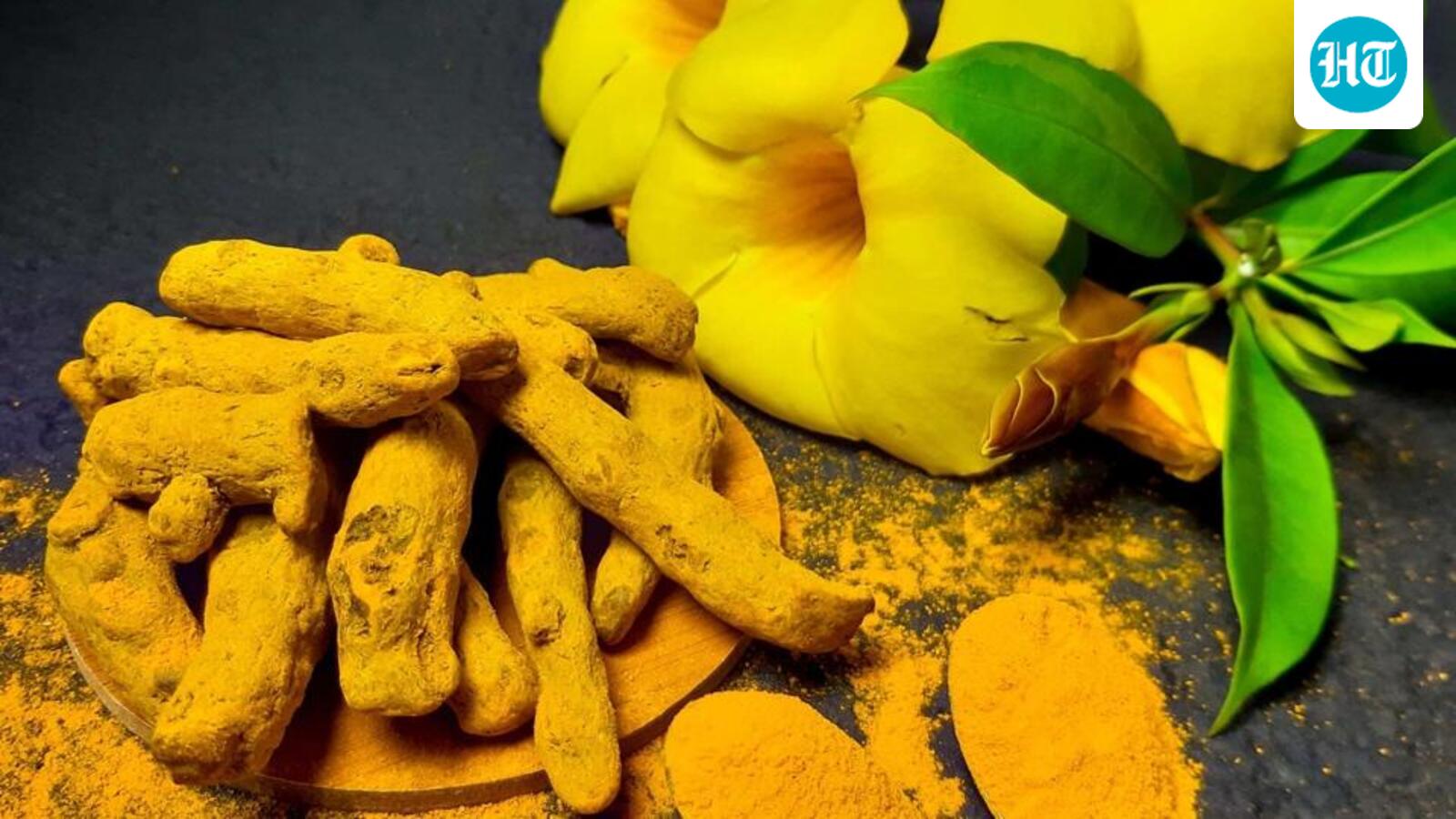
E-PaperSubscribeSubscribeEnjoy unlimited accessSubscribe Now! Get features like A decade ago, few outside Meghalaya had heard of Lakadong turmeric. Today, the golden spice grown in the hills of Jaiñtia has reached the global stage, with Prime Minister Narendra Modi showcasing Meghalaya’s GI-registered Lakadong turmeric at the G7 Summit. The high-curcumin turmeric has gone from an obscure hill crop to a GI-tagged premium product showcased before world leaders.For the state, the moment is more than a diplomatic flourish. It is the latest chapter in the transformation of a traditional crop into a premium agricultural product, backed by a growing farmer base, processing infrastructure and an increasingly ambitious export strategy. But the question is whether global recognition can translate into sustained international demand, higher-value products and better returns for the thousands of farmers who cultivate Lakadong. Meghalaya is betting that it can. The story begins with the geography of the Jaiñtia Hills. Studies by the ICAR Research Complex for the North Eastern Hill Region, along with assessments by the Meghalaya government and interventions under the National Horticulture Board’s cluster programme, point to favourable soil and climatic conditions, particularly in West Jaiñtia Hills, where Lakadong has traditionally been cultivated. The area’s warm, humid conditions and abundant rainfall, combined with predominantly acidic soils, provide an environment in which the variety develops its distinctive characteristics. Studies of the traditional Lakadong-growing belt have recorded exceptionally high rainfall and highlighted the role of soil and climate in its performance. What sets Lakadong apart, however, is not simply where it grows but what it contains. Its curcumin content ranges between 7% and 12%, giving it a premium position among turmeric products. The compound is valued for its colour and increasingly used in food, pharmaceutical, nutraceutical and cosmetic applications. The state government describes Lakadong as one of Meghalaya’s most distinctive agricultural products, with its high curcumin content giving it considerable potential in high-value markets. The geography therefore becomes part of the product itself. It is not simply turmeric grown in Meghalaya, but a variety whose identity, quality and reputation are closely connected to the landscape where generations of farmers have cultivated it. The numbers show how far that journey has reached. More than 13,000 farmers are now involved in Lakadong cultivation across 124 villages, supported by 15 farmer collectives. The crop currently covers around 2,581 hectares. Government interventions have increasingly moved beyond cultivation to strengthen the value chain through quality planting material, farmer capacity building, aggregation, processing, finance and market linkages. More than 2,500 metric tonnes of quality planting material have been supplied to 7,345 farmers. For farmers, the transformation has been tangible. Padma Shri awardee Trinity Saioo, who spent years organising Lakadong growers and promoting better cultivation practices, has seen the change first-hand. “There is a huge difference from the way we cultivated earlier,” Saioo said. “Farmers previously relied on chemical fertilisers and pesticides. Today we encourage organic cultivation using cow dung, goat manure, biofertilisers and biopesticides.” Farmers have also moved from traditional flat cultivation towards raised-bed systems, improving drainage, plant health and productivity. The transformation is equally visible after harvesting. “Today we have collection centres, washing units, slicing machines and drying facilities. Farmers can easily sell their produce through organised collection systems,” Saioo added. For Riwame Lyngdoh of Shangpung village, the shift has meant less wastage and better prospects. “Initially we cultivated the crop in our own indigenous way as taught by our ancestors. This led to a lot of wastage and sometimes we would not get a price that would commensurate our labour,” Lyngdoh said. The government’s emphasis is now increasingly on what happens after the crop leaves the field. A major milestone came in March 2024, when Lakadong turmeric received its Geographical Indication registration under GI Application No. 741. The GI status recognises Lakadong as a distinctive agricultural product of Meghalaya and provides a mechanism to protect its geographical identity, authenticity and reputation in domestic and international markets. That protection is becoming more important as visibility grows. A premium agricultural brand cannot afford to have ordinary turmeric sold under its name. The GI tag provides legal recognition, but the challenge is to build systems of testing, traceability, certification and branding that allow buyers to identify authentic Lakadong. The state has already begun building that infrastructure. One significant addition is the Bio-Curcumin Extraction Unit at Laskeiñ in West Jaiñtia Hills, completed in July 2025. The facility can process 200 kg of dry turmeric a day into oleoresin, powder, curcumin and bio-curcumin capsules. The challenge for Lakadong is no longer proving that the crop is special. It is proving that Meghalaya can consistently deliver a high-quality, traceable and value-added product to demanding markets. There are already signs that the market is responding. Lakadong products in sliced, dried and powdered forms are being marketed across Indian markets including Punjab, Indore, Gandhinagar and Jharkhand. More significantly, Lakadong has established an international market presence. Exports to date have reached the United States, United Kingdom, Netherlands and Russia, with international consignments totalling more than 17.15 MT and valued at ₹29.75 lakh. The figure is modest compared with Meghalaya’s ambition, but it marks an important transition. Lakadong is no longer merely a local speciality with theoretical export potential. It has crossed international borders. Union minister for Development of North Eastern Region Jyotiraditya Scindia has described Lakadong as a flagship “Brand North East” product, highlighting its potential to take Meghalaya’s high-curcumin turmeric from a traditional agricultural crop to a globally recognised value-added product. He has also emphasised building the ecosystem around such products, from production and processing to branding, certification and international markets. The mission aims to expand Lakadong cultivation from the current 2,581 hectares to 7,000 hectares across West and East Jaiñtia Hills, benefiting more than 17,500 additional farmers. Production is targeted to reach 49,400 MT by 2030.
المصدر: Hindustan Times
| Source: Hindustan Times
ملاحظة تحريرية | Editorial Note:
نُشر هذا المقال في الأصل بواسطة Hindustan Times.
خبر (Khabr) هي منصة إعلامية أردنية مرخّصة تعمل بالذكاء الاصطناعي.
نضيف قيمة تحريرية من خلال: تحليل ذكي للأخبار، ملخصات تلقائية، رواية صوتية بالذكاء الاصطناعي، ترجمة متعددة اللغات، وتدقيق الحقائق.
هدفنا جعل الأخبار أكثر وضوحاً وسهولةً للقارئ العربي.
This article was originally published by Hindustan Times.
Khabr is a licensed Jordanian AI-powered news platform (Registration #82086).
We add editorial value through: AI-powered news analysis, automated summaries, AI audio narration, multi-language translation (Arabic, English, French, Turkish), and AI fact-checking.
Our mission is to make news more accessible and understandable for Arabic-speaking audiences worldwide.