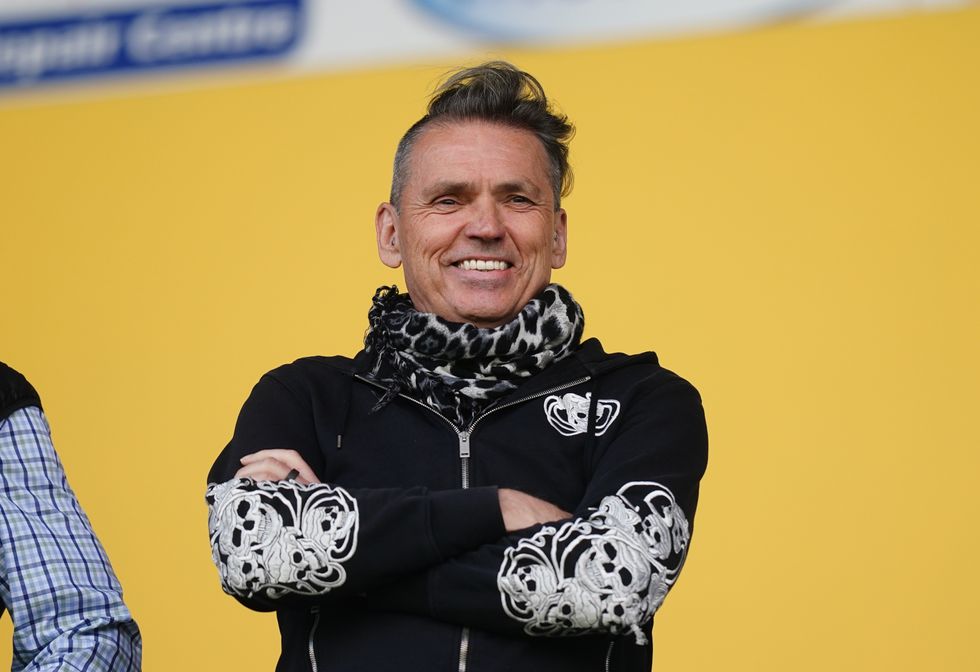
Net Zero risks being viewed as a crusade for the middle-classes, one of the country’s most influential green industrialists has told GB News.
Wind farm tycoon Dale Vince, founder of Ecotricity, wants the debate over green energy reframed so that people understand that “it’s not about giving stuff up”.
He argues that too much time is spent talking about technologies that he says benefit the wealthy, such as heat pumps.
Although they help burnish green credentials he says they can seem out of reach of working people.This risks green energy becoming ‘ghettoised”, the Labour donor warns, when it would be better to extol its benefits.
Allowing ‘green gas’, or biomethane, to warm our homes would see billions flow into rural communities, he says, while ‘breaking the link’ between the cost of gas and the cost of electricity would see bills plummet.
“I’ve been saying this for a long time now”, he explains. “It's not about polar bears and ice caps. It's about jobs, GDP, and opportunity.”
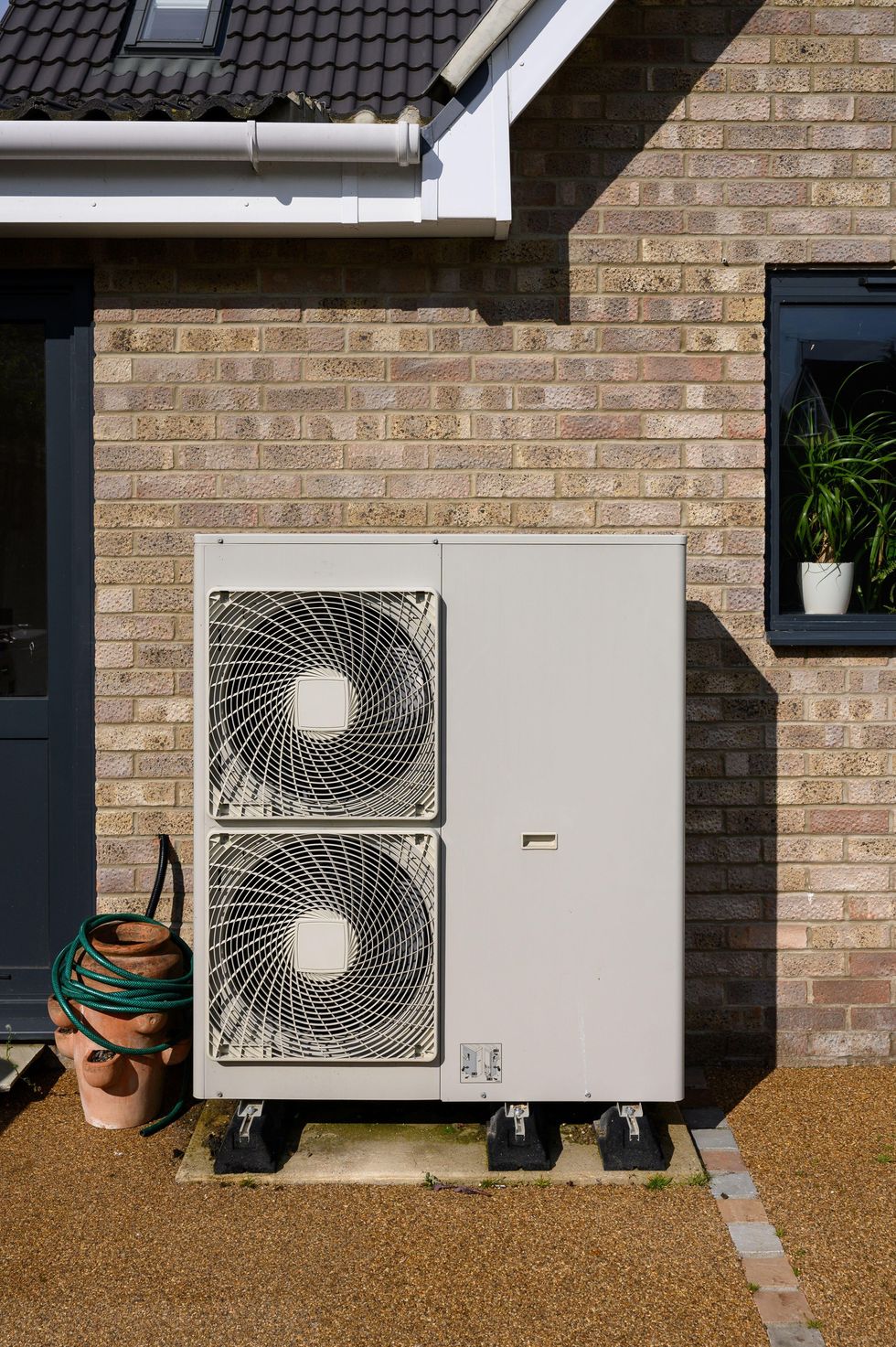
High on his list are heat pumps. Almost a fifth of UK greenhouse emissions come from home heating, making it a key obstacle on the path the Net Zero.
Electric heat pumps are viewed as a replacement for natural gas.
But Mr Vince believes the Government is wasting billions of pounds on subsidising heat pumps when biomethane could warm homes without the “operational nightmare” of tearing up existing pipelines.
Around 25 million homes rely on gas. Of these, Mr Vince says, a fifth are unsuitable for heat pumps and a further fifth would require extensive renovations for the pumps to run properly.
Biomethane is chemically identical to natural gas but it is produced from organic waste streams, such as food waste or slurry.
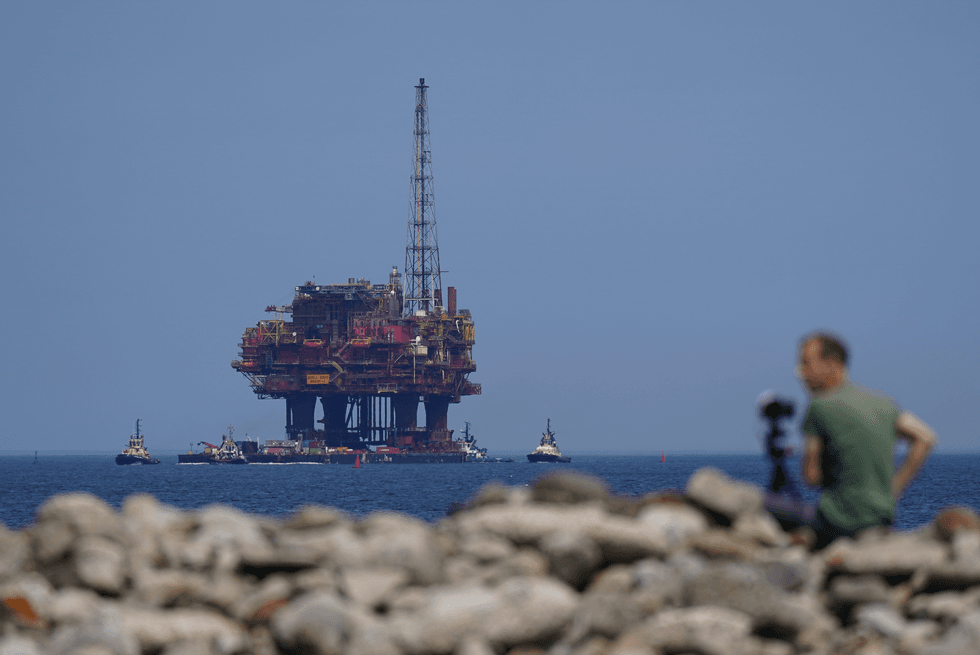
Unlike North Sea gas, it doesn’t come from geological reserves.
LATEST DEVELOPMENTS
- UK ceramics set to be 'talk of the world' once more after £120m funding package
- Britain's old oil capital risks being abandoned by Labour 'sleepwalkers', business chief warns
- 'Insane!' Kemi Badenoch blasts Labour for lifting Russian sanctions while banning North Sea licences
Mr Vince, who founded Ecotricity as the "world’s first green energy company" in 1995, says this could be used, alongside some heat pumps and hydrogen, for heating.
“We’ve done the studies,” he says. “There's enough land in Britain to make enough gas for all of our homes. It doesn't have to be heat pumps or nothing.
“It would be an enormous commercial opportunity and a levelling up, not from south to north, but from urban to rural. We'd create a transition for farmers, into the world of Net Zero, growing different things that align with this low carbon agenda.
“It's also an example of fitting the current system - using current gas networks and so on.
“We can make the gas we need to replace the fossil gas in the grid, like we make green electricity to replace brown electricity. There's a huge opportunity.
“Around 150,000 jobs in the rural economy, and billions of pounds of annual income in the rural economy.”
The Government’s Boiler Upgrade Scheme has earmarked nearly £3 billion to subsidise clean heating – largely through heat pumps. But Mr Vince believes this money could disproportionately end up in the hands of the wealthy.
“Spending billions on heat pumps is not a plan,” he says.
“I think it's wrong. I think it's a terrible waste of public money.
“It’s a very important issue because it goes to the heart of the current cultural clash where we have Net Zero, and even the green economy, being painted as something for the middle classes, for the people that have money.”
He fears any impression of the middle classes winning out from subsidies could conceal the benefits of moving to a greener economy.
So keen is he to stress these benefits that he’s unsure of the term ‘Net Zero’ itself.
“I think it's been tarnished,” he says. “I've never been a fan of ‘zero’, because we're talking about getting something down to a certain place, when actually, we should be talking about the upside opportunities, the creation of jobs that will never go away. The economic growth that would never go away.
“Those are the things we should be talking about, the great opportunities, not driving something down to ‘Net Zero’.
“It sounds like a crusade. It sounds like giving stuff up. It's not about giving stuff up.”
The Government insists there is record-demand for heat pumps and says that, through its Warm Homes Plan, low-income families can get a heat pump, solar panel and battery at no cost.
It says it is supporting biomethane production, which it says can reduce our reliance on imported gas.
But Mr Vince’s irritation doesn’t stop at heat pumps. He is angered by wholesale energy prices, which he says give a false impression of the cost of renewables.
The UK has the most expensive industrial electricity in the developed world, with domestic costs also high.
In part this is because marginal pricing means the cost of electricity is often set by the price of gas. Mr Vince believes changing this – or ‘breaking the link’ - is essential to lowering bills.
The Energy Department has attempted to decouple electricity from gas. It recently announced that companies on legacy renewable contracts, which see them paid the same as gas generators the majority of the time, would be encouraged to accept new terms.
Under these ‘contracts for difference’, they would agree a price per unit. If the wholesale energy cost is above this price, the generator would pay back the difference. If it is below, the generator would be paid a subsidy.
But Mr Vince says these efforts have fallen short.
He explains: “They talked a good game on breaking the link. They eventually, after years of lobbying, said, we're going to break the link.
“The following week they announced the details and it's not breaking the link. It's a deception of the nation. And I'm quite cross about that because properly breaking the link would knock billions off our energy bills this year, in an energy crisis.”
Under the Government plans, he says, there would be a lag between the providers being refunded and the customers receiving that money back.
"The refund comes later, which doesn't really help cash-strapped families," he says.
The Government points out that in the early 2020s gas set the price of electricity 90 per cent of the time, compared to 60 per cent of the time.
By 2030 it is predicted gas will set the wholesale price only half the time.
But Mr Vince maintains that the price of gas should have no influence at all on the price of renewables. Under his proposal, generators would be paid the exact price they bid to sell their electricity, with no adjustments made for wholesale prices.
This would mean savings could be passed directly to customers, he says, adding that the whole concept of marginal pricing should be ditched for energy.
“It's just one of those mechanisms that we're supposed to just accept, because that's the way things are done. It doesn't have to work this way", he says.
He also points out that renewable firms linked to the wholesale price can get a windfall when costs spike.
He says: “It doesn't cost more to make wind or sun generated electricity in a fossil fuel crisis. It doesn't cost more. No. Your cost of operation is the same, and this money is added to people's energy bills unnecessarily.
“I'm very frustrated, but more frustrated that Ed Miliband announced he was breaking the link and then didn't.”
Mr Miliband may want to take note; Mr Vince is unlikely to let matters lie. He has got, he says, “a relentless nature and a sharpened sense of injustice”.
He has already hit out at Labour infighting, accusing those plotting against the Prime Minister of “a complete lack of loyalty”.
“I think Keir Starmer should stay,” he says. “There shouldn't be a leadership contest.
“I back Keir Starmer to finish the job that he started, to deliver the manifesto that he got elected on.”
But the message he is keenest to get home today is that renewables should be seen as an opportunity, not a burden.
“It's the economic opportunity of the 21st century,” he says. “That's what the green economy is, and I think when we continue to talk about it as Net Zero, it sounds like a crusade, and that’s a mistake.
“Actually, it's about jobs, the economy, GDP, all the things that people care about."
A spokesperson for the Department for Energy Security and Net Zero said: “The British public is showing record demand for heat pumps. “Through our Warm Homes Plan, low-income families could get a heat pump, solar panels and a battery, at no cost at all, as we lift up to one million households out of fuel poverty.
“We are going further and faster on clean, homegrown power because it is the route to energy security and lower bills for good.”
Our Standards: The GB News Editorial Charter