تحليل ذكي | AI Editorial Analysis
•Published: 07:00, 12 April 2026 | Updated: 07:24, 12 April 2026 On the latest episode of the Daily Mail's War on Tape, foreign correspondent Chris Pleasance breaks down the military options available...
•Since the launch of Operation Epic Fury, a joint US-Israeli bombing campaign of Iran, the regime retaliated by blocking the Strait, a vital waterway that accounts for about 20 per cent of the world's...
•Using rudimentary defences: a mix of deep sea mines, primitive drones and speedboats, Iran has been able to bring the world economy to its knees.
هذا الخبر من Daily Mail. خبر يقدم أدوات ذكاء اصطناعي للتلخيص والترجمة والاستماع.
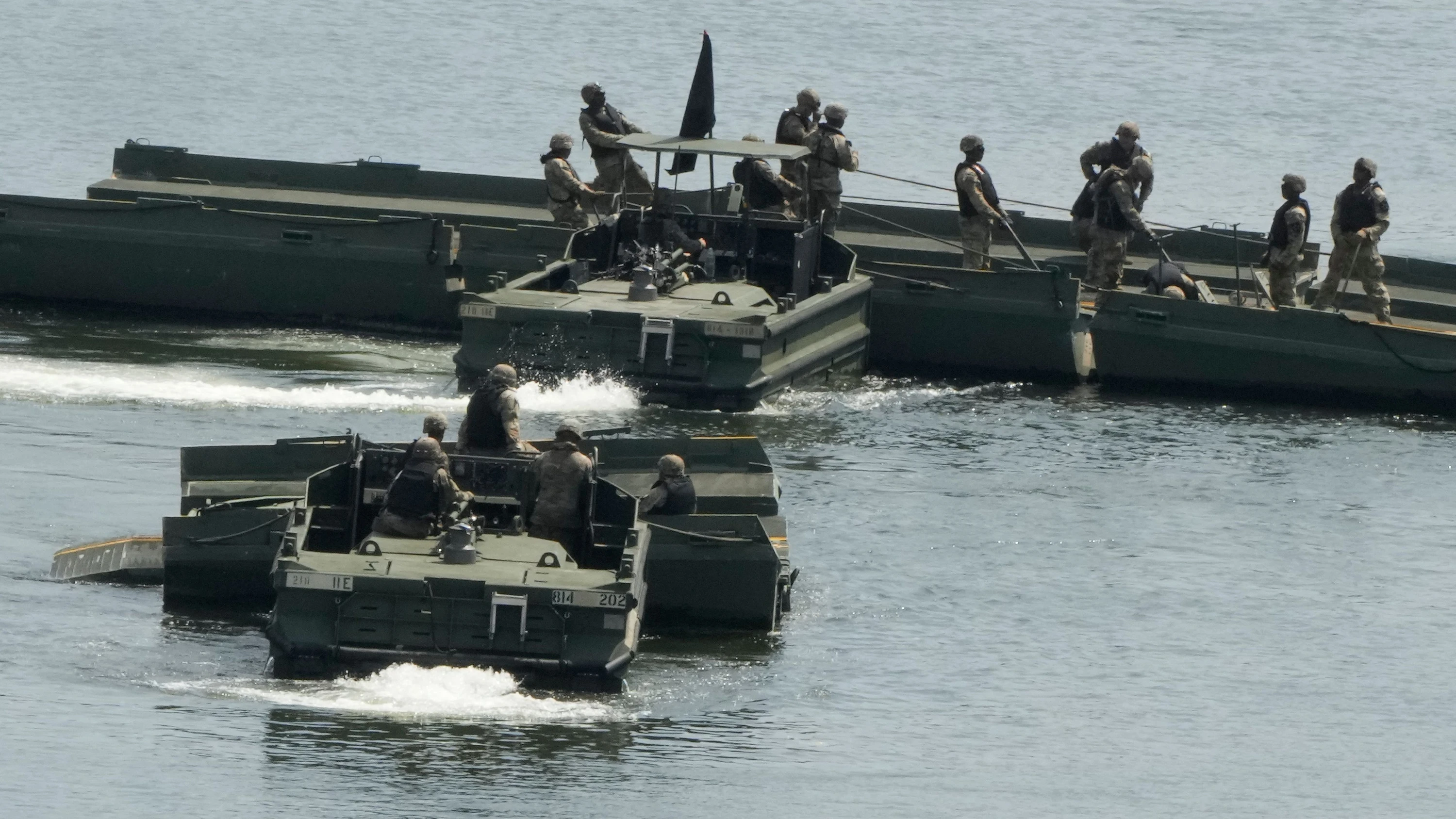
Published: 07:00, 12 April 2026 | Updated: 07:24, 12 April 2026 On the latest episode of the Daily Mail's War on Tape, foreign correspondent Chris Pleasance breaks down the military options available to America for seizing the Strait of Hormuz by force and why each would come at a devastating price. Since the launch of Operation Epic Fury, a joint US-Israeli bombing campaign of Iran, the regime retaliated by blocking the Strait, a vital waterway that accounts for about 20 per cent of the world's oil and gas flows. Using rudimentary defences: a mix of deep sea mines, primitive drones and speedboats, Iran has been able to bring the world economy to its knees. At its peak, Brent crude was selling for $126 a barrel, a faster price rise than during any other conflict in recent history. On Tuesday, Trump announced a two week ceasefire with Iran, having threatened days earlier to destroy Iranian civilisation if the regime kept the Strait closed. On the latest episode of the Daily Mail's War on Tape, foreign correspondent Chris Pleasance breaks down the military options available to America for seizing the Strait of Hormuz Looking at the US's options for reopening the Strait by force, host Pleasance explains why Tuesday's ceasefire may have come as a relief to both sides On Tuesday, Trump announced a two week ceasefire with Iran, having threatened days earlier to destroy Iranian civilisation if the regime kept the Strait closed Looking at the US's options for reopening the Strait by force, host Pleasance explains why Tuesday's ceasefire may have come as a relief to both sides. 'In order to reopen the Strait, the US would need to send warships loaded with troops', he began. 'There they will face three layers of defences, each designed to exploit a different geographical feature of this unique terrain. 'The first are naval mines. These are explosive devices that sit on or under the water's surface and explode if a ship passes by. 'These devices exploit the narrowness of the Strait, which is just 35 miles across at its narrowest point. This makes it very easy to mine. 'Just a handful of explosives would make it extremely dangerous to sail through. 'The next are anti-ship missiles and aerial drones. These weapons exploit the high mountains on the Iranian shore, which give good visibility over the waters below. 'The mountains provide plenty of opportunities for hidden launch sites, from which weapons can get into the air. 'Finally, there are sea drones and attack speedboats. Small craft armed with either missiles, machine guns or loaded with explosives. 'In a straight fight a US warship would easily overpower them, but deployed as a swarm from close range, they can cause significant damage.' Pleasance noted that any invasion force would first need to neutralise all three threats before a single boot could hit the ground. If that is even possible without enormous casualties, US forces would then be left with four unenviable options. 'Thousands of marines could seize the small islands on the inside of the Strait', he explained. Even if the US were successful in taking territory, utilising it to control the Strait poses its own problems WATCH THE FULL EPISODE: Iran war: Why the Strait of Hormuz is a death trap 'This would involve using Osprey aircraft, hovercraft and landing boats to get troops and armour onto the shore. 'A second option would see marines attack the larger islands much closer to the Iranian shore. These are heavily defended, so fighting here would be harder and would likely result in far greater casualties. 'A third option would see marines, alongside special forces, invade the Iranian mainland to eliminate the bulk of drone and missile launch sites in one go. 'This option carries the most risk. Fighting up mountains against a well emplaced enemy with reinforced defences is very hard work. 'The wildcard option is to invade Kharg Island. The island is important to Iran because it refines 90 per cent of its crude oil. Taking it would not reopen the Strait, but it would hand America a major bargaining chip. 'Iranian defences on the island are thought to be substantial. These include ship killing missiles, which could fire at warships and landing craft.' Even if the US were successful in taking territory, utilising it to control the Strait poses its own problems. 'The islands are within range of Iranian drones, missiles and even certain kinds of long range artillery firing from the mainland', Pleasance said. 'The islands are fixed so they will not be difficult for Iran to hit and US troops would have to work very hard to defend themselves. 'Almost certainly, more of them will be killed, putting further pressure on Trump's already unpopular war. 'Sending troops seems more likely to escalate the war with Iran than to end it. The US appears out of good options and easy wins.' Hear Pleasance's analysis in full by subscribing to the Daily Maill World YouTube channel. No comments have so far been submitted. Why not be the first to send us your thoughts, or debate this issue live on our message boards. By posting your comment you agree to our house rules. Do you want to automatically post your MailOnline comments to your Facebook Timeline? Your comment will be posted to MailOnline as usual. Do you want to automatically post your MailOnline comments to your Facebook Timeline? Your comment will be posted to MailOnline as usual We will automatically post your comment and a link to the news story to your Facebook timeline at the same time it is posted on MailOnline. To do this we will link your MailOnline account with your Facebook account. We’ll ask you to confirm this for your first post to Facebook. You can choose on each post whether you would like it to be posted to Facebook. Your details from Facebook will be used to provide you with tailored content, marketing and ads in line with our Privacy Policy.
المصدر: Daily Mail
| Source: Daily Mail
ملاحظة تحريرية | Editorial Note:
نُشر هذا المقال في الأصل بواسطة Daily Mail.
خبر (Khabr) هي منصة إعلامية أردنية مرخّصة تعمل بالذكاء الاصطناعي.
نضيف قيمة تحريرية من خلال: تحليل ذكي للأخبار، ملخصات تلقائية، رواية صوتية بالذكاء الاصطناعي، ترجمة متعددة اللغات، وتدقيق الحقائق.
هدفنا جعل الأخبار أكثر وضوحاً وسهولةً للقارئ العربي.
This article was originally published by Daily Mail.
Khabr is a licensed Jordanian AI-powered news platform (Registration #82086).
We add editorial value through: AI-powered news analysis, automated summaries, AI audio narration, multi-language translation (Arabic, English, French, Turkish), and AI fact-checking.
Our mission is to make news more accessible and understandable for Arabic-speaking audiences worldwide.