Is petrodollar starting to crack? How Iran war puts world oil trade at risk
المصدر: Gulf News | Source: Gulf NewsDubai: The global financial system’s reliance on the US dollar for oil trade is being tested in real time as the Iran war approaches the two-month mark, with a fragile two-week ceasefire window now in focus.
What began as a geopolitical shock has evolved into a deeper market shift, forcing investors and policymakers to reassess the durability of the petrodollar system that has underpinned global trade for five decades.
Get updated faster and for FREE: Download the Gulf News app now - simply click here.At its core, the petrodollar framework is straightforward: crude oil is priced in dollars, energy-importing nations must hold dollars to buy it, and exporting countries recycle those earnings into US assets.
That structure, formalized in the 1970s through agreements between Washington and Gulf producers, has long sustained global demand for the greenback and reinforced its reserve currency status. The Iran conflict has both reinforced and unsettled that system.
Oil, dollar move in tandem
Oil prices surged in the immediate aftermath of US and Israeli strikes on Iran on Feb. 28, triggering a sharp repricing across currencies and bond markets.
Brent crude climbed roughly 25% in the weeks that followed, while the dollar strengthened against most major peers. That correlation marked a break from the typical pattern, where rising oil prices tend to weigh on the US currency. Instead, the dollar has moved in tandem with oil.
“Oil markets continue to set the tone in FX,” said Alex Cohen, a foreign-exchange strategist at Bank of America, pointing to recent price swings tied to developments around the Strait of Hormuz.
Costly oil boosts US dollar
Strategists and investors say the shift reflects structural changes in the US economy as well as the mechanics of global oil trade. The US is now one of the world’s largest energy producers, insulating it from supply shocks that hit import-dependent economies harder. At the same time, because oil remains priced in dollars, any spike in crude prices increases global demand for dollar liquidity.
“Higher oil prices mechanically improve the US terms of trade and increase global demand for dollars to transact energy,” said Neil Sutherland, a portfolio manager at Schroder Investment Management.
The result has been a renewed “petrodollar impulse,” with markets effectively treating the US currency as a proxy for energy exposure. Some analysts have gone as far as describing the dollar as a “petrocurrency” during the conflict, reflecting how tightly it has tracked crude prices since late February.
War also exposing cracks
Yet the same dynamics strengthening the dollar in the short term are exposing vulnerabilities in the system over a longer horizon.
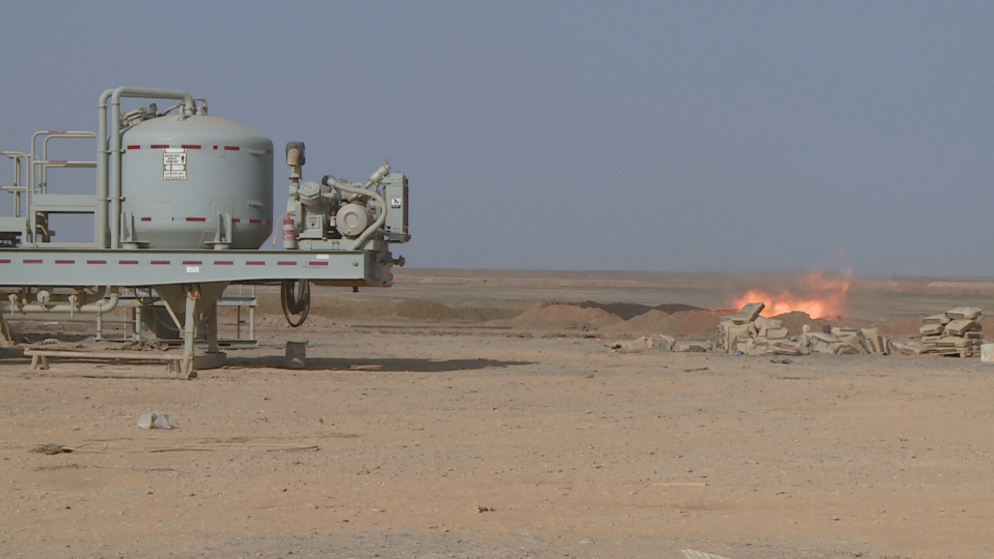
The Strait of Hormuz, through which roughly a fifth of global oil flows, has become a focal point of both military and financial pressure. Disruptions to shipping have amplified price volatility and forced energy buyers to rethink supply chains and payment mechanisms.
Reports that Iran has allowed oil shipments to pass only if payments are made in Chinese yuan highlight a growing willingness to bypass the dollar in strategic transactions. That shift, while still limited in scale, is being closely watched by banks and policymakers.
Rise of ‘petroyuan’ narrative
“The conflict could be the catalyst for erosion in petrodollar dominance and the beginnings of the petroyuan,” wrote Deutsche Bank strategist Mallika Sachdeva in a recent note.
China’s role is central to that potential transition. As the largest buyer of Middle Eastern crude, Beijing has been steadily expanding the use of its currency in energy trade, while developing payment systems that operate outside traditional dollar-based channels.
The Iran war has accelerated those efforts, giving both buyers and sellers stronger incentives to experiment with alternatives. At the same time, Gulf producers are recalibrating their own positions.
Gulf states hedge their bets
Many oil exporters in the region now sell significantly more crude to Asian markets than to the US, weakening the historical alignment that anchored the petrodollar system. Initiatives aimed at enabling cross-border payments without the dollar, including multi-central bank projects, are gaining traction as a hedge against geopolitical risk.
Still, the dollar’s dominance remains intact for now.
Most global oil contracts continue to be priced and settled in dollars, and the depth of US financial markets provides a level of liquidity and stability that alternatives have yet to match.
Sign up for our daily business newsletter, Cheques & Balances.Markets reflect mixed signals
Market behavior during the conflict reflects that dual reality.
Investors have simultaneously sold US Treasuries amid inflation concerns tied to higher oil prices while increasing their exposure to the dollar itself, a dynamic that underscores the currency’s enduring centrality. “Those are oil and the dollar,” said Nathan Thooft, a senior portfolio manager at Manulife Investment Management, describing the limited number of trades that have consistently worked during the volatility.
The longer-term outlook is less clear-cut.
Long-term risks to rising dollar
Sustained high energy prices risk slowing economic growth in the US as well as abroad, potentially undermining the relative advantage that has supported the dollar’s recent strength.
“The US economy will likely see a decline in GDP growth as a result of higher energy prices that affect consumer spending, so it isn’t a net positive overall,” said Kathy Jones, head of fixed-income strategy at Charles Schwab.
For now, the petrodollar system is neither collapsing nor fully secure. It is adapting under pressure, shaped by a war that has made oil — and the currency used to trade it — the central axis of global markets once again.
Whether that pressure results in lasting change will depend on what happens next: not just on the battlefield, but in the currency of the next barrel of oil traded.
- With inputs from Agencies
ملاحظة تحريرية | Editorial Note: نُشر هذا المقال في الأصل بواسطة Gulf News. خبر (Khabr) هي منصة إعلامية أردنية مرخّصة تعمل بالذكاء الاصطناعي. نضيف قيمة تحريرية من خلال: تحليل ذكي للأخبار، ملخصات تلقائية، رواية صوتية بالذكاء الاصطناعي، ترجمة متعددة اللغات، وتدقيق الحقائق. هدفنا جعل الأخبار أكثر وضوحاً وسهولةً للقارئ العربي.
This article was originally published by Gulf News. Khabr is a licensed Jordanian AI-powered news platform (Registration #82086). We add editorial value through: AI-powered news analysis, automated summaries, AI audio narration, multi-language translation (Arabic, English, French, Turkish), and AI fact-checking. Our mission is to make news more accessible and understandable for Arabic-speaking audiences worldwide.