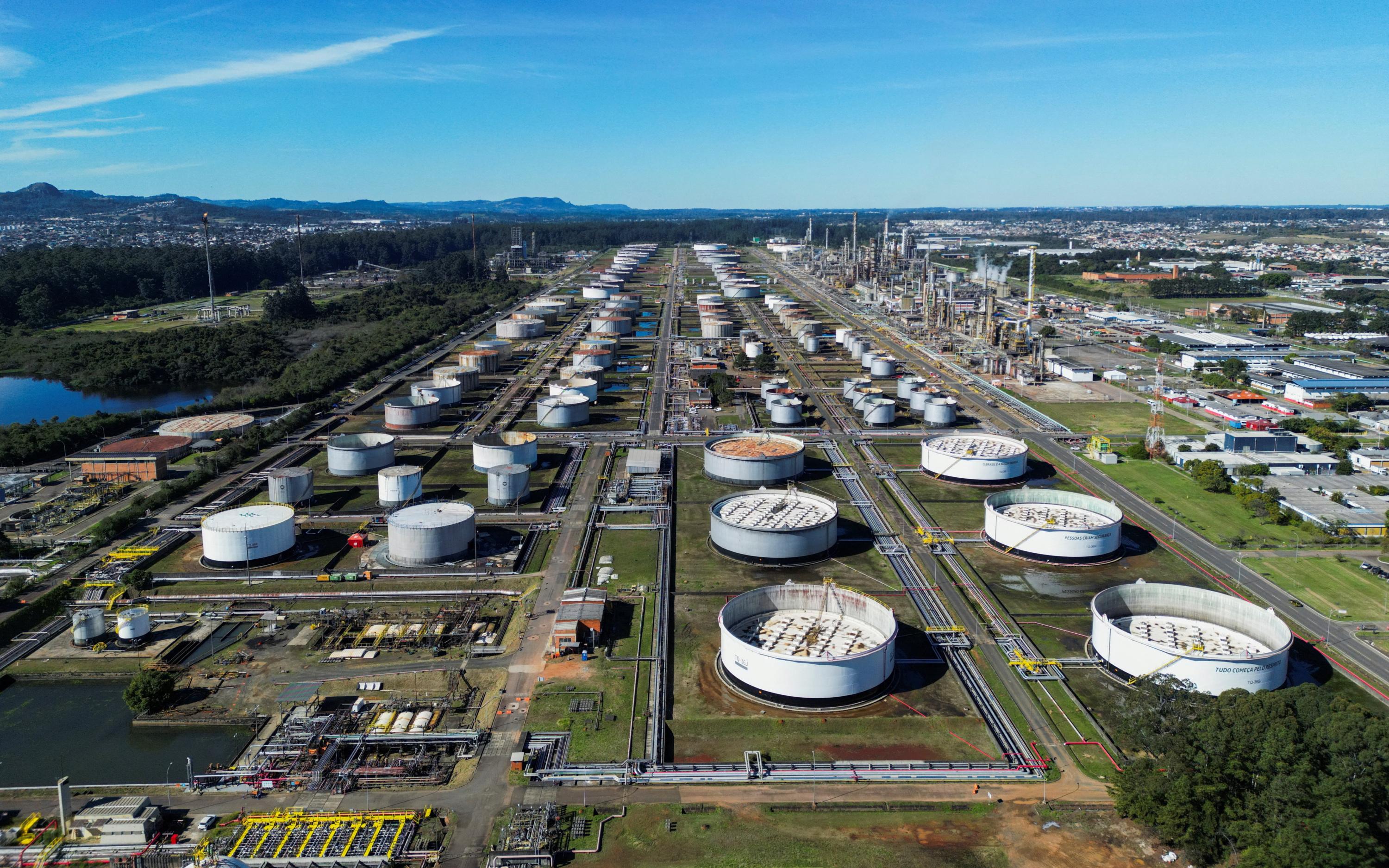
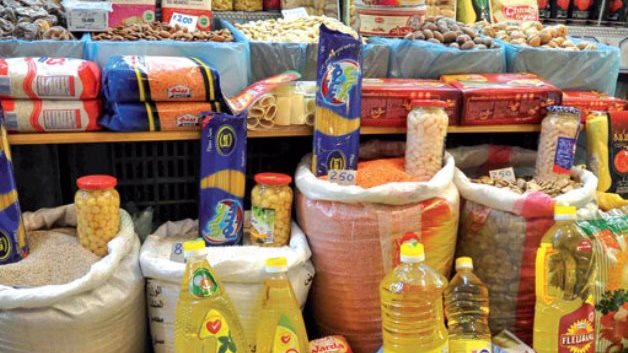
DUBAI 23°CGOLD/FOREXPRAYER TIMESNEWSLETTERSLOGIN GOLD/FOREXDUBAI 23°CPRAYER TIMES BUSINESSBUSINESSBANKING & INSURANCEAVIATIONPROPERTYTAX NEWSCORPORATE TAXANALYSISTRAVEL & TOURISMMARKETSRETAILCORPORATE NEWSTECHAUTO Business / RetailIran war: Fertilizer supply squeeze deepens, raising risks for global food pricesFertilizer disruptions raise risks for crops, yields and global food prices Dubai: The impact of the Iran conflict is moving deeper into the real economy, with fertilizer supplies tightening across global markets and raising the risk of higher food prices in the months ahead. Farmers across regions are facing rising input costs and delayed shipments, with disruptions in the Strait of Hormuz affecting a critical artery for both energy and agricultural inputs. Around a third of global seaborne fertilizer trade passes through the route, linking the current disruption directly to planting cycles and crop output across multiple regions. Shipping flows through the Strait have dropped sharply, disrupting not only oil and gas but also the movement of key agricultural inputs. The Middle East plays a central role in global fertilizer supply, both as a producer and as a transit hub, meaning any sustained disruption quickly feeds into availability and pricing worldwide. The pressure is already visible in supply chains, with nitrogen and phosphate shipments slowing at a time when many major agricultural regions are entering key planting windows. Delays are being compounded by rising energy costs, which are pushing up the price of fertilizer production itself, particularly for nitrogen-based products that rely heavily on natural gas. Fertilizers are typically applied just before or during planting, and even short delays can reduce yields, especially in developing economies where access is already constrained and buffers are limited. Carl Skau, deputy executive director of the World Food Programme, warned that the shortage is hitting “just as planting season begins,” increasing the risk for farmers already dealing with weather volatility and rising costs. The disruption is particularly acute for countries that rely heavily on imports from the Gulf, including parts of Africa and Asia, where supply routes are now strained by shipping bottlenecks and higher transport costs. In some cases, countries depend on the region for the vast majority of their fertilizer needs, leaving little room to pivot to alternative suppliers in the short term. Even small delays can have measurable consequences. Research cited by industry participants shows that delays in fertilizer application can reduce yields by several percentage points within a single season, with cumulative effects on food supply if disruptions persist. Analysts say the current disruption could have a longer tail than previous commodity shocks, with supply constraints unlikely to ease quickly even if tensions stabilise. “Other major exporters face binding constraints and are unlikely to rapidly scale up shipments to offset conflict-driven supply shortfalls," said Kelly Xu, Commodity and Energy Strategist at Alpine Macro. That limitation reflects both capacity constraints and the time required to ramp up production or redirect trade flows. Exposure is most acute across South and Southeast Asia, while Europe faces additional pressure from energy-sensitive production and rising dependence on imports. Xu added that the current episode may unfold differently from previous spikes. “Unlike the 2022 episode, the current conflict is more likely to generate a delayed and less acute inflation impulse, with spillovers into core inflation remaining unlikely.” Even so, she noted that the divergence between fertilizer costs and agricultural prices could widen over the next three to six months, increasing strain on farm economics. The link between energy and food is becoming more pronounced, with rising gas prices affecting fertilizer production and availability, while higher diesel costs are pushing up transport and distribution expenses. Speaking at CERAWeek, taking place in Houston, Texas, Dr Sultan Ahmed Al Jaber, UAE Minister of Industry and Advanced Technology, ADNOC Managing Director and Group CEO, Chairman of Masdar and Executive Chairman of XRG said, “Energy security is not just a slogan, it’s the difference between lights on and lights off.” He pointed to the scale of the disruption in the Strait of Hormuz, describing it as a critical chokepoint for the global economy. Large volumes of oil, gas, fertilizers and petrochemicals move through a narrow corridor, making it highly sensitive to geopolitical shocks and supply interruptions. The result is a cascading effect, where disruptions in energy markets feed directly into agricultural inputs, increasing costs for farmers and tightening supply conditions across food systems. Economists say the next phase of the impact will be felt in food markets, with tighter fertilizer supply likely to reduce yields and push up prices over time. "Fertilizer supply disruptions could translate into food price inflation over time," said Laura Cooper, Global Investment Strategist at Nuveen. She noted that the shock is already moving through supply chains faster than expected, with second-order effects spreading across commodities, from metals to agricultural inputs. Higher fertilizer costs, combined with elevated transport expenses, are raising the risk of tighter food supply and sustained price pressure. The United Nations has already stepped in, launching a task force aimed at facilitating fertilizer shipments through the Strait of Hormuz and developing mechanisms to keep agricultural trade moving. The move reflects growing concern that prolonged disruption could affect harvests across key crops including wheat, rice and corn. The pressure is expected to fall hardest on lower-income countries, where farmers have less capacity to absorb higher costs or secure alternative supplies. Fertilizer shortages can force farmers to reduce usage or switch to less input-intensive crops, both of which lead to lower output. In markets where margins are already tight, this can translate quickly into reduced planting or lower productivity, amplifying food supply risks. Governments may step in through subsidies or policy measures, but such support often comes at the cost of fiscal strain, limiting their ability to invest in longer-term agricultural resilience. Taken together, the disruption marks a shift in how the conflict is affecting the global economy, moving from energy markets into agriculture, with implications that extend from farm-level decisions to consumer food prices. If the disruption persists, the effects are likely to deepen, feeding into inflation, trade flows and food security in the months ahead. Oil at $200: Still a real risk — or a market myth? Circular economy is missing piece in energy transition $890m a day: The soaring cost of the Iran war How safe is your grocery supply in the UAE right now?
المصدر: Gulf News
| Source: Gulf News
ملاحظة تحريرية | Editorial Note:
نُشر هذا المقال في الأصل بواسطة Gulf News.
خبر (Khabr) هي منصة إعلامية أردنية مرخّصة تعمل بالذكاء الاصطناعي.
نضيف قيمة تحريرية من خلال: تحليل ذكي للأخبار، ملخصات تلقائية، رواية صوتية بالذكاء الاصطناعي، ترجمة متعددة اللغات، وتدقيق الحقائق.
هدفنا جعل الأخبار أكثر وضوحاً وسهولةً للقارئ العربي.
This article was originally published by Gulf News.
Khabr is a licensed Jordanian AI-powered news platform (Registration #82086).
We add editorial value through: AI-powered news analysis, automated summaries, AI audio narration, multi-language translation (Arabic, English, French, Turkish), and AI fact-checking.
Our mission is to make news more accessible and understandable for Arabic-speaking audiences worldwide.