Iran attacks US Gulf allies, causing a fire at Kuwait power plant
•play Live Sign upShow navigation menuNavigation menuNewsShow more news sectionsAfricaAsiaUS & CanadaLatin AmericaEuropeAsia PacificWorld CupMiddle EastExplainedOpinionVideoMoreShow more sectionsFeatur...
•xwhatsapp-strokecopylinkgoogleAdd Al Jazeera on GoogleinfoAn anti-US banner in Tehran, July 19 [AFP]By Al Jazeera Staff and AFPPublished On 19 Jul 202619 Jul 2026Iran has fired drones and missiles at...
•Kuwait and Bahrain reported multiple waves of Iranian strikes on Sunday, with Kuwaiti authorities saying one attack started a fire at a power and water plant.
هذا الخبر من Al Jazeera English. خبر يقدم أدوات ذكاء اصطناعي للتلخيص والترجمة والاستماع.
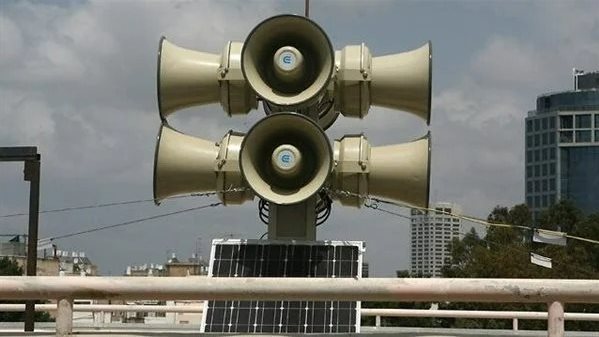
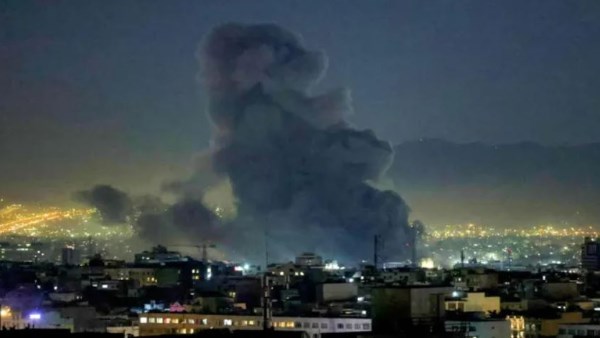
play Live Sign upShow navigation menuNavigation menuNewsShow more news sectionsAfricaAsiaUS & CanadaLatin AmericaEuropeAsia PacificWorld CupMiddle EastExplainedOpinionVideoMoreShow more sectionsFeaturesEconomySportHuman RightsClimate CrisisInvestigationsInteractivesIn PicturesScience & TechnologyPodcastsTravelSponsored Contentplay Live Click here to searchsearchSign upNavigation menucaret-leftUS-Israel war on IranStrait of HormuzWhat is Iran’s Pickaxe Mountain?Why have strikes resumed?Bodies of Evidencecaret-rightNews|US-Israel war on IranIran attacks US Gulf allies, causing a fire at Kuwait power plantKuwait and Bahrain report several rounds of Iranian missile, drone attacks; sirens reportedly sound in Jordan. xwhatsapp-strokecopylinkgoogleAdd Al Jazeera on GoogleinfoAn anti-US banner in Tehran, July 19 [AFP]By Al Jazeera Staff and AFPPublished On 19 Jul 202619 Jul 2026Iran has fired drones and missiles at Kuwait and Bahrain and claimed to have stopped two ships in the Strait of Hormuz after an eighth consecutive night of attacks by the United States. Kuwait and Bahrain reported multiple waves of Iranian strikes on Sunday, with Kuwaiti authorities saying one attack started a fire at a power and water plant. Both countries, which host US military installations, have borne the brunt of attacks by Iran on its Gulf neighbours since hostilities resumed this month all but shattering the US-Iran ceasefire. Kuwait’s Ministry of Electricity, Water and Renewable Energy condemned the “heinous Iranian aggression”, while Bahrain’s military said its air defences had also thwarted “treacherous” Iranian attacks. Iran’s army said that one of its Sunday attacks on Kuwait targeted a US ammunition depot at Camp al-Adiri and air defence radars at Ali Al Salem airbase, which hosts US personnel. In a statement on the IRIB broadcaster, Iran’s army said its soldiers would “remain firm and steadfast” in defending the Iranian people “against the enemies of Iran and humanity”. Also on Sunday, Israel’s military said an Iranian missile was fired towards the Jordanian city of Aqaba, as sirens reportedly sounded in Jordan. Israeli and Jordanian forces intercepted the Iranian missile, the Israeli military told AFP. Iran’s latest attacks follow a series of overnight US strikes on Iran that Washington said aimed to “punish” Islamic Revolutionary Guard Corps (IRGC) forces responsible for earlier attacks in Jordan that killed two US service members. The US military said the strikes also sought to “degrade Iran’s ability to threaten commercial shipping in the Strait of Hormuz”. The US attacks struck areas in Iran’s Hormozgan and Khuzestan provinces, as well as Qeshm Island, according to Iranian media reports. They were less intense than previous nights of US attacks, reported Al Jazeera’s Tohid Asadi from Tehran. Later on Sunday, Iran’s nuclear energy agency said the US attacked an under-construction nuclear power plant in the country’s south-west, which it condemned as a breach of international law. There were signs on Sunday of further turmoil in the Strait of Hormuz, where the IRGC said it blocked two ships that tried to use an “unsafe route”. It said both had been involved in an unspecified “accident”. The status of Hormuz has proven to be a major point of contention following the US-Iran Memorandum of Understanding signed last month, which extended the April ceasefire and agreed to the gradual reopening of the waterway. Iranian officials said Tehran has the right to continue managing shipping through the strait. The US says Iran does not control the waterway and reimposed its own blockade of Iranian ports. Paul Musgrave, professor of government at Georgetown University in Qatar, said Iran has the “upper hand” in terms of commitment to the war, which it sees as existential. “Since February, the asymmetry on how interests have been conducted has been clear: the regime in Tehran is fighting an existential war. The United States and Israel are fighting a war over policy choices,” Musgrave told Al Jazeera. Advertisement AboutAboutShow moreAbout UsCode of EthicsTerms and ConditionsEU/EEA Regulatory NoticePrivacy PolicyCookie PolicyCookie PreferencesAccessibility StatementSitemapWork for usConnectConnectShow moreContact UsUser Accounts HelpAdvertise with usStay ConnectedNewslettersChannel FinderTV SchedulePodcastsSubmit a TipPaid Partner ContentOur ChannelsOur ChannelsShow moreAl Jazeera ArabicAl Jazeera EnglishAl Jazeera Investigative UnitAl Jazeera MubasherAl Jazeera DocumentaryAl Jazeera BalkansAJ+Our NetworkOur NetworkShow moreAl Jazeera Centre for StudiesAl Jazeera Media InstituteLearn ArabicAl Jazeera Centre for Public Liberties & Human RightsAl Jazeera ForumAl Jazeera Hotel PartnersFollow Al Jazeera English:المصدر: Al Jazeera English | Source: Al Jazeera English
ملاحظة تحريرية | Editorial Note: نُشر هذا المقال في الأصل بواسطة Al Jazeera English. خبر (Khabr) هي منصة إعلامية أردنية مرخّصة تعمل بالذكاء الاصطناعي. نضيف قيمة تحريرية من خلال: تحليل ذكي للأخبار، ملخصات تلقائية، رواية صوتية بالذكاء الاصطناعي، ترجمة متعددة اللغات، وتدقيق الحقائق. هدفنا جعل الأخبار أكثر وضوحاً وسهولةً للقارئ العربي.
This article was originally published by Al Jazeera English. Khabr is a licensed Jordanian AI-powered news platform (Registration #82086). We add editorial value through: AI-powered news analysis, automated summaries, AI audio narration, multi-language translation (Arabic, English, French, Turkish), and AI fact-checking. Our mission is to make news more accessible and understandable for Arabic-speaking audiences worldwide.