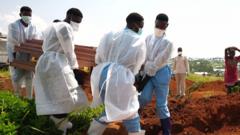
'I buried my parents one day after the other' - Ebola mourners learn how to grieve safely
•'I buried my parents one day after the other' - Ebola mourners learn how to grieve safely27 minutes agoShareSaveAdd as preferred on GoogleAnne SoyBunia, DR CongoBBCNone of the usual crowds attend buri...
•Today I have come to say goodbye to my mother."As he fills the grave with soil, he says he has also lost three sisters and a brother-in-law to Ebola."I want to say for all people [to hear] that Ebola...
•Stringent protocols have to be followed to stop it spreading - and safe burials are vital.One of several gravediggers hard at work at the cemetery tells me that 15 families were currently attending bu...
هذا الخبر من BBC News. خبر يقدم أدوات ذكاء اصطناعي للتلخيص والترجمة والاستماع.
ملاحظة تحريرية | Editorial Note: نُشر هذا المقال في الأصل بواسطة BBC News. خبر (Khabr) هي منصة إعلامية أردنية مرخّصة تعمل بالذكاء الاصطناعي. نضيف قيمة تحريرية من خلال: تحليل ذكي للأخبار، ملخصات تلقائية، رواية صوتية بالذكاء الاصطناعي، ترجمة متعددة اللغات، وتدقيق الحقائق. هدفنا جعل الأخبار أكثر وضوحاً وسهولةً للقارئ العربي.
This article was originally published by BBC News. Khabr is a licensed Jordanian AI-powered news platform (Registration #82086). We add editorial value through: AI-powered news analysis, automated summaries, AI audio narration, multi-language translation (Arabic, English, French, Turkish), and AI fact-checking. Our mission is to make news more accessible and understandable for Arabic-speaking audiences worldwide.