A strange week, at turns uplifting, unsettling, joyous and bemusing. And yet, as I put to bed another issue of the magazine, I find myself filled with a sense of sadness and menacing fear for the future.
Let’s start with the uplifting bit. My week began in northern France, where my wife and I had escaped with the children for a short half-term break by the sea. We were near Calais, the white cliffs of Dover visible on the horizon. The weather was blistering and we cycled, swam, played and felt a million miles from home even though we were barely 20 minutes from the Channel Tunnel. Bliss.
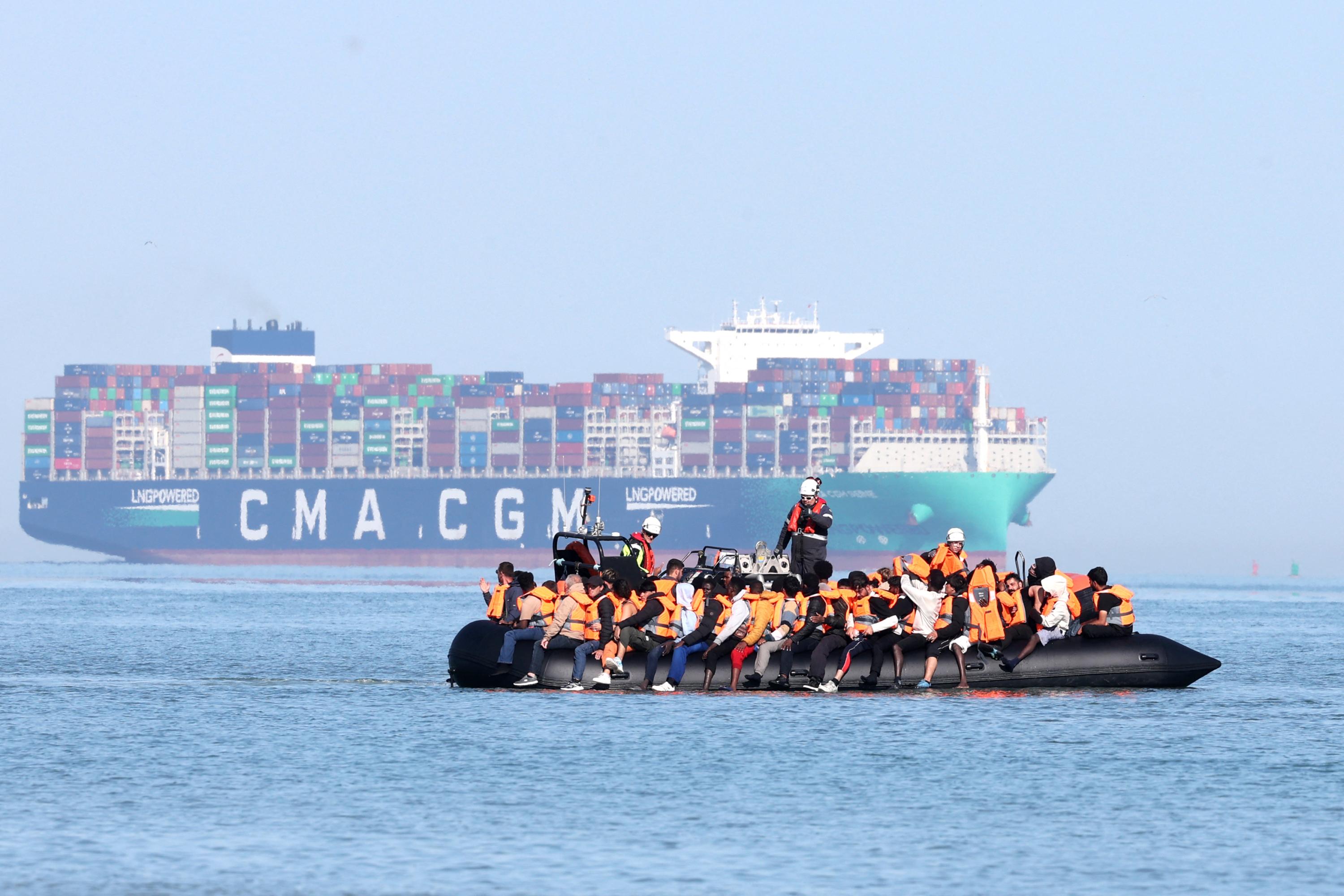
Yet, there was something unsettling about it all, too. As we walked along the beach one day, we spotted three gendarmes armed with guns heading out on to the sand. The obvious dawned: they were looking for small boats. When I spoke with one of the officers, he said the dinghies were leaving all the time, hidden in the dunes behind us. The next day, a warship appeared off the coast. I thought of a cartoon by Peter Brookes published in the Times in 1998 when Tony Blair was the all-conquering hero who had delivered peace in Northern Ireland. The comic depicts him walking on water. But in the background was a warning: a Titanic-like ship floating on the calm surface.
My son and I then travelled to Leipzig to watch Crystal Palace playing in the Uefa Conference League final. We arrived by train: Calais to Paris, Paris to Frankfurt, Frankfurt to Leipzig. It gives me some comfort to report that though British trains have become enragingly tardy, so too have theirs. We were delayed for two hours getting to Paris, while the train to Germany was held up at the border so police could check documents. We are living in an era of migration, and that vague sense of menace that now hangs everywhere.
Leipzig was a joyous scene when we got there: tens of thousands of south Londoners basking in the glory of the club’s first ever European final. And here’s a little media secret: Arsenal may have become “London FC” – the capital’s first global superclub – but Palace has quietly become the club of another, less fashionable set. In Leipzig, I bumped into the Guardian’s policy editor, Kiran Stacey, the Financial Times’s world news editor, Alex Barker, and the Fabian Society’s Joe Dromey. Also at the game was the FT’s political editor, George Parker, and the former business secretary Greg Clark. Over dinner, Kiran and I concluded that where older generations of journalists might have lived in north or west London and supported Arsenal or Chelsea, today we can’t afford either and so congregate in Lewisham, Camberwell, Bromley and Croydon.
From the joy of Leipzig to my bemusing return to London. On Monday, a text arrived from a friend with a screenshot of messages sent between Peter Mandelson and the former Downing Street director of communications Steph Driver, in which the former US ambassador described me as “essentially benign” but suffering from “Patrick Maguire syndrome”. Patrick, a friend, is the Times’s chief political commentator. What does it mean to suffer from his affliction? Perhaps we were both too critical of Starmer or too ponderous in our analysis, too “chin-strokey”. On reflection, I think it is that we are both considered too provincial in our politics, not quite “sound” in some way – not Blairite.
I thought about this in light of Blair’s intervention last week, the most serious analysis of the Starmer government’s failures from a major political figure in years. Yet my condition means I cannot help but see the holes in his argument. Blair insists Britain’s problems began in 2007 – the year he left office. This was the year Labour began moving left and the migration challenge changed completely, he argues. But this bypasses the 2008 financial crisis, which destroyed the political economy on which New Labour was built, and the fact that Nigel Farage was a political force before Blair left office. Britain’s problems are not merely those of political will – the failure of post-Blair politicians to be as Blairite as he wished – but structural challenges with roots reaching beyond 2007 .
All of which brings me to the sense of dread that capped off this week: the footage of the murder of Henry Nowak, handcuffed by police as he lay dying, accused of racism by the man who had stabbed him. The images of Henry’s final moments are almost too upsetting to comprehend. But so too is the sense of menace about what is coming in our politics and our national life if things carry on as they are. That Titanic on the horizon haunts my imagination.
[Further reading: Andy Burnham’s door-knock to Downing Street]