⚡ عاجل: كريستيانو رونالدو يُتوّج كأفضل لاعب كرة قدم في العالم●⚡ أخبار عاجلة تتابعونها لحظة بلحظة على خبر●⚡ تابعوا آخر المستجدات والأحداث من حول العالم●
AI اقتراحات ذكية
AI مباشر|--مشاهد مباشر
1,073,742مقال401مصدر نشط228قناة مباشرة3,746خبر اليوم
آخر تحديث:منذ 3 ثواني
How the UAE’s multiple sclerosis community keeps rising: Swimming, cycling and celebrating triumphs
•They move with MS, not for it.There's a radiating sense of strength that emerges from the UAE's National Multiple Sclerosis Society.
•In the space between fatigue and hope, they build full lives anyway, be it through showing up for work, parenting, or training for the Open Masters Games, that was held in Abu Dhabi, earlier this year...
•'I want to live as normally as possible'For Abu Dhabi-based Marie Meillaud, living with multiple sclerosis begins with perspective.
هذا الخبر من Gulf News. خبر يقدم أدوات ذكاء اصطناعي للتلخيص والترجمة والاستماع.
There's a radiating sense of strength that emerges from the UAE's National Multiple Sclerosis Society. In the space between fatigue and hope, they build full lives anyway, be it through showing up for work, parenting, or training for the Open Masters Games, that was held in Abu Dhabi, earlier this year.
It's about playing the long game, and they play it well.
'I want to live as normally as possible'
For Abu Dhabi-based Marie Meillaud, living with multiple sclerosis begins with perspective. Her initial diagnosis felt like a tsunami. But, she decided to move forward rather than fighting it.
She holds the philosophy close to her heart, and it forms the basis of her professional and personal life. Meillaud wants to live as normally as possible, as she emphasises. “I have a demanding job in operations, where I lead a team, maintain a busy social life, and raise 10-year-old twins as a normal family. I constantly set new personal goals for myself, including challenges like the Open Masters Games,” she says.
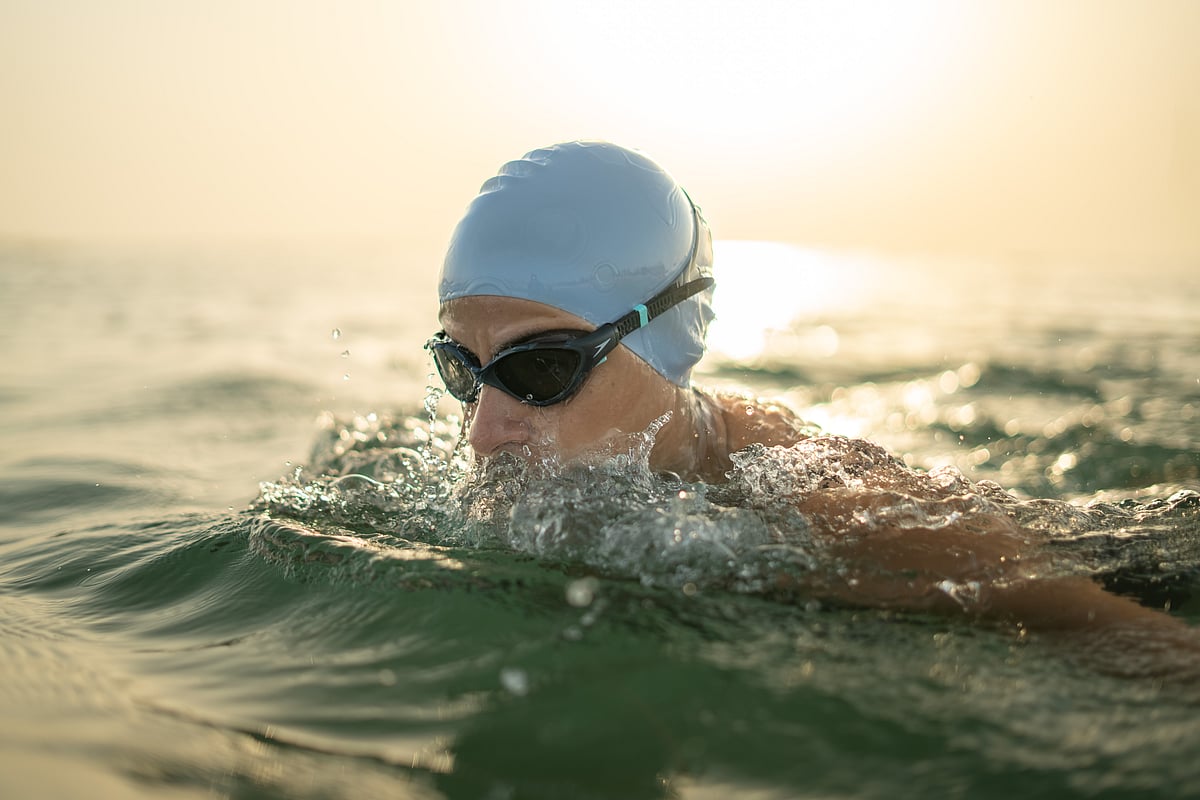
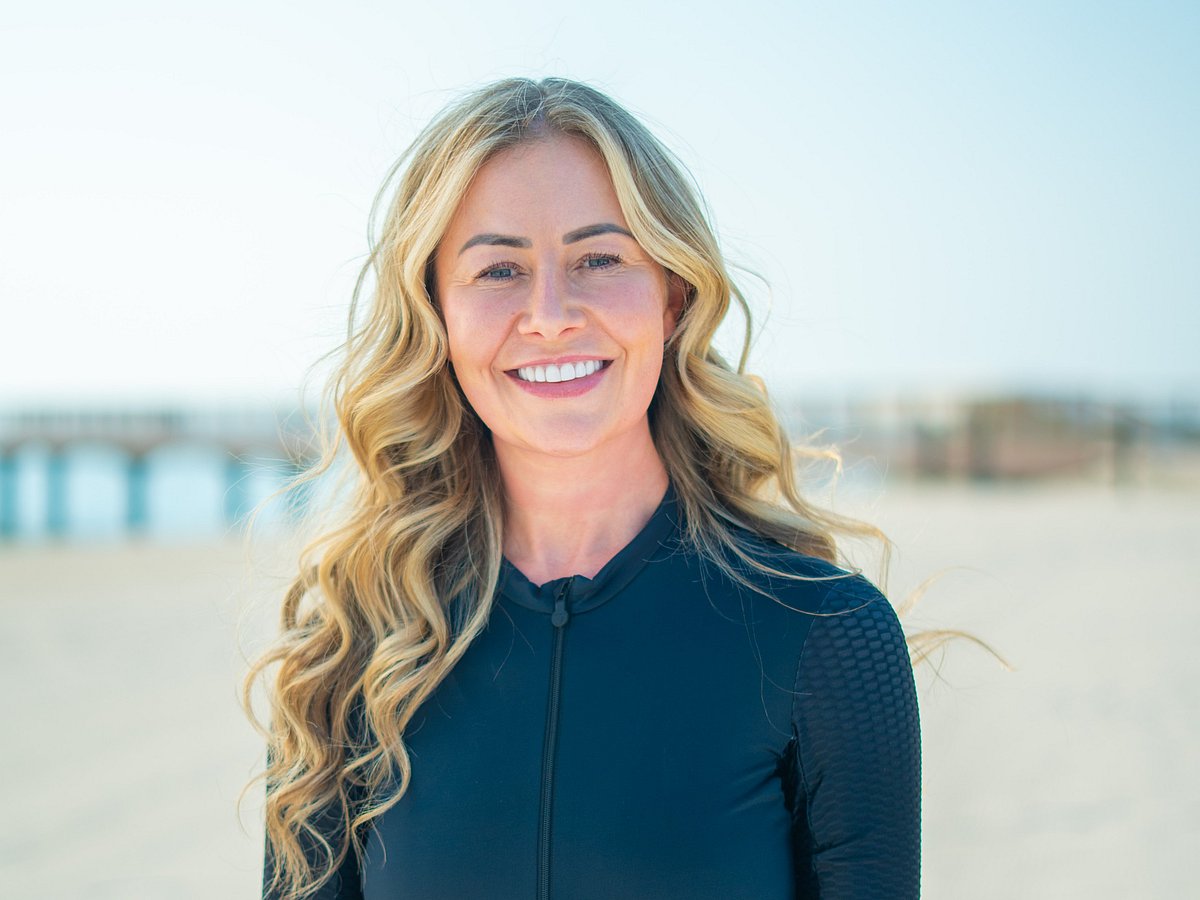
Marie Meillaud participated in the Open Master Games, this year.
MS doesn’t cloud her mind every morning. But its presence is always felt. She respects it, and is grateful that her condition is relatively stable. However, the fatigue that accompanies the illness, feels endless. “It is my main challenge. I prioritise sleep and try to go to bed early, even though people living with MS know there’s no real trick to overcoming the fatigue.”
If she pushes too hard, her body reminds her to slow down.
Sometimes, through physical signals such as burning sensations or numbness, or a sudden energy crash. “My steady approach means treating my energy as a precious resource and managing it carefully.”
This awareness helps her move through life. Before the Open Masters Games, she wasn’t excercising much and didn’t feel the need to bee active. “These games have been an eye-opener for me and made me realise how important daily physical activity is. You should listen to your body and take care of it.”
And perhaps most importantly, she draws a clear line between herself and her diagnosis: “MS is something I live with; it is not who I am.”
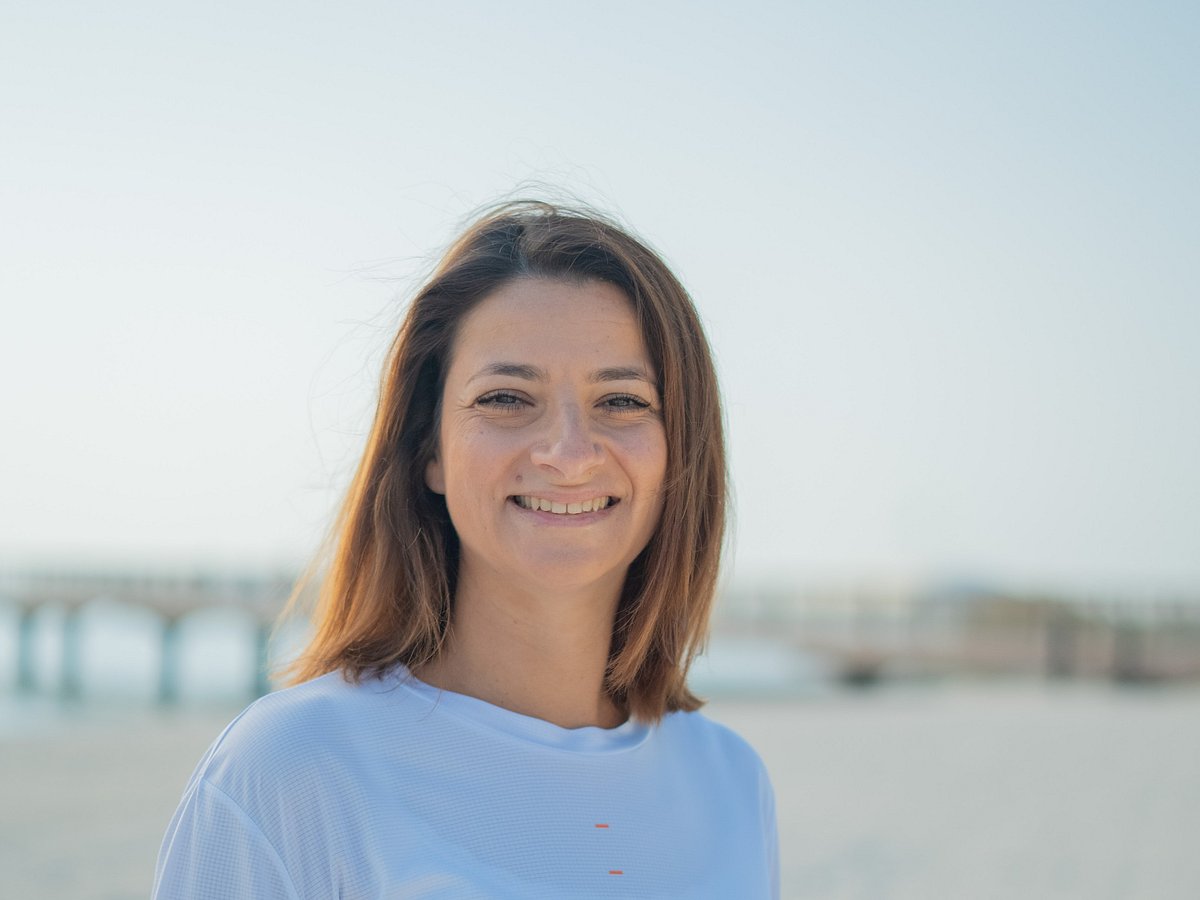
Marie Meillaud: 'I have a demanding job in operations, where I lead a team, maintain a busy social life, and raise 10-year-old twins as a normal family....'
The invisible weight
MS is an invisible illness. And no doubt, it's exhausting. As Meillaud explains, the ‘invisibility’ tends to make her feel lonely or misunderstood. After all, if people can’t see what you’re going through, they don’t quite understand it.
Yet, ironically, it has also given her strength. "The world doesn’t constantly see or understand my challenges, I’ve learned to stand tall within it. My family, friends, and colleagues may not always feel what I feel, but them treating me as capable, present, and strong has quietly helped me remain exactly that.”
Finding rhythm, building community
When Meillaud was first diagnosed, support systems were limited. Today, that has changed, owing to organisations like the National Multiple Sclerosis Society. “I have always chosen openness over silence when it comes to my MS. I am proud to be a Person of Determination, and even prouder to advocate for MS awareness,” she says. Her diagnosis came a time when there was no established or active MS community in the UAE, which made the beginning feel more unpredictable.
Yet, after the launch of the National Multiple Sclerosis Society, she knows one thing for sure: She isn’t alone. “Even if I cannot attend every event, simply knowing that I’m not alone, brings immense comfort and strength.”
Love and support persists in different forms at home, and that includes routine. The simple consistency of good sleep, healthy homemade meals, regular exercise and planning are just a few factors. “Probably influenced by my job, I need things to be organised, structured, and well planned. Every weekend, I prepare the full weekly menu for our family, from lunches to dinners. It helps me stay focused and prevents last-minute changes,” she says.
A family that moves as one
The family motto is clear: MS exists, but it doesn’t lead their lives.
For Marie and her partner Sirik, MS has been a shared journey. As they say, they navigate daily life as a team, choosing openness over silence. “Our twins were born just two years after Marie’s diagnosis. When they turned six, we started explaining what MS is, using simple, child-appropriate words so they could understand without fear,” explains Sirik.
They work around the hardest days, but the rest of the days have the sense of normalcy, work, school, social dinners, busy weekends and outdoor activities. More importantly, there’s the sound of laughter filling their home.
As Sirik adds, he ensures that Meillaud feels supported and seen.
They can’t hide MS, but neither is it the centre of their lives.
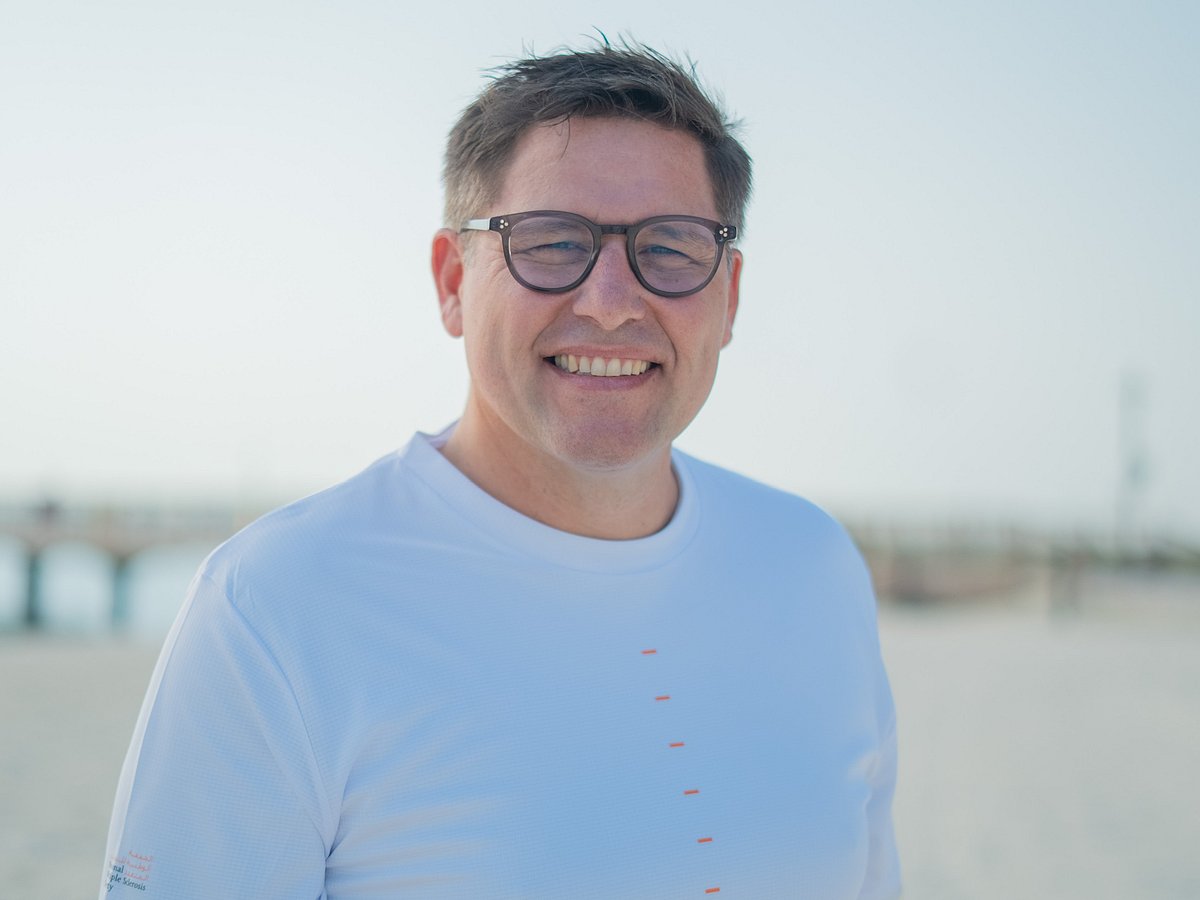
Sirik Deurloo, Marie Meillaud's husband.
As he adds, they weren’t naturally 'sporty' people, yet were fully committed and achieved something they're immensely proud of. "For four months, our routine and even our family rhythm shifted. Three times a week, we drove to an Olympic pool for practice before the kids were awake. It wasn’t always easy, but even if they weren’t training with us, they were part of the journey and encouraged us in their own way," he says.
The discipline, support for one another, and celebration of victories side by side strengthened our bond and deepened an understanding of each other. "It reminded us that when we move in the same direction together, we are capable of far more than we imagine."
The finish line that changed everything
For many in this community, the Open Masters Games earlier this year was a turning point. As Meillaud says, when she first expressed interest in representing NMSS at the Games, she wasn’t aware of the journey that awaited her.
She didn’t know how to swim freestyle, either. “It came at a time when I was going through health and mental challenges and truly needed a personal goal to regain motivation and direction in my life.”
And so began four months of intense, regular training, filled with doubts and moments of wanting to quit.
However, she never felt alone. “I was supported, trusted, and constantly encouraged not to give up. The NMSS team and my family stood by me in the most beautiful way, right up to the finish line, cheering with signs during our races. It was just amazing,” she says.
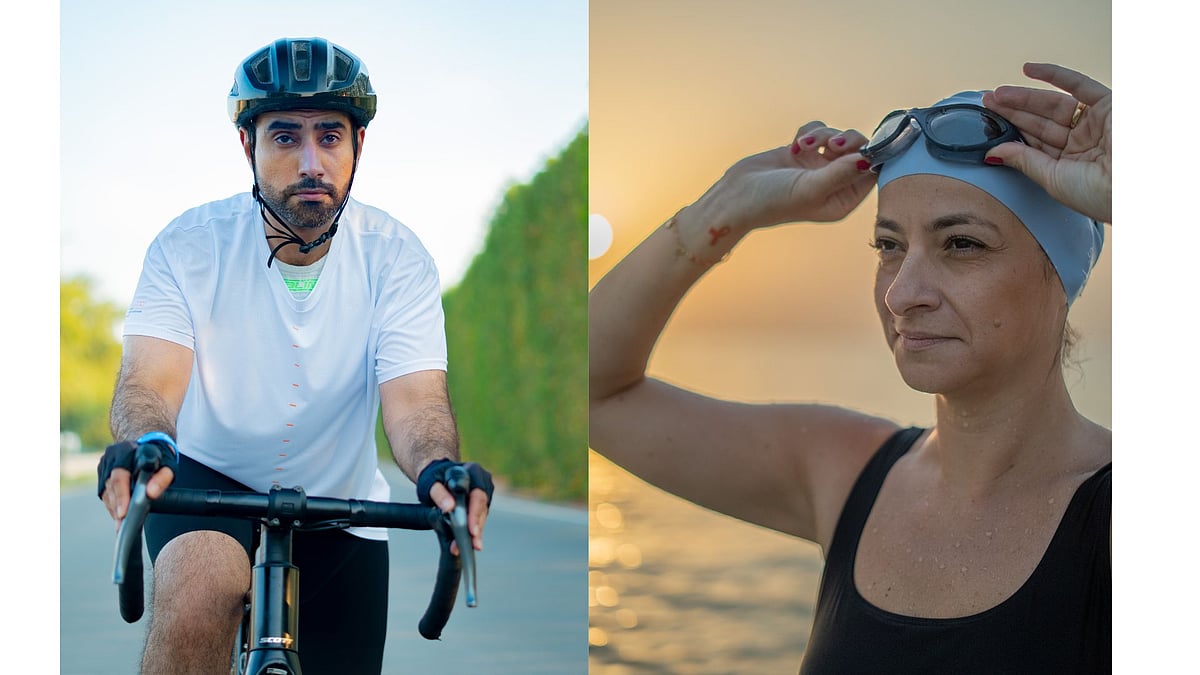
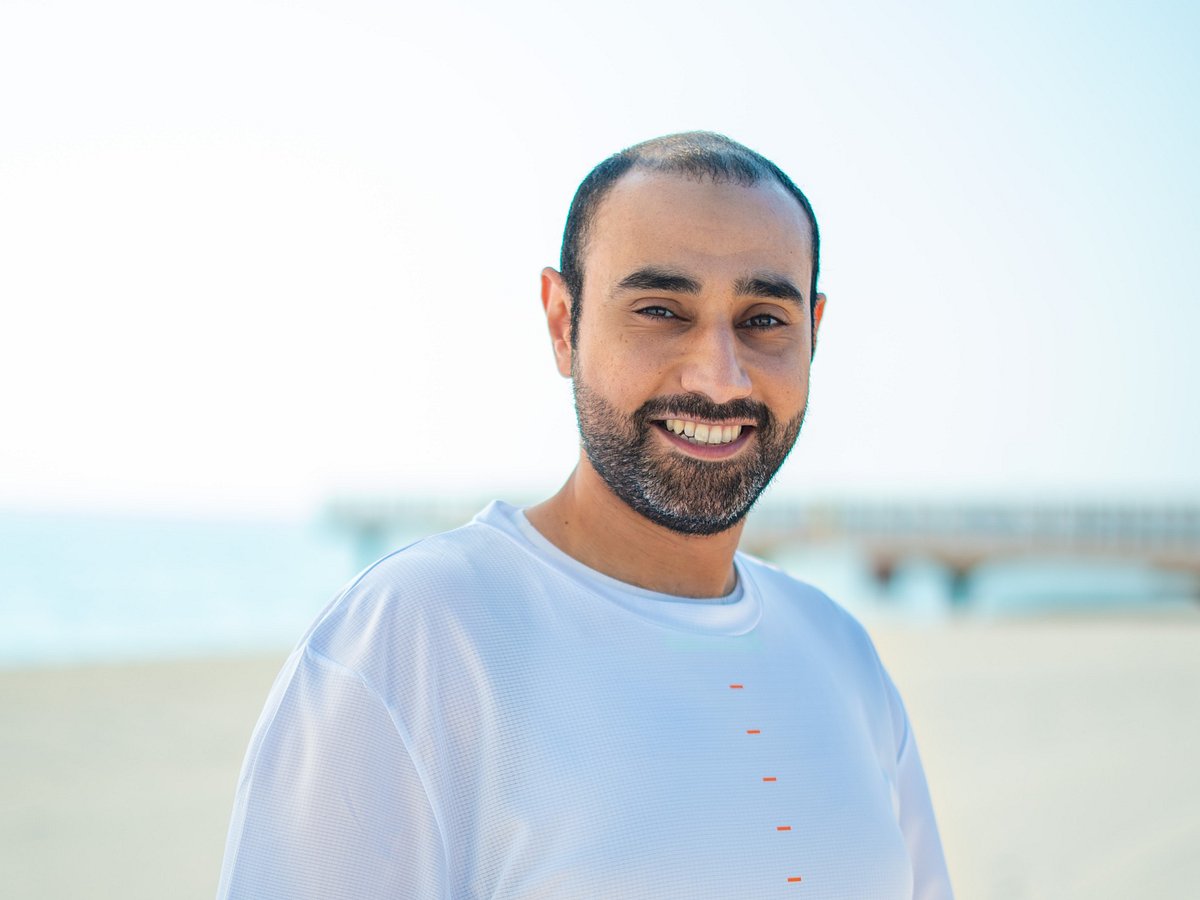
Mohamed Al Harbi: Cycling was a journey back to control and regaining balance.
Movement as medicine
If Meillaud found pride in swimming, in another corner of Abu Dhabi, Mohamed Al Harbi found freedom on a bike.
For Al Harbi, the journey with MS began long before a diagnosis, which was marked by confusion, imbalance, and uncertainty. Cycling was a journey back to control and a means to steady himself when his body felt unpredictable. “Before my diagnosis, I was experiencing fatigue and coordination issues without understanding why,” he says.
Yet, once he got on a bike, the answers felt different, almost therapeutic. Physically, it helped manage the stiffness and fatigue. Mentally, it cleared his head, reducing stress and helped him focus. “On days when symptoms feel heavy, even a short ride reminds me that I am still strong and capable,” he says.
And the days when MS tries to slow him down? The movement pushes him forward. “Each time I push through a ride or complete a workout, I feel like I am taking charge of my body instead of letting the condition define me."
"MS teaches you to listen to your body, he says. Some days require rest. Others allow strength," says Mohamed Al Harbi
Even the diagnosis, though difficult, brought clarity amid the fear and emotions it stirred. Yet, it was tinged with a sense of relief. “Finally understanding what was happening allowed me to take action. I became more intentional about my health, my rest, and my movement. Exercise stopped being optional and became part of my treatment and daily routine,” he says.
And, with that, came a few learnings. MS teaches you to listen to your body, he says. Some days require rest. Others allow strength. “It has taught me patience with setbacks, resilience, and gratitude for every small victory.”
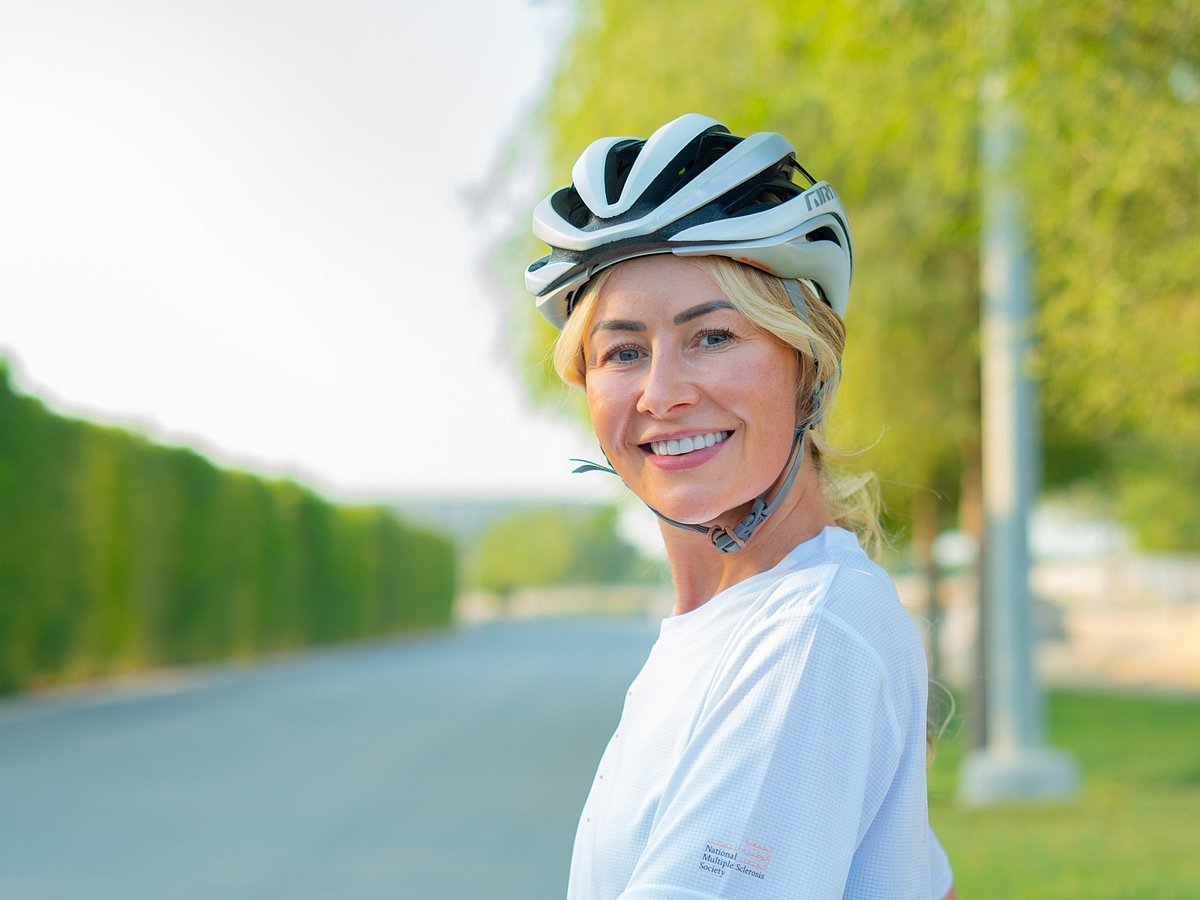
Deborah Dunne completed the 40km road race, this year, Open Masters Games
Strength in small steps
Some found freedom in swimming, others tried cycling, and Deborah Dunne took on both spinning classes and cycling.
This particular movement has become an important part of her life now. “Attending Crank, the spinning classes I go to, has played such a huge role in keeping me motivated and consistent. It gives me structure and a space to focus and clear my mind. Even walking my dogs helps me reset,” she says.
These moments of silence allow her to reconnect with herself. She is reminded, of what the body can still do. That steady practice led her to a powerful achievement: Completing a 40km road race, in the Open Master Games this year.
Breaking it down, she says, “Preparing for and completing the 40km road race in 1 hour and 26 minutes was a powerful moment for me. It wasn’t just about the time, but about what it represented, resilience and trusting my body.”
Crossing the finish line was deeply emotional. Pride swelled, spilling over into tears of joy. “I actually cried with joy before the finish line because of the incredible support I received from the National Multiple Sclerosis Society, my husband Alan, my friends, and of course my family.”
As she puts it, it was never just about finishing the race. It was about realising she had carried the MS community with her, and done it proud. MS, she proved, could not hold her back.
Deborah Dunne
Changing what’s possible
MS does not take charge of their lives.
“I want people to understand that we are normal people living full, meaningful lives. MS does not define who we are,” Meillaud says.
But she also calls for nuance. “Invisible symptoms don’t mean we don’t need support. And visible symptoms don’t mean we are already supported enough. MS is complex, and living with it long term requires empathy, patience, and awareness.”
For Al Harbi, the message is one of possibility. A diagnosis is not the end of your dreams. “With determination, support, and movement adapted to your body, it’s possible to live fully, stay active, and achieve more than you ever imagined.”
And for families walking this path together, the lesson is simple. When you’re surrounded by loved ones, anything is possible. It gives you strength to push through the hardest moments. And gradually, the strength keeps multiplying.
One day, you realise just how far you’ve come. And somehow, together, you keep going.
ملاحظة تحريرية | Editorial Note:
نُشر هذا المقال في الأصل بواسطة Gulf News.
خبر (Khabr) هي منصة إعلامية أردنية مرخّصة تعمل بالذكاء الاصطناعي.
نضيف قيمة تحريرية من خلال: تحليل ذكي للأخبار، ملخصات تلقائية، رواية صوتية بالذكاء الاصطناعي، ترجمة متعددة اللغات، وتدقيق الحقائق.
هدفنا جعل الأخبار أكثر وضوحاً وسهولةً للقارئ العربي.
This article was originally published by Gulf News.
Khabr is a licensed Jordanian AI-powered news platform (Registration #82086).
We add editorial value through: AI-powered news analysis, automated summaries, AI audio narration, multi-language translation (Arabic, English, French, Turkish), and AI fact-checking.
Our mission is to make news more accessible and understandable for Arabic-speaking audiences worldwide.
هذا الخبر ضمن تغطية خبر لقسم صحة.
نقدّم لك تحليلات ذكية وملخصات يومية لأهم الأخبار من مصادر موثوقة متعددة.
المصدر: Gulf News.
يوجد 6 مقالات مرتبطة بهذا الموضوع.
This article is part of Khabr's coverage of Health.
We provide AI-powered analysis, summaries, and multi-source aggregation to keep you informed.
Source: Gulf News.
Tags: multiple sclerosis, community support, sports.
🍪 نستخدم ملفات تعريف الارتباط لتحسين تجربتك وعرض الإعلانات المخصصة. باستخدامك للموقع، فإنك توافق على سياسة ملفات تعريف الارتباط وسياسة الخصوصية.
We use cookies to enhance your experience and show personalized ads. By using this site, you agree to our Cookie Policy and Privacy Policy.
🔍
FREEFree 1GB Internet + Free International Calls
$1 trial — eSIM in 190+ countries — No roaming charges