How Saudi Arabia's spending spree reached the end of the line
•How Saudi Arabia's spending spree reached the end of the linePublished25 May 2026BySebastian UsherGlobal affairs correspondentAutocratic monarchs once left an echo of their glory in the ruins of the m...
•Those monumental physical traces are to be found in the fertile plains, mountainsides and deserts of the Middle East.
•But one of their most prominent modern counterparts may only have a digital footprint to leave behind for some of his most ambitious concepts.A decade ago, the Crown Prince of Saudi Arabia Mohammed bi...
هذا الخبر من BBC الشرق الأوسط. خبر يقدم أدوات ذكاء اصطناعي للتلخيص والترجمة والاستماع.
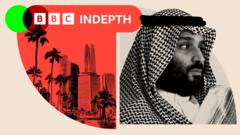
How Saudi Arabia's spending spree reached the end of the linePublished25 May 2026BySebastian UsherGlobal affairs correspondentAutocratic monarchs once left an echo of their glory in the ruins of the megaprojects they commanded at the peak of their unchallenged power. Those monumental physical traces are to be found in the fertile plains, mountainsides and deserts of the Middle East. But one of their most prominent modern counterparts may only have a digital footprint to leave behind for some of his most ambitious concepts.A decade ago, the Crown Prince of Saudi Arabia Mohammed bin Salman – or MBS as he is widely known – decreed a revisioning of his country that leapt from the realm of science fiction. It was called Vision 2030. Extraordinary monolithic structures were to help bring forth new technological marvels not just for the Kingdom but for the world.Those ideas were made manifest in lavish PR material conjuring up fantastical landscapes that attracted reams of coverage that mingled awe and derision. It was made possible by the near $1trn (£744bn) sovereign wealth fund of Saudi Arabia (PIF) whose riches, so dependent on oil, were to be used to create the foundation for a future without oil.Image source, NEOMImage caption, Saudi has taken on mammoth building projects such as this one called Gidori as part of its regeneration driveFour years from 2030, there has now been, perhaps predictably, a retrenchment. Part of that is down to financial imperatives, as a big fall in oil prices before the current war in the Middle East meant that even Saudi Arabia's extraordinary wealth took a hit.Even though those prices have now shot up because of the war, the uncertainty created by the conflict will continue to put constraints on Saudi revenue and spending. And the influx of foreign investment in these hyper-expensive visionary projects has never materialised to the degree on which the Saudis had been banking.But is it a recalibration or a retreat?From fantasy to...المصدر: BBC الشرق الأوسط | Source: BBC الشرق الأوسط
ملاحظة تحريرية | Editorial Note: نُشر هذا المقال في الأصل بواسطة BBC الشرق الأوسط. خبر (Khabr) هي منصة إعلامية أردنية مرخّصة تعمل بالذكاء الاصطناعي. نضيف قيمة تحريرية من خلال: تحليل ذكي للأخبار، ملخصات تلقائية، رواية صوتية بالذكاء الاصطناعي، ترجمة متعددة اللغات، وتدقيق الحقائق. هدفنا جعل الأخبار أكثر وضوحاً وسهولةً للقارئ العربي.
This article was originally published by BBC الشرق الأوسط. Khabr is a licensed Jordanian AI-powered news platform (Registration #82086). We add editorial value through: AI-powered news analysis, automated summaries, AI audio narration, multi-language translation (Arabic, English, French, Turkish), and AI fact-checking. Our mission is to make news more accessible and understandable for Arabic-speaking audiences worldwide.