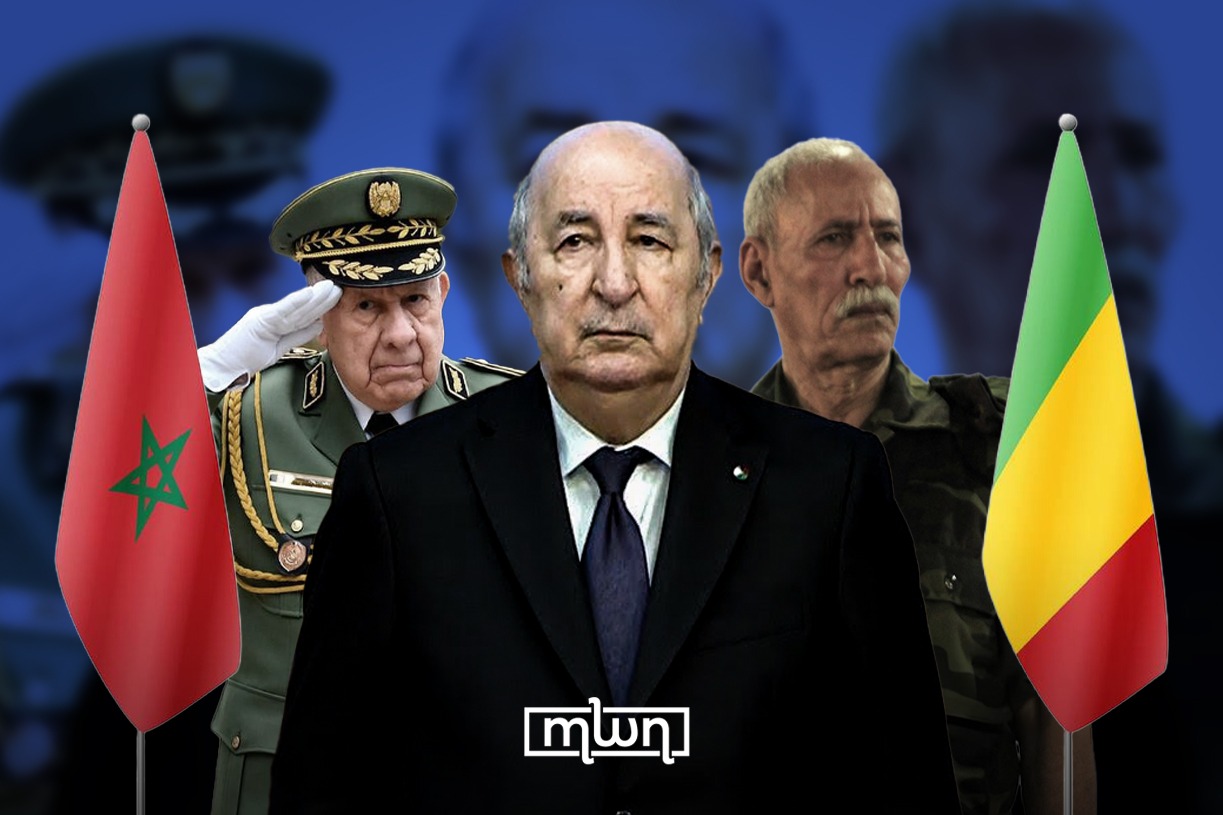
Bob Dylan’s iconic 1965 song “Like a Rolling Stone” sounds like a cruel wake-up call for people who knit a coat of lies and believe it fits in the highest stage of good fashion. Every word of Dylan’s song applies to the Polisario and to its backer and main party to the North-West Africa conflict, Algeria.
The words are so strong and make no mercy at all: ‘Once upon a time you dressed so fine/Threw the bums a dime in your prime, didn’t you? People call and say, “Beware, doll, you’re bound to fall” ‘You thought they were all kidding you/ You used to laugh about/ Everybody that was hanging out/ Now you don’t talk so loud/ Now you don’t seem too proud/ About having to be scrounging your next meal (…)’.
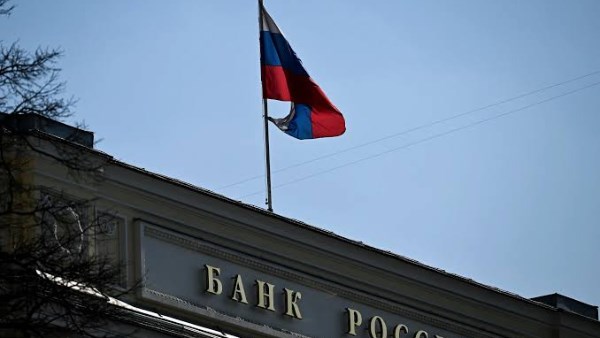
On April 10, 2026, Mali withdrew its recognition of the so-called SADR. This was a huge step given the fact that Mali was among the first countries to recognize this rush-to-make entity in 1980. More strikingly, the move stresses that the era of diplomatic blackmail and security fait accompli with respect to the North-West African conflict is over. Mali is known for being a beacon of great civilization that dates back centuries. This very fact has impacted its foreign policy and diplomacy over the last five decades.
Mali is a country that breathes values and spreads them all around its geographic neighborhood. It nurtures them constantly so to serve as a guideline to remind of the civilizational imprint that has always been his own for centuries. This imprint is marked by the wisdom that sets the timing and the pace of strategic decisions.
A historical reminder would be useful to refresh the readers’ memories prior to sharing my take on such an unusual event. Indeed, the civilizational imprint mentioned earlier is clearly transcribed in the reference manuscripts of Abderrahmane Es-Saadi, “Tarikh as-Soudane (تاريخ السودان written in 1650 and translated into French by Houdas Octave in 1964)” and Mahmoud Kati (Tarikh el-Fettach تاريخ الفتاش completed in 1655 by Ibn al-Mokhtar and translated into French by Houdas Octave and Delafosse Maurice in 2013).
It is worth mentioning the contribution of contemporary Malian historians, notably Adam Bâ Konaré who wrote a master-piece of a study that dismisses many ill-interpretations about the relationships between Morocco and Mali. Besides, several izajat (confirmation degree) and manuscripts rooted in Moroccan and Sub-Saharan African brotherhoods’ traditions (Sufi tarîqahs) are a testimony of such deep and fruitful relationship.
This civilizational imprint is highly carved into the minds of enlightened individuals as Amadou Hambathé Bâ, whose quote ‘’In Africa, when an elder dies, it is a library that burns’’ cannot be but inspirational for the new African generations.
Nothing but the truth
Indeed, a library such as the one in Timbuktu, which gives evidence to the common heritage between Morocco and Mali thanks to Ahmed Baba. Ahmed Baba was a theologian and scholar who lived during the Saadian Empire’s splendid era. Pending Morocco’s conquest of Sudan (nowasday Mali), which ended with the collapse of the Songhai Empire (1594), Ahmed Baba was arrested and deported to Morocco after being charged with sedition.
In the aftermath of the death of Sultan Ahmed al-Mansur, Ahmed Baba was released by his successor Sultan Zaydan an-Nasser. The latter greeted him in his court after he learned about his outstanding knowledge as a theologian and man of letters. He returned to Timbuktu in 1608, and died a few years later.
North Africa and Sudan history witnessed ups and downs. Yet, historians of colonization and military ethnology’s amateurs focus only on the dramatic episodes of the fall of the Songhai Empire following Ahmed al-Mansour’s military intervention (1590-1599).
These historians rarely mention that Morocco’s intervention took place because the Turks settled in Algiers and the Portuguese on the Atlantic coasts and were trying to sever Morocco from its African roots.
They overlook the exemplary relations between Morocco under the rule of the dynasty of Merinids and the Mali Empire ruled back then by the legendary Mansa (Ganga) Musa (1312-1337). It seemed that the main concern of the historians of the colonization era was to bring about a political and cultural rift to depict Morocco as an empire operating with a hegemonic DNA.
In the aftermath of their independence, Morocco and Mali topped the list of the founders of the Casablanca Group (1960-1961) alongside Egypt, Ghana, Guinea (Conakry), Libya, and Algeria (provisional government) and were firmly engaged in building strong ties to advance the African spirit of solidarity and common fate. Yet, the way this commitment was perceived sparked dichotomous interpretations about how independent Africa should be built.
The relations between Morocco and Mali could have reached an exemplary level hadn’t the Sand War between Morocco and Algeria in 1963 been waged. History will remember that it was in Bamako that a declaration to end hostilities was signed between Morocco and Algeria on February 20, 1964. Mali and Ethiopia under the aegis of the Organization of African Unity (OAU) played a big role to bring peace back between the two North African countries. At the time Modibo Keita was president of Mali (1960-1968) and played a tremendous role within the Casablanca Group.
At the origin of the conflict between Morocco and Algeria were the border lines inherited from colonization that the uti possidetis juris rule adopted in haste made more complex to deal with. A rule praised at the time, which would later be the source of border conflicts that would erupt over the next five decades. Countries like Tunisia, Senegal, Mauritania (claimed by Morocco at the time), Egypt, etc., supported Algeria, which smartly played the role as a victim of Morocco’s alleged irredentism.
Egypt, indeed, which the Algerian President Abdelmadjid Tebboune recently praised for having militarily supported Algeria during the Sand War. He did it on February 7, 2026, during his periodic meeting with the Algerian national press. It is equally worth recalling that during the Egyptian military intervention, Hosni Mubarak, who was then a jet pilot, was captured by the Moroccan citizens and handed over to the military officers. His plan was crushed, and it was easier for these people to capture him. Later, the late King Hassan II freed him upon Gamal Abdunnasir’s request, who made a solemn commitment to turn over the page of enmity between Morocco and Egypt.
The same Moubarak plays a crucial role in the release of Algerian soldiers (some of whom are top decision-makers in Algeria nowadays) captured by the Moroccan army during the Amgala I war in the Moroccan Sahara that took place in January 27-29, 1976).
Destiny has many tricks up its sleeve. On April 6, 2026, Egypt set aside its reservations and confirmed its recognition of Moroccan sovereignty over its southern provinces. This decision was made on the occasion of the first session of the High Coordination and Monitoring Commission meeting, held in Cairo.
History will also record those countries supposedly close to Morocco that fooled it during its battle for the recovery of its Southern provinces between 1960 and 1990. They disappeared at a time when the issue of its territorial integrity was going through hard times
The Sand war: truth or dare and false
In the aftermath of the overthrow of Modibo Keita, Mali takes a trajectory harmful to Morocco’s interests. General Moussa Traoré rose to power on November 19, 1968, and made it happen; no time wasted. Then, Mali became one of the first countries to recognize the so-called SADR on July 4, 1980.
As a result, diplomatic relations with Mali go through a long period of tension. However, Morocco opts for a policy of non-rupture, within the framework of a more coherent vision aimed at convincing African countries of the rightfulness of its cause. The late King Hassan II preferred the adage “Let time take its course.” Relations only resumed normally on May 16, 1988 between Rabat and Bamako.
Assuming that Mali has adopted fundamentally hostile positions would only confirm a fact for which examples abound in the arena. Beside the recognition of the so-called-SADR, the Malian president Moussa Traoré gets involved in the mediation between Mauritania and the Polisario Front during the 16th OAU Summit in Monrovia (July 17-20, 1979).
Traoré’s mediation led to the signing of a peace agreement between the two, paving the way for Nouakchott to hand over Terris al-Gharbiyya (Oued Eddhab) to the Polisario in 1979. Fortunately, Morocco does not back down and, implementing its commitments made under the Tripartite Agreement of Madrid, signed in 1975, takes over this part of its southern provinces.
Similarly, throughout the 1980s and 1990s, the leaders of the Polisario were received with honors in Bamako. This unnecessary gesture placed the Arab and African diplomatic corps (with the exception of Algeria and Libya) in an awkward position. Because, according to the protocol adopted at the time by the Malian Ministry of Foreign Affairs, the Arab and African diplomatic corps was invited to participate in welcoming the heads of state, particularly African and Arab, at the airport. The dean of the diplomatic corps of Palestinian nationality (a former student of Moroccan universities) tried to convey the dismay of these diplomats. In vain.
The situation slightly improved toward the end of Moussa Traoré’s presidency. After the coup d’état, a smooth relationship resumed, yet without change in the official position of Mali with respect to the North-West African conflict. However, in 1991, the Malian government made the decision not to co-author the Algerian resolution hostile to Morocco’s interest before the Fourth Committee of the United Nations General Assembly. Then, over time, this position was sustained despite Algerian aggressive pressures.
One of the funniest things back then was the issue of Morocco’s map. The map of Africa was displayed and sold in bookstores, showing Morocco without its southern provinces. This brings me to share the story of a street vendor who used this issue to make money. One day, he stops by the Moroccan diplomatic chancellery to sell a beautiful map of Africa.
The borders of Morocco are amputated. His attention is brought to such a big anomaly. He apologizes and says he mixed up the sets of maps. He rushes out and returns with another set that includes the map of Morocco, featuring its southern provinces.
The merchant proposes that the Embassy buy both sets of maps and thus solve the problem once and for all. He makes the same proposal to the Algerian Embassy in Bamako. The map dealer defends himself by saying he has no choice: he has to make his living at any expense. This, once again, raises the issues of blackmailing that is familiar in that neighborhood.
How, then, can one explain the revolving diplomatic positions of Mali? My first observation is the response of a Malian diplomat with extensive knowledge and expertise in Maghreb and African affairs. He says that Mali has the Algerian knife at its throat. Mali can’t do anything about it and hopes that Morocco understands.
Exactly! Mali itself is threatened by separatism in the northern part of the country. Not only because of the Tuareg issue (1963-1990-2006-2012 and 2023), but also out of fear of seeing the United States’ Sahara project concocted by Muammar Gaddafi implemented. Mali (like Niger, Mauritania, and Chad) would have lost a large part of its territory if a direct confrontation had occurred with Algeria and Libya.
It is no surprise then that these countries, in addition to Tunisia, were forced by Algeria to sign border agreements in 1983 during the OAU harsh bargain on the admission of the so-called SADR. A situation that led to Morocco’s withdrawal from the pan-African organization in 1984. The OAU is already being held hostage by a handful of countries, including Algeria and Nigeria, to which South Africa will be added in 1993-1994.
Unwavering Morocco’s commitments to African Unity
However, seasoned diplomats and observers have been confused to witness Mali with its balanced diplomacy in the aftermath of its independence being blackmailed and not showing a strong retaliation. The country owed nothing to Algeria. Bamako could have used its contribution to the Algerian national liberation struggle, recently revealed through the dissemination of a statement attributed to Abdelaziz Bouteflika, to challenge his detractors.
This information was withheld until last year when Algeria crossed the threshold of diplomatic sound behavior. Nevertheless, the Malians were well aware of who was behind the arrogance of the Algerians: France.
All the Algerian mediations that led to the agreement for peace and reconciliation in Mali (referred to as the Algiers process –May and June 2015) were remotely supervised by France. Three examples may sustain this argument and can be laid down as follow.
Firstly, amidst the turmoil between Morocco, Mali and Algeria, France steps in. The Frensh president Francois Mitterrand sharpens its weapons and sets out to reconquer sub-Saharan Africa. He uses conditionality credo as an engine for France’s African policy.
The 16th conference of African and French heads of state in La Baule (June 19-21, 1991) gave hard times to most of the participants, mostly President Moussa Traoré. The latter started to distance himself from Paris. So, he was topping the blacklist of heads of state France inked. Already at that time, a hunt was planned against African regimes declared close to the USSR. The latter was experiencing a fast process of its disintegration.
France, through Algeria, was suspicious about the activism of the Malian army aimed at establishing a security corridor in the northern part of the country. Interests in hydrocarbons that did not benefit the Malian people were threatened. Moussa Traoré had to somehow be framed. Files labeled “political crimes and economic crimes” were brought up to bring him down.
The same policy of pressure and blackmail has been used later. On the occasion of the tension between Mali and Algeria reaching its peak in 2023, it was revealed that Algeria’s support for certain Tuareg and Arab movements wasn’t innocent. It was rooted in the fact that since 2007, the hydrocarbon fields in Kidal, particularly in Taoudéni, had been pumped by the Algerian Sonatrach.
Certainly, the concessions of Sonatrach were legal, but the resumption of control of this region by the Malian army would have impacted Algerian production, given that the Taoudéni basin lies in the subsoil of the borders between the two countries.
Secondly, the France Libertés Foundation, created on March 4, 1986, by Danielle Mitterrand, was active in several sub-Saharan countries, including Mali. Danielle Mitterrand was received with great pomp in Bamako in 1991. She communicated her message, which followed the line drawn at La Baule. The move gave hard time to Malian decision-makers. On the same day, an unwelcome guest is received in Bamako: the leader of the Polisario, Mohamed Abdelaziz.
At the airport in the VIP lounge, an unusual scene occurred: just as Danielle Mitterrand was about to leave the lounge to board a flight to Paris, Abdelaziz arrived on an Air Algérie flight. He was pushed toward the lounge by Algerian diplomats in front of the incredulous gaze of the Malian chief of protocol. The Algerian diplomats wanted to hit the jackpot: a kind of diplomatic feat, as the reopening of the Moroccan Embassy in Bamako on December 12, 1988, did not please Algeria.
“Danielle et Abdelaziz se croisent. Quelques minutes d’hésitation, et Danielle Mitterrand continue son bonhomme de chemin. Des supputations meublent alors les chancelleries diplomatiques pour quelques jours. Rien à signaler, mais la phobie s’empare de Koulouba.”
Danielle and Abdelaziz crossed paths. A few minutes of hesitation, and Danielle Mitterrand continued on her way. Speculations then filled the diplomatic chanceries for a few days. Nothing to report, but phobia took over Koulouba Palace.
Thirdly, trapped, the Malian president turns to Morocco. He requested a soft mediation from the late King Hassan II with Françoise Mitterrand. The African team of the Elysée was in trouble. Already, Moussa Traoré was a little reassured. Yet, only for a few months.
The various Malian governments that have led the country in the aftermath of Moussa Traoré’s fall have navigated the murky waters of relations between Morocco and Algeria. Commitments and promises of neutrality have been observed against all odds. That is to say, between the Algerian-Libyan hammer and the Franco-Mauritanian anvil. Indeed, the four-step waltz with a single track at the time: keeping the Sahel countries in a state of permanent security dependence.
Scornful anecdotes
However, as the means of deterrence and persuasion have changed, the terms of blackmail and domination have taken on a new form. Proxy actors are included in the equation. They are divided into three categories. The first category concerns the Tuaregs. They are called to the rescue through the revival of the Tuareg nation project. A large part of Malian territory is dedicated to this project.
The second category includes non-state armed movements (NSAMs) that unite components aiming to overthrow existing regimes while cultivating transnational alliances. These movements are in collusion with the intelligence services of foreign countries, particularly those of neighboring countries.
The third category encompasses extremist jihadist movements or those related to them. A good segment of these movements rides the wave of various foreign interests, combining eloquently proselytism and banditry.
Mali and the other Sahel countries are suffering martyrdom due to the activities of these three destabilizing movements. With the exception of certain Tuareg components from Mali and Niger, who have engaged in national dialogue within the framework of respecting the territorial integrity of the states, the other components are on the verge of terrorism. They have direct and indirect links to dissident movements (Kamal F. Sadni : Séparatisme et terrorisme : fin de l’ambivalence complice, le Maroc Diplomatique, le 25 mai 2022).
It goes without saying that Mali’s withdrawal of recognition of the so-called-Sahrawi Arab Democratic Republic is an important event. There is a lot of evidence that sustains it. One: the evolution of the Moroccan Sahara issue, since the Moroccan proposal for autonomy in 2007, Morocco’s return to the African Union in 2017, and the recognition by the United States of the Moroccanity of the Sahara which has had a snowball effect.
Two: the adoption of United Nations Security Council Resolution 2797 on October 31, 2025, making the autonomy plan under Moroccan sovereignty the only solution to the artificial regional conflict over the Sahara. It is on the basis of this sole resolution that contacts took place in Madrid (February 8 and 9, 2026) and in Washington (February 23 and 24, 2026) with the participation of Morocco, Algeria, Mauritania, and the Polisario Front.
Three: the straight line and the language of clarity Morocco adopted in the royal speech of August 20, 2022, convinced its friends and foes about the prism of the territorial integrity issue in Morocco’s foreign policy. The comfort zone is no longer accepted.
Four: the seriousness and credibility of the royal initiative toward the landlocked countries of the Sahel to facilitate their access to the Atlantic Ocean announced on November 6, 2023. This initiative is progressing steadily, despite attempts of certain countries in the region (and beyond) to obstruct it.
Such bold development projects in Africa, far from the classic policies that have long since failed, make them fear losing the race in the regional and international balance of power. They especially fear losing everything because they are going against the tide of history. They are aware that Morocco is striking points with respect to the issue of its Southern provinces.
The initiative to open up the Sahel countries complements other Atlantic initiatives. On the one hand, the process of Atlantic African coastal states (PEAA) was launched in 2009 and reaffirmed in 2022. On the other hand, the Africa Atlantic Pipeline project, initially called the Nigeria-Morocco Pipeline, was announced on December 2, 2016, during the official visit of King Mohammed VI to Nigeria. It is believed that the signing ceremony will take place solemnly and that the 25 billion USD budget dedicated to the project has been secured. The announcement is scheduled to happen by the end of 2026.
Five: the time when certain countries blackmailed Morocco by manipulating the map and the exact number of African Union member states is over. Regarding the map, the Libyan government of Dbeibeh based in Tripoli, showed such strange behavior on April 9, 2026. He presented Morocco’s map deprived of its southern provinces on the occasion of the meeting of military intelligence chiefs from the Sahel states and the Mediterranean.
Morocco wouldn’t have been invited or would have deemed it inappropriate to take part in given his neutral mediator status in the Libyan civil war since the signing of the Skhirat agreements in 2015.
Regarding the number, the Senegalese Prime Minister Ousmane Sonko reportedly slipped a phrase in this sense. He said that Africa had 55 states. Sonko was reportedly responding to the statement by the president of the African Football Confederation (CAF), Patrice Motsepe, who mentioned the number of 54 member states during his visit to Dakar on April 9, 2026. Senegal explained later that Sonko’s statement was a lapsus.
The ultimate collapse of the last stooges
Senegal expected Motsepe to take stand on the dispute regarding the Africa Cup of Nations final that recently took place in Morocco. The dispute was brought before the Court of Arbitration for Sport (CAS) by the Senegalese Football Federation. The president of CAF refrained from pouring oil on the fire. He adopted the same behavior during his visit to Rabat on April 9, 2026.
If such a trend of behind the scene hostility will be publicly confirmed by the new political leadership in Dakar, it will recall the about-face of Ibrahima Fall, then Minister of Higher Education, who, in 1983, implied that the right of peoples to self-determination was sacred. He extended this right to the Polisario even though the official position of Senegal was unconditional support for Moroccan sovereignty over the Sahara.
A surprising stance at a time when Senegal was threatened by separatism in Casamance. It is true that Ibrahima I. Fall took pride in having obtained his PhD by defending a thesis titled “Contribution à l’étude du droit des peuples” at the Université of Paris I.
It goes without saying that those who want to go back risk missing the train when it moves at its optimal speed. They might indeed only see dust and can’t even grab a grain of it.
Six: the list of African countries that support the so-called SADRis shrinking like a skin of sorrow. We count among them Algeria, Angola, Mozambique, Tanzania, Ethiopia, Uganda, Lesotho, Botswana, Zimbabwe, Mauritius, Mauritania, Nigeria, Namibia, and South Africa. Some of these countries are in a status of effective freeze that awaits confirmation before the end of the year 2026.
Similarly, several African countries have opened consulates in the southern provinces of Morocco. In Laayoune, we have Burundi, Comoros, the Central African Republic, Malawi, Zambia, Eswatini, São Tomé and Príncipe, Gabon, and Ivory Coast. In Dakhla, we have Burkina Faso, Djibouti, The Gambia, Guinea-Bissau, Guinea (Conakry), Liberia, Equatorial Guinea, the Democratic Republic of the Congo, Cape Verde, Chad, and Senegal.
There was a time when Algeria boasted that the so-called SADR had around thirty embassies worldwide, fully funded by the Algerian treasury. The phantom Polisrio’s diplomatic representations exist in 9 countries so far.
On the international level, more than 126 countries have unequivocally confirmed their support (or reiterated their support) for the autonomy plan under Moroccan sovereignty. The dream of an independent entity in the South of Morocco is fading. Soon this artificial dispute that was part of the East-West struggle and the fervor of the Cold War will be resolved. Back then no superpower truly believed in a project that would fragment Morocco or help Algeria and the Polisario to implement it on the ground.
Seven: Last week, the so-called SADRplayed an insipid show where people watched four flags of countries waved during the military parade to celebrate the 50th anniversary of a republic that was imagined in the distracted minds of Muammar Gaddafi and Houari Boumediene, five decades ago.
The flags of Algeria, Venezuela, Colombia, and Cuba carried by grains of sand that whisper the requiem of a utopia no longer enchanting the revolutionary music lovers à la carte. It only persists through the illusion of Saharan nights that, through their stark reality, carve into the bones of a population held hostage in Tinduf camps. The so-called SADR whines in this space of desolation and moves in mobile graves that even death cannot to pity them.
Cuba presents a staggering example of absurd and nonsense. Theoretically, Havana continues to support the Polisario with the hope of recovering more than 250 million US dollars that Algeria owes it for training and educating Sahrawi children from Tinduf since the 1970s. In these times, when Cuba is being suffocated, recovering part of this amount will be most welcome.
Unless the Algerian’s decision-makers, already bankrupt, fear that honoring such a debt to Cuba will backfire on them as serious matters begin in the United States Congress to put the Polisario on the list of a terrorist movement.
Algeria and other countries that had hesitated before taking a stand on the tripartite war between the United States, Israel, and Iran. Iran, which is suspected of supporting proxy movements listed as terrorist organizations. Soon the Polisario front will be added to.
Eight, the residents of the Tindouf camps and the Sahrawis from the southern provinces, who have returned to Morocco, must reflect on the evolution of the situation and stop playing both sides. They must carefully study and understand the terms of the royal speech welcoming the “Moroccan brothers” held willingly or forcibly in Tindouf. On this occasion, King Mohammed VI declared October 31st as “Aïd Al Wahda” (Day of Unity), which will now be celebrated by all Moroccans as a national holiday.
The unity, like that decided by the late King Mohammed V in 1957, inaugurating the Route of Unity between Taounate and Ketama, ending the separation between the north and the center of the country, respectively freed from Spanish and French colonization. The late King Hassan II, then crown prince, made the first pickaxe blow to the project. It was the beginning of the process of reclaiming the territories plundered by colonization. This process will continue, much to the chagrin of Morocco’s detractors from all sides.
If Mali, a country rich in its history, makes a distinction to ensure that its millennia-old history remains legendary, some African countries are still mired in the swamps of outdated ideologies. There are even some who, lacking a tangible history, have sought to smear that of other peoples.
Algeria counts among the most venomous in this respect. It has mobilized an armada of historians and researchers on demand, even involving family members of certain decision-makers to undermine Mprocco’s sovereignty. Amel Nesrine Lamamra, daughter of the former Algerian Minister of Foreign Affairs Ramtane Lamamra, stands out particularly in this acrobatic exercise. She presented a thesis at the University of Cambridge in 2010, where she defended what she called the right of peoples to self-determination, using the Polisario and the so-called SADRas a case-study.
The time has come for the spirit of vigilance and political and diplomatic courage to regain its footing on the African continent. September 2026 will be the month when illusions will evaporate and masks will fall.
Mali, Kenya, Egypt, and so many other African, European, Latin American, and Asian countries have understood it since 2020. One must commend their courage and especially their pragmatism. Blackmail and dual language no longer have any reason to prevail. Countries that haven’t taken a bold step and those that served as troublemakers will soon be labeled as pariah states. The entities the proxies they keep supporting will be surely put on the list of terrorist movements.
Mali, like other countries in the Sahel-Saharan band, has been suffering for four decades from bloody actions caused by organized crime networks in collusion with terrorist groups. The dissident movements in northern Mali are being manipulated by Algeria, just as they were by Libya under Gaddafi. Bamako realizes that Algiers is losing control over these networks. He is aware that leaders resembling separatist movements are involved in terrorism and banditry.
The establishment of the Confederation of Sahel States (CES) on July 6, 2024, is the culmination of a process initiated in 2023 under the name of the Alliance of Sahel States, consisting of Burkina Faso, Mali, and Niger. The CES makes headlines. It rises to the challenge and resists pressures from neighboring countries and those outside the region. There, too, blackmail and the use of proxies don’t shake the CES’s commitments to common defense and successfully carrying out the CES, a beacon of hope for the peoples of the region.
Lately, a friend, who read one of my last articles, asked me about the significance and the impact of the withdrawal, suspension, or freezing of recognition of the so-called SADR observed recently. My answer can be summarized as follows. One: it puts an end to the ambivalence of countries that are still in their comfort zone. Two: It forces Algeria to commit unambiguously to the implementation of resolution 2797, adopted on October 31, 2025.
Three: it delivers the final blow to the Polisario. The Front can no longer hope to see new countries take the risk of recognizing him. Four: It prepares the legal ground to review the African Union Charter and amend it regarding the criteria for the admission and exclusion of member states. Five: it gives a comfortable majority to Morocco’s friends to request the exclusion of the so-called SADR. Six: it provides even stronger arguments to the United States Congress to place the Polisario on the list of terrorist movements.
Seven: It strengthens Morocco’s policy in the southern provinces. Eight: it encourages the influx of foreign investments across the entire national territory. Nine: it gives a boost to the implementation of advanced regionalization. Ten: It puts an end to (or renders futile) the attempts of certain European circles that still keep denouncing the cooperation agreements between Morocco and the European Union in the fields of agriculture and fishing.
All countries that know how to do politics and diplomacy are aware that in the Northwest African conflict, the games are over. But not Algeria. The Algerian decision-makers demonstrated such a behavior twice within a span of forty-eight hours.
On one hand, they seized the visit of His Holiness Pope Leo XIV to Algeria on April 13, 2026, to slip the representative of the so-called SADR among the diplomatic corps’ representatives greeting him. The Vatican doesn’t recognize the existence of such an entity, which is not a member of the United Nations.
On the other hand, the Algerian decision-makers announced they intend to recognize the independence of the Azawad Liberation Front (ALF) as a matter of retaliation to Mali’s severance of all ties with the so-called SADR .
Algerian decision-makers never draw conclusions from their past mistakes. They did it mainly by stressing the right of peoples to self-determination in the amended constitution, which came into force in 2021. This amendment was seized by the Movement for the Autonomy of Kabylia (MAC) to declare the independence of the region of Kabylia on December 14, 2025.
Algerian decision-makers also do not realize the magnitude of the danger that the Algerian Southern Liberation Movement has posed since 2022. The MLSA organizes military operations in Timiaouine near the Malian border.
Bob Dylan’s song sounds like a hecatomb for Algeria and the Polisario Front. It ends with “How does it feel, ah, how does it feel? / To be on your own, with no direction home / Like a complete unknown, like a rolling stone.”
On the eve of the progress report the Secretary-General’s personal envoy on the Sahara will present to the Security Council by the end of April 2026, on the latest developments regarding the Sahara issue, it’s sound to assume that the process is advancing steadily. People who thought that the tripartite war between the United States, Israel and Iran would overshadow the process of resolving other international conflicts must now be disappointed.
For its part, the African Union, as an organization seeking to rise, must rectify the monumental error that the former OAU Secretary-General, Edem Kodjo, committed in Addis Ababa in 1982 in blatant violation of the two-thirds quorum requirement stipulated in Article 18 of the regulations.
The African Union must primarily correct the bad faith deliberately shown at its creation in 2002 in Durban, South Africa. The time for setting the record straight has come: the ambiguities have had their day. The African elder to whom Amadou Hampathé Bâ paid tribute is keeping watch. And all those who believe in the righteousness of their cause, too.
The post How Does It Feel to Be Like a Rolling Stone? The Cruel Wake-Up Call appeared first on Morocco World News.