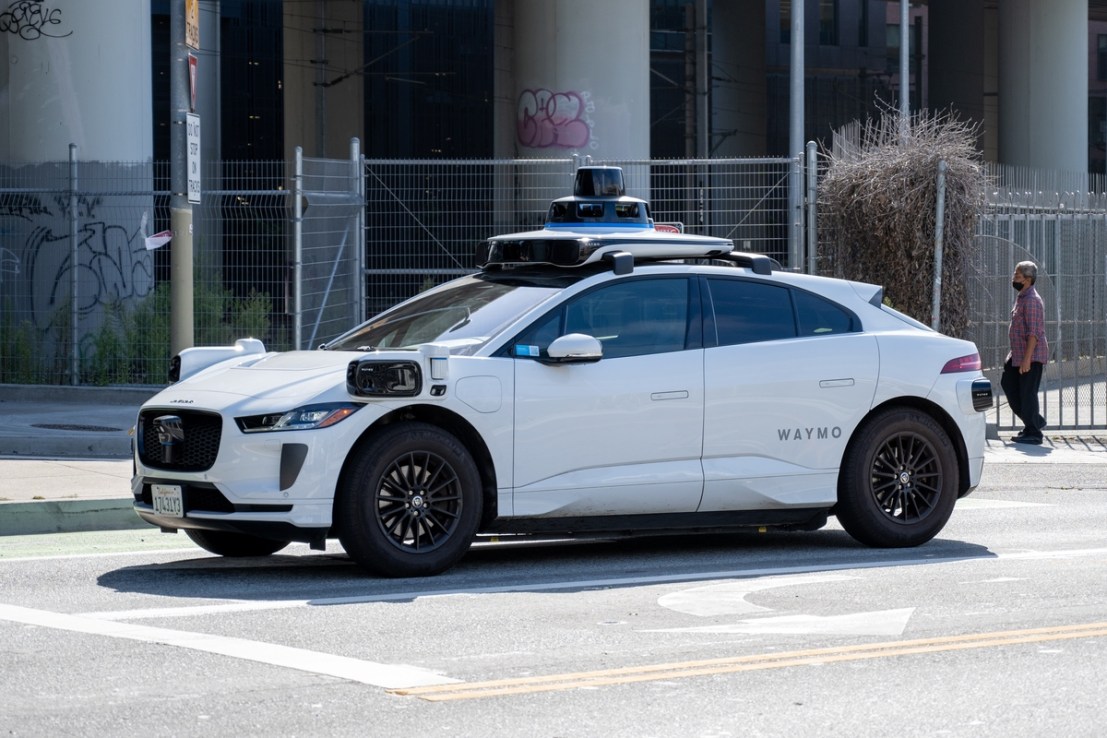
How do you teach a robotaxi London? Waymo explains
•Before Waymo launches a commercial robotaxi service in London, it needs to teach its vehicles more than just how to drive on the left, writes Saskia Koopman.
•Waymo, the Alphabet-owned autonomous driving company, has spent months testing vehicles across the capital ahead of a planned commercial launch, collecting driving data on the capital’s streets and tr...
•The robotaxi giant has been testing in London since last autumn and has recently begun allowing its autonomous software to take control of vehicles on public roads, with trained specialists behind the...
هذا الخبر من سيتي أيه إم. خبر يقدم أدوات ذكاء اصطناعي للتلخيص والترجمة والاستماع.
المصدر: سيتي أيه إم | Source: سيتي أيه إم
Before Waymo launches a commercial robotaxi service in London, it needs to teach its vehicles more than just how to drive on the left, writes Saskia Koopman.
Waymo, the Alphabet-owned autonomous driving company, has spent months testing vehicles across the capital ahead of a planned commercial launch, collecting driving data on the capital’s streets and training its systems to understand everything from British police signals to how emergency services interact with autonomous vehicles.
The robotaxi giant has been testing in London since last autumn and has recently begun allowing its autonomous software to take control of vehicles on public roads, with trained specialists behind the wheel.
“When you have 100 cars, you have to integrate with local police, you have to integrate with emergency services, ambulance services,” said Saswat Panigrahi, chief product officer. “We have had multiple months of engagement.”
Waymo already operates fully autonomous ride-hailing services across 11 US cities and says it now drives more than four million autonomous miles every week.
The company has logged more than 170 million autonomous miles in total and is now using London as its first major European test market.
“The sirens are slightly different in each city,” Panigrahi said. “The light patterns are different, solid lights mean different things in different cities, flashing lights mean different things in different cities.”
Waymo’s vehicles are trained to recognise police officers, emergency vehicles and hand gestures – but bin more unusual situations, the car can ask for confirmation from a remote operator.
“There could be an emergency scene where the police officer has just arrived,” Panigrahi said. “In those moments, sometimes we can ask a question to a remote operator, saying, ‘Hey, is this an authorised person telling me to break the red light?’”
According to Panigrahi, the company has already begun working with London emergency services ahead of any commercial launch.
“We train with local law enforcement,” he said. “We show up multiple months in advance, we engage with local [authorities] … and we train with them.”
Building a London service
Panigrahi added that Waymo is also collecting data on the less predictable parts of a mass roll-out: “I noticed a pub that you go to here, depending on the time of the day, people have different preferences on where they want to be dropped off”.
“Sometimes they want to be dropped off right in front of the pub and sometimes they’re like, ‘No, it’s quite dense there, just drop me out one block away’.”
The data is fed into what Waymo describes as multimodal AI models, which are trained on information gathered across its global fleet.
“And the massive multimodal AI models that we’re training with this data does get better the more diverse data that you provide it,” he added.
The company says operating across multiple cities helps improve the system because each location presents different road layouts, driving styles and passenger behaviours.
London has already thrown up some unusual challenges. Earlier this year, residents in Shoreditch complained that Waymo vehicles repeatedly reversed down a narrow residential street during overnight testing.
Panigrahi said the issue stemmed from the fact that the cars were conducting data collection rather than carrying passengers: “What would happen is this particular way to a little street, in a real-life service, that many cars wouldn’t ever be hailed by. What we have done is now we have enough data from that area, so we’re avoiding going there.”
The vehicles are also continuously building a picture of how London’s roads function.
“The Waymo cars are also noticing how long it’s taking for them to traverse, and through that, they are building a model of how what’s the throughput of each of the roads,” Panigrahi said.
Waymo’s push into London comes as parent company Alphabet doubles down on AI spending, with the Google owner unveiling plans on Tuesday to raise up to $80bn to fund AI infrastructure, while autonomous driving remains one of its largest long-term bets.
The UK government opened applications for self-driving passenger services in May, with Waymo, Uber and British startup Wayve all targeting launches in the capital.
Any deployment in London will also require approval from Transport for London, which has raised questions around congestion and the impact on existing transport networks.
“We will start small,” Panigrahi said. “Right now you can already see us testing that in a pretty large area, but we’ll start in a smaller area with a few cars and then slowly expand from there.”
ملاحظة تحريرية | Editorial Note: نُشر هذا المقال في الأصل بواسطة سيتي أيه إم. خبر (Khabr) هي منصة إعلامية أردنية مرخّصة تعمل بالذكاء الاصطناعي. نضيف قيمة تحريرية من خلال: تحليل ذكي للأخبار، ملخصات تلقائية، رواية صوتية بالذكاء الاصطناعي، ترجمة متعددة اللغات، وتدقيق الحقائق. هدفنا جعل الأخبار أكثر وضوحاً وسهولةً للقارئ العربي.
This article was originally published by سيتي أيه إم. Khabr is a licensed Jordanian AI-powered news platform (Registration #82086). We add editorial value through: AI-powered news analysis, automated summaries, AI audio narration, multi-language translation (Arabic, English, French, Turkish), and AI fact-checking. Our mission is to make news more accessible and understandable for Arabic-speaking audiences worldwide.