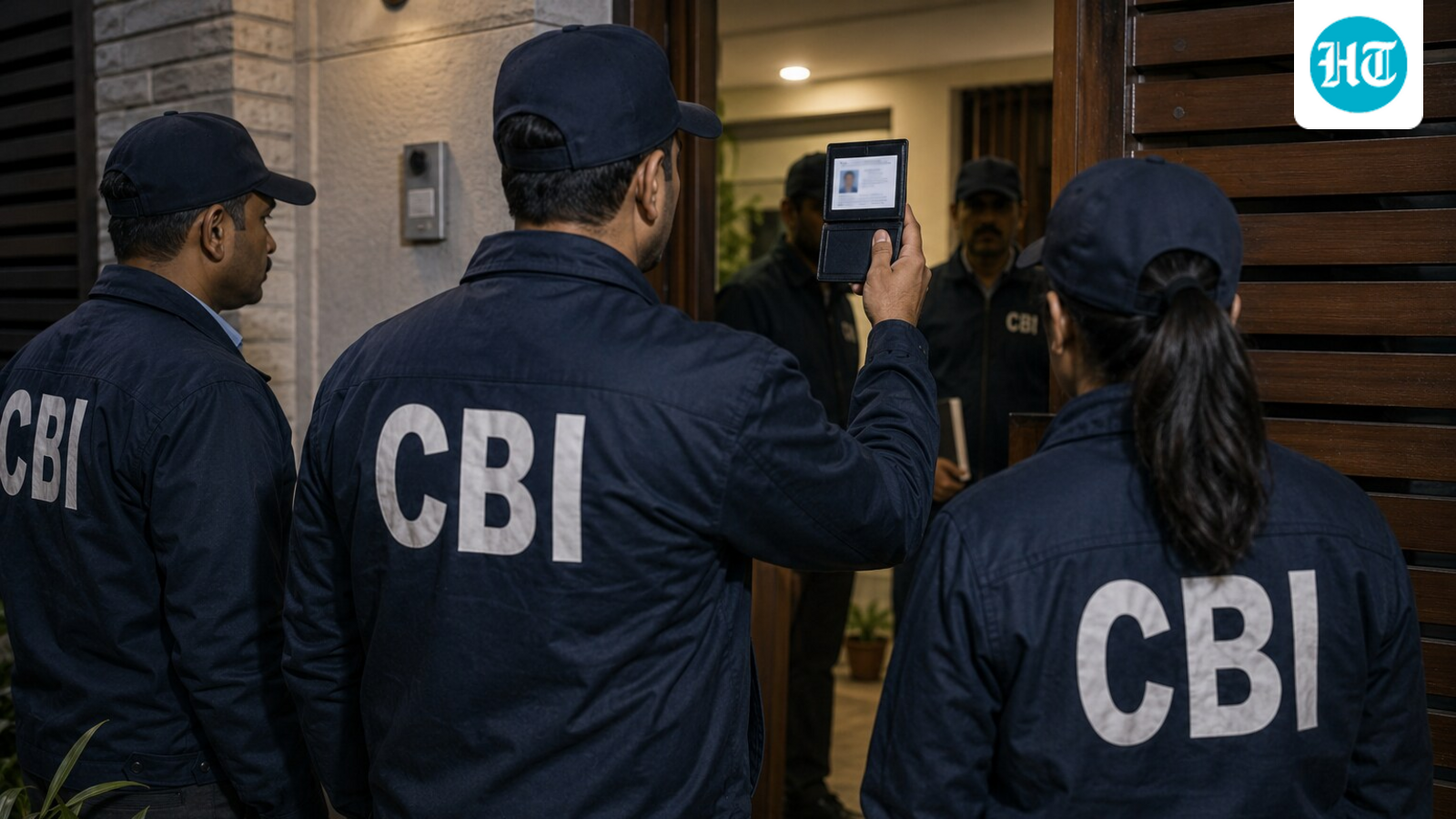
E-PaperSubscribeSubscribeEnjoy unlimited accessSubscribe Now! Get features like A former hotel manager, a former bar singer, an ex-banker and three unemployed youths were allegedly brought together in a carefully staged operation designed to make victims believe they were facing a genuine CBI raid. Police believe the gang may have carried out two or three similar fake CBI raids in Delhi, Mumbai and Jammu and Kashmir. (Representational image)The seven-member gang arrested by Delhi Police allegedly selected wealthy targets, obtained information about their homes and assets, assembled men to pose as federal investigators, wore jackets bearing the CBI insignia and carried fake identity cards. When confronted, they allegedly used threats and psychological pressure to force victims into submission. Police believe the gang may have carried out two or three similar fake raids in Delhi, Mumbai and Jammu and Kashmir, with digital evidence showing its members posing as CBI, Enforcement Directorate and other government officials. The alleged modus operandi, pieced together from the Prashant Vihar incident and the investigation that followed, shows how the gang attempted to turn an ordinary group of impostors into a convincing federal raiding team. Police have identified Asifa, 29, originally from Jammu and Kashmir, and Pooja Aggarwal, in her 20s, as the alleged masterminds. Asifa had previously run a hotel in Delhi's Rajendra Place, which shut down after suffering losses. Police said she had interacted with people connected to the police and army and often claimed to have such contacts. Pooja had previously worked as a singer at bars and restaurants and allegedly met Asifa while working at a restaurant in Karol Bagh. Investigators suspect the two combined Asifa's familiarity with the mannerisms and authority associated with law enforcement with Pooja's ability to organise people and stage the raids. Their alleged objective was simple: make the victims believe that a powerful central agency had arrived at their doorstep, leaving them too frightened to question the operation. The gang allegedly did not choose its victims at random. The investigation led police to a 63-year-old former banker, Kuldeep Sharma, who had worked with SBI and ING Vysya Bank. Sharma had previously handled the banking affairs of the complainant, Pratham Aggarwal, and was therefore familiar with his family and financial circumstances. Police allege that he provided the gang with Pratham's address and information about possible cash and valuables. According to police, Asifa met Sharma at a family wedding around eight months ago. Investigators allege that after Asifa and Pooja discussed their ability to conduct covert "raids", Sharma offered information about a potential target. This gave the gang what was arguably its most important ingredient: information that could make a fake raid appear genuine. The next step was to create the appearance of a large, organised government operation. Police said Pooja contacted her brother-in-law, Chander Prakash Sharma, 38, and asked him to arrange people who could pose as CBI officers. Chander, a former electronics repairman, allegedly recruited unemployed youths Shubham alias Golu, Rajveer Singh and Nitin Sharma. They were paid daily wages to act as stern federal agents during the raids, according to police. The result was a team large enough to overwhelm a household. In the Prashant Vihar case, eight people — six men and two women — turned up at the target's home. The gang allegedly understood that claiming to be CBI officers would not be enough. The group needed to look like CBI officers. The suspects allegedly wore dark jackets carrying the CBI monogram and flashed purported government identity cards when they arrived at the target's home. Police later recovered clothing bearing the CBI insignia, along with photographs and screenshots of fake government identity cards. Investigators also recovered videos from the suspects' phones showing people posing as CBI, ED and other government officials during raids at different locations. Police are examining the videos to establish whether they correspond to other actual incidents and to identify possible victims. On August 11, around 10pm, Pratham Aggarwal and his mother were at their home in Prashant Vihar when the eight-member group arrived. The alleged officers introduced themselves as CBI officials, showed purported identity cards and demanded entry, claiming they had come to conduct a raid. The sudden arrival of a large team, combined with CBI-branded clothing and official-looking IDs, was allegedly intended to prevent the family from immediately realising that the officers were impostors. The gang then allegedly relied on intimidation to maintain the illusion. The family did not simply comply. When Pratham and his mother asked the alleged officers to show proper authorisation or a search warrant, the group allegedly became threatening and intimidating. The eight people remained outside the house for nearly 90 minutes, creating fear and apprehension, according to police. The gang's strategy, investigators believe, was to maintain pressure for long enough to force the occupants to surrender or hand over valuables before they had an opportunity to verify the officers' identities. "The gang's modus operandi relied entirely on swift, overwhelming intimidation, using forged documents and branded attire to shake down targets before anyone could verify their credentials," DCP (Rohini) Shashank Jaiswal said. The alleged raid began to unravel when neighbours started gathering outside the house. With more people watching the proceedings, the group could no longer rely on the family remaining isolated and intimidated. The alleged officers then claimed that a formal notice issued to Pratham's father was in their vehicle and left on the pretext of retrieving it. But the notice never arrived in physical form. Instead, a purported CBI notice was sent to Pratham's father's mobile phone. The message was later deleted, but the family had managed to take a screenshot. Police examined the screenshot and suspected that the notice was forged. That digital trace became a crucial lead for investigators. The Prashant Vihar incident came amid another suspected fake CBI raid in Delhi. In an earlier case in Rohini, around eight to 10 people allegedly reached a businessman's home claiming to be CBI officials and attempted to enter the residence. They were wearing clothes carrying the CBI insignia and carrying identity cards identifying themselves as CBI officers. When the family demanded the search authorisation, the alleged officers claimed that the document was inside their vehicle and left to retrieve it. The family called the police, while a purported CBI notice bearing the name and signature of the CBI Director was later sent through WhatsApp. The family had taken a screenshot before the message was deleted. Police are investigating whether this and other similar incidents are linked to the arrested gang. The Prashant Vihar family approached the police after the alleged raid. An FIR was registered at Prashant Vihar police station on August 19, and teams were formed to identify the suspects. Investigators examined CCTV footage from the area, mobile phone data, the fake notice and other digital evidence. Technical surveillance eventually helped identify the suspects, leading to the arrest of seven people. Police recovered eight mobile phones, CBI-monogrammed clothing and images of purported fake government IDs. The phones also contained videos allegedly showing similar raids in which members of the group posed as CBI, ED and other government officials. The investigation has not ended with the seven arrests. Police believe the gang may have carried out two or three similar operations in Delhi, Mumbai and Jammu & Kashmir. Investigators are examining the digital and financial trails, the source of the forged documents and the identities of other people who may have participated in the raids. At the heart of the alleged operation was a simple psychological trick: make the victim believe that the state had arrived at the door. (With inputs from Karn Pratap Singh) Follow the latest breaking news, major developments and agenda-setting stories from India and around the world with the newsdesk at Hindustan Times. Operating round the clock, the desk brings together experienced editors, reporters and correspondents to deliver fast, accurate and contextual reporting across subjects that influence public policy, governance, business, society and international affairs. The HT News Desk covers politics, elections, government policies, the economy, business and markets, science and technology, the environment, law and order, infrastructure, education, climate issues and geopolitics, while closely tracking developments across states, institutions and global capitals. The team also leads coverage of major breaking news events, policy announcements, court proceedings, natural disasters, public emergencies and significant international developments. Reports published by the newsdesk are based on information gathered from reporters on the ground, official statements, government agencies, court records, regulatory filings, recognised institutions and other authoritative sources. Stories undergo editorial scrutiny and verification processes to ensure accuracy, fairness and relevance, and are updated as events evolve and additional information becomes available. Whether covering a key political decision in New Delhi, an economic policy shift affecting millions, a landmark court ruling or a major global event, the HT News Desk aims to provide readers with reliable, fact-based journalism that delivers not only the latest developments but also the context and analysis needed to understand their wider implications.Read More
المصدر: Hindustan Times
| Source: Hindustan Times