• Global oil supply cut by 20pc; backlog of hundreds of ships grows
• Truce brings little relief as security firms warn of persistent risks
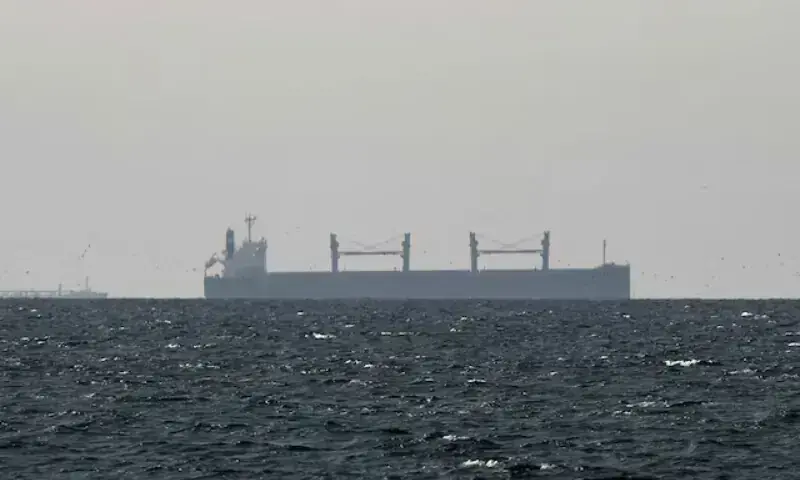
LONDON: Ship traffic through the Strait of Hormuz stood at well below 10 per cent of normal volumes on Thursday despite a US-Iran ceasefire as Tehran asserted its control by warning ships to keep to its territorial waters.
Hundreds of tankers and other ships have been stuck inside the Gulf since a war with Iran began on Feb 28, cutting global oil supply by 20pc in the world’s biggest-ever supply disruption. The crisis showed little signs of abating as prices for some physical oil grades hit fresh all-time highs on Thursday.
Just seven ships had passed through the strait in the past 24 hours versus about 140 normally, ship-tracking data showed.
The vessels included one oil products tanker and six dry bulk carriers, according to data from Kpler, Lloyds List Intelligence and Signal Ocean. A chemical tanker was also set to cross, destined for India, ship-tracking data on the MarineTraffic and Pole Star Global platforms showed.
Iran must open the strait without conditions, the CEO of UAE state oil giant ADNOC said on Thursday.
The directive for the new route came directly from Iran’s Islamic Revolutionary Guard Corps. The IRGC has told vessels to sail through Iranian waters around Larak Island to avoid the risk of naval mines in the usual lanes through the strait, Iran’s semi-official Tasnim news agency reported on Thursday.
Vessels are to enter the strait north of Larak Island and exit just south of it until further notice in coordination with the IRGC’s navy, Tasnim quoted the IRGC as saying.
Even with these new instructions, maritime security experts warned of lingering dangers. Risks persist for ships not authorised by Iran, particularly those affiliated with Israel and the US, British maritime security company Ambrey said in an advisory.
“Even shipping with apparent approval has been turned back in recent weeks mid-transit,” it said.
Gridlock
The gridlock has created a massive backlog of vessels, and a quick resolution seems unlikely.
“Most shipping lines are likely to remain cautious, and two weeks will not be enough to clear the backlog even if there is a marked increase in traffic,” said Torbjorn Soltvedt at risk intelligence company Verisk Maplecroft.
Some vessels are already using a new route around Larak Island despite warnings. The Indian-flagged LPG tanker Pine Gas exited the Gulf via the channel without paying Iran a toll or being boarded, its chief officer told Reuters.
Major shippers remain cautious. Mitsui OSK Lines has moved three tankers through the strait in recent days and is awaiting guidance from Japan’s government, its CEO said.
“The Strait remains as open or closed as it was” before the ceasefire plan emerged, shipping journal Lloyd’s List editor-in-chief Richard Meade told a briefing.
Traffic in the past week was “90pc below normal levels and it was almost entirely being driven by Iranian trade”, said Bridget Diakun, a Lloyd’s List Intelligence analyst.
Traffic is expected to remain at a maximum 10-15 passages a day “if the ceasefire holds”, according to Kpler analyst Ana Subasic.
Of the 315 passages by commodity carriers from March 1 to April 8, 202 were by oil and gas tankers, and most were heading east towards the Gulf of Oman, Kpler data showed. A majority involved ships coming from or heading to Iran.
Leaving the Gulf now “would not be advisable” without coordinating with the United States and Iran, Jakob Larsen, chief safety and security officer for the international shipping association BIMCO told AFP on Wednesday.
Many shipowners and shipping associations are unsure whether ships would be able to safely pass from the Gulf to the Gulf of Oman, even if the ceasefire holds.
Countries are taking steps to manage supply strains. India has granted waivers for two Iranian cargoes, including LPG for cooking, as it faces a severe gas shortage and has begun rationing.
The United States last month issued a temporary waiver on Iranian oil exports, set to expire April 19, to stabilise global supply and prices. Since Feb 28, at least 23 Iranian-flagged tankers have reached Asia, maintaining pre-war shipment levels, according to a monitoring group.
Published in Dawn, April 10th, 2026