Hormuz traffic flows despite ship attack as Iran fights to keep its grip on key trade route
•A trickle of marine traffic was passing through the Strait of Hormuz on Friday despite an attack on a ship in the vital waterway a day earlier, as Iran reiterated its warnings for ships to follow a Te...
•A flow of vessels transiting via an alternative route close to Oman in recent days has drawn Iran’s ire, as it works to maintain its grip on the key trade route despite the United States’ assertion th...
•The two sides have been engaged in a public dispute over the future of the waterway as they clash over the terms of their initial deal to end the war, with Iran intent on maintaining its leverage whil...
هذا الخبر من NBC News. خبر يقدم أدوات ذكاء اصطناعي للتلخيص والترجمة والاستماع.
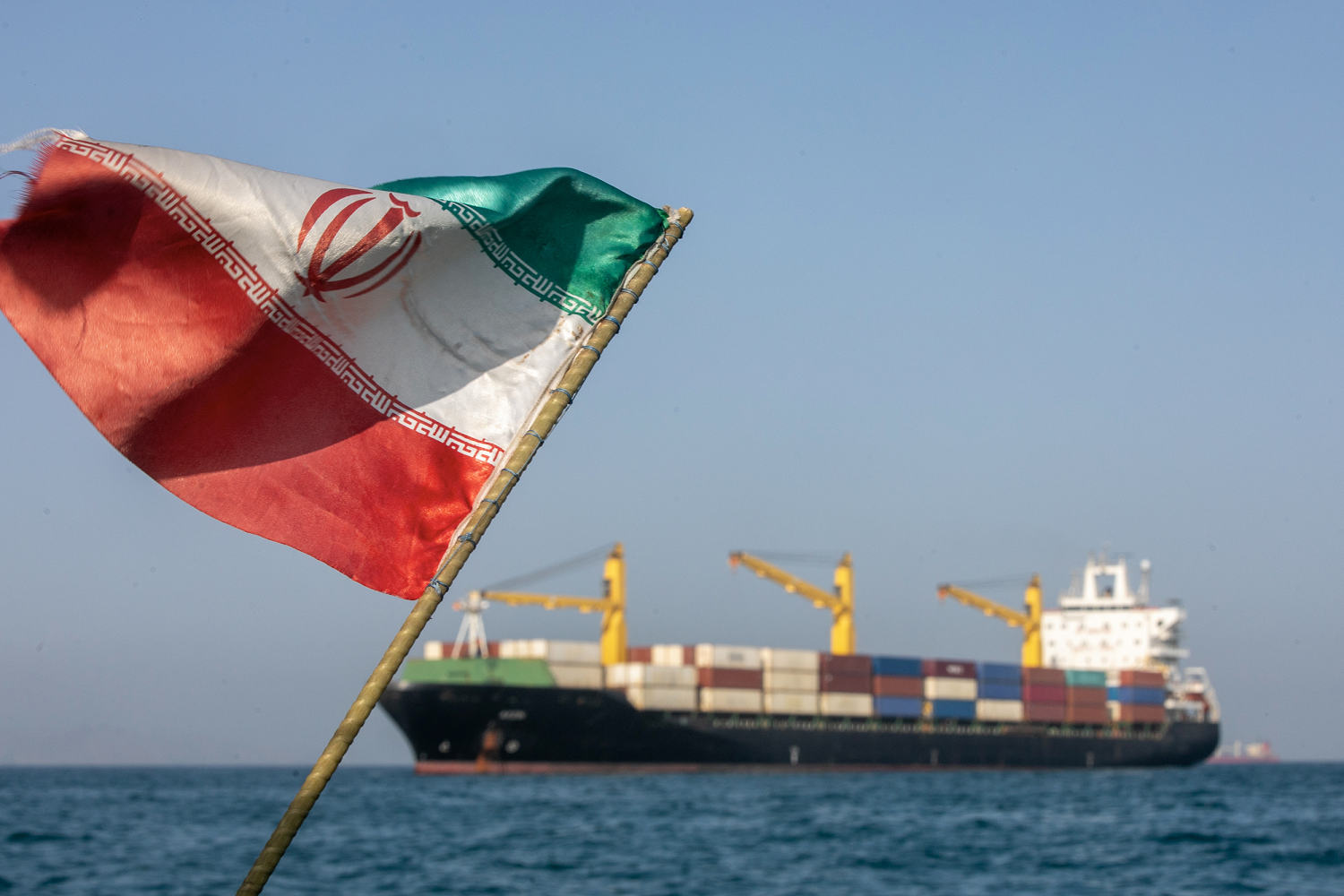
A trickle of marine traffic was passing through the Strait of Hormuz on Friday despite an attack on a ship in the vital waterway a day earlier, as Iran reiterated its warnings for ships to follow a Tehran-approved route. A flow of vessels transiting via an alternative route close to Oman in recent days has drawn Iran’s ire, as it works to maintain its grip on the key trade route despite the United States’ assertion that the strait is open. The two sides have been engaged in a public dispute over the future of the waterway as they clash over the terms of their initial deal to end the war, with Iran intent on maintaining its leverage while American and global officials insist transit must be free. At least 37 vessels had transited the strait or are in the process of doing so since Thursday’s incident involving a container ship from Taiwan-based shipping giant Evergreen Marine, an NBC News review of MarineTraffic data showed. Despite Iran’s threats, 20 of those ships had taken a route far south of Iran that hugs the coastline of the United Arab Emirates and bends along Oman’s Musandam Peninsula, avoiding Iranian waters. Iran has warned that it cannot guarantee safety for ships not following a specified route close to the Iranian coastline. Its newly-formed Persian Gulf Strait Authority warned Thursday that such ships will not be covered by safe passage guarantees and warned that any “consequences” will be the responsibility of the vessels and their owners. The International Maritime Organization (IMO), the U.N.’s maritime agency, had coordinated the alternative route. The body announced a plan this week to evacuate 11,000 sailors, but suspended the operation after the attack on Ever Lovely. IMO Secretary-General Arsenio Dominguez said the struck vessel “did not transit under IMO’s evacuation framework.” The Singapore-flagged Ever Lovely was sailing close to Oman on Thursday and was along its northernmost coast when it was struck on its starboard side by an “unknown object,” its owner company, Evergreen Marine, said in a statement to the Taiwanese stock exchange on Friday. The ship sustained damage to its bridge windows, but no injuries were reported, and the cargo onboard was safe, the company said. “The main engine and all navigation equipment continued to operate,” and its seaworthiness was not impacted as it departed the Strait of Hormuz, it added. However, the company warned that the cancellation of the International Maritime Organization’s evacuation plan had added “new uncertainty” to the ceasefire agreement. Singapore’s Maritime and Port Authority said in a statement that it was “deeply concerned about the incident, which was unprovoked, unjustifiable, and a breach of international law.” Iran has not publicly acknowledged the strike. The White House was “aware of these reports and looking into them,” a U.S. official told NBC News. “President Trump has been clear that Iran cannot subvert the free flow of traffic in the Strait,” the official added. The memorandum of understanding signed by the U.S. and Iran last week stated that Iran would “make arrangements using its best efforts for the safe passage of commercial vessels with no charge for 60 days only from the Persian Gulf to the Sea of Oman and vice versa.” The differences between the U.S., which says that ships must be able to pass freely, and Iran, which insists that ships can only move through Iranian waters, have since exploded in public, with Iran’s navy issuing stern warnings to ships moving through other routes, and the U.S. blasting Iran for continuing to control the traffic. Iran’s Deputy Foreign Minister Kazem Gharibabadi said Friday that safe passage through the strait “cannot be guaranteed through vague arrangements, parallel routes, or decision-making conducted outside of Iran’s considerations as a coastal state.” He said that “any valid framework must be based on coordination with Iran.” “Otherwise, the result will be the suspension of the designated parallel route.” His comments followed a meeting of Secretary of State Marco Rubio and the Gulf Cooperation Council on Thursday, after which a joint statement said: “Ministers rejected any tolls, fees, or attempts to assert control over the Strait.”المصدر: NBC News | Source: NBC News
ملاحظة تحريرية | Editorial Note: نُشر هذا المقال في الأصل بواسطة NBC News. خبر (Khabr) هي منصة إعلامية أردنية مرخّصة تعمل بالذكاء الاصطناعي. نضيف قيمة تحريرية من خلال: تحليل ذكي للأخبار، ملخصات تلقائية، رواية صوتية بالذكاء الاصطناعي، ترجمة متعددة اللغات، وتدقيق الحقائق. هدفنا جعل الأخبار أكثر وضوحاً وسهولةً للقارئ العربي.
This article was originally published by NBC News. Khabr is a licensed Jordanian AI-powered news platform (Registration #82086). We add editorial value through: AI-powered news analysis, automated summaries, AI audio narration, multi-language translation (Arabic, English, French, Turkish), and AI fact-checking. Our mission is to make news more accessible and understandable for Arabic-speaking audiences worldwide.