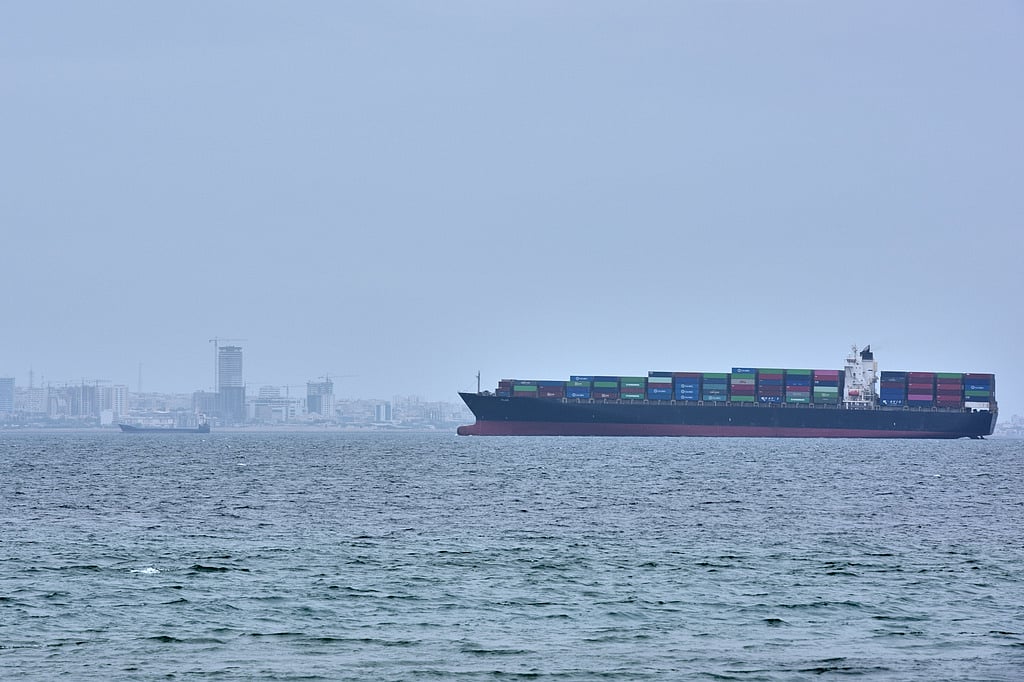
Hormuz crisis: When an energy shock becomes a food emergency
المصدر: Gulf News | Source: Gulf NewsThe global conversation about the Strait of Hormuz has centred, understandably, on oil prices and geopolitical brinkmanship. Brent crude has surged past $127 a barrel. Major shipping firms have suspended operations. Defence analysts continue to debate naval corridors and mine-clearing timelines. All of this matters. Yet it obscures a slower, quieter crisis already unfolding in countries far from the Gulf, in places where families were skipping meals long before a single missile was fired.
The closure of the Strait of Hormuz is not only an energy shock. It is, as the FAO’s Chief Economist, Maximo Torero, warned, “a systemic shock affecting food systems globally.” Nearly 20 million barrels of oil pass through the Strait each day, alongside roughly a fifth of the world’s liquefied natural gas and up to 30 per cent of all internationally traded fertiliser. When the Strait closes, it does not merely raise fuel prices; it raises the cost of producing and purchasing food.
The countries now bearing the brunt of this crisis had little margin to absorb it. Consider the Philippines, which imports 98 per cent of its oil from the Middle East. On 24 March, President Ferdinand Marcos Jr. signed an executive order declaring a national energy emergency in response to the Hormuz disruption. Diesel prices have surged, fuel reserves have tightened, and transport workers have gone on strike. Small food vendors, already operating on the thinnest of margins, are seeing their cooking gas costs rise sharply, alongside food prices. For an archipelago of 115 million people whose economy depends on diesel-powered transport and fishing, this is not a temporary inconvenience. It is a direct threat to livelihoods.
Alarming set of pressures
Bangladesh faces a different but equally alarming set of pressures. It depends heavily on Gulf energy and fertiliser imports, and the disruption has come in the middle of the Boro rice season, when farmers most need affordable inputs. Fertiliser plants reliant on Qatari natural gas have already shut down, while electricity shortages and inflation are compounding the strain. In a country where millions already live on the edge of food insecurity, these are not abstract macroeconomic pressures. They translate directly into whether a family eats rice twice a day or once.
Egypt is vulnerable in a different way, but no less seriously. As one of the world’s largest wheat importers, it is highly exposed to the food price volatility triggered by the Hormuz crisis. History offers a sobering reminder of what happens when food prices spike in import-dependent societies. In Egypt, bread prices and food insecurity were among the pressures that contributed to the 2011 upheavals. The social contract across much of the Middle East and North Africa has long been underwritten, in part, by access to affordable staples. When that contract frays, the consequences extend well beyond economics.
Threat to global food security
These are not isolated cases. The International Rescue Committee has warned that the Hormuz closure could pose “an exponentially greater threat to global food security than the 2022 Ukraine food shock,” with only a narrow window to prevent a sharp rise in hunger by June. From East Africa to South Asia, import-dependent states face serious exposure to fertiliser and food supply disruptions. Nearly 320 million people worldwide are already acutely food insecure, roughly double the number in 2019. The Hormuz crisis is striking a system that was already under severe strain.
The historical parallels are uncomfortable. The 1973 oil embargo quadrupled oil prices and sent shockwaves through the developing world. Petroleum bills soared, foreign exchange reserves were depleted, and fertiliser shortages compounded an already severe food crisis. In Ethiopia, the economic fallout contributed to the political instability that ultimately toppled Emperor Haile Selassie’s government in 1974. Across the Sahel, drought and rising energy costs collided to produce catastrophic food shortages. The lesson from 1973 was that energy crises do not remain confined to their original domain. They become food crises, which in turn become political crises, and ultimately humanitarian emergencies. More than 50 years later, that lesson is being relearned in real time.
Scope of crisis
What makes the current situation potentially more severe is its scope. The 1973 embargo primarily disrupted oil. The 2022 Ukraine shock affected wheat and fertiliser flows through the Black Sea. Hormuz is disrupting all of it simultaneously: oil, LNG, fertiliser, petrochemicals, and the shipping lanes that carry them. This is particularly consequential as farmers enter the planting season and make decisions that will shape crop yields for the rest of the year. The next food crisis will not begin months from now. In many places, it has already begun.
The international community’s response has, so far, been weighted heavily towards the strategic and military dimensions of the crisis. Naval escorts, oil reserve releases, and sanctions waivers dominate the headlines. These measures are important, but they do little for the fisherman in Tawi-Tawi whose boat sits idle, the farmer in Comilla who cannot afford fertiliser, or the family in Cairo recalculating whether they can afford bread this week. The UN’s effort to create a task force modelled on the Black Sea Grain Initiative is a welcome step, as is the limited agreement to allow humanitarian and fertiliser shipments through the strait. However, these remain partial measures in the face of a crisis that is deepening by the day.
If the past half-century of energy shocks has taught us anything, it is that the humanitarian costs fall hardest and fastest on those least able to absorb them. The Strait of Hormuz may be a geopolitical chokepoint, but for hundreds of millions of people, it is something far more immediate, namely the corridor through which their food, fuel, and livelihoods flow. Treating this crisis solely as a matter of energy security or military strategy is not just analytically incomplete; it is morally insufficient.
Dr Rikard Jalkebro is Associate Professor at the Anwar Gargash Diplomatic Academy, Abu Dhabi
ملاحظة تحريرية | Editorial Note: نُشر هذا المقال في الأصل بواسطة Gulf News. خبر (Khabr) هي منصة إعلامية أردنية مرخّصة تعمل بالذكاء الاصطناعي. نضيف قيمة تحريرية من خلال: تحليل ذكي للأخبار، ملخصات تلقائية، رواية صوتية بالذكاء الاصطناعي، ترجمة متعددة اللغات، وتدقيق الحقائق. هدفنا جعل الأخبار أكثر وضوحاً وسهولةً للقارئ العربي.
This article was originally published by Gulf News. Khabr is a licensed Jordanian AI-powered news platform (Registration #82086). We add editorial value through: AI-powered news analysis, automated summaries, AI audio narration, multi-language translation (Arabic, English, French, Turkish), and AI fact-checking. Our mission is to make news more accessible and understandable for Arabic-speaking audiences worldwide.