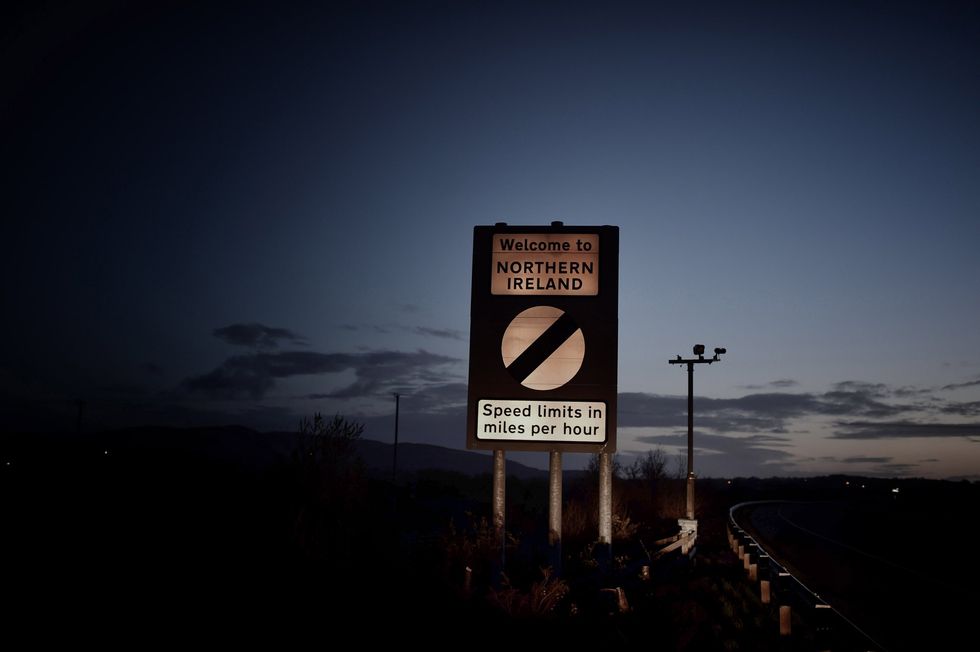
Home Office under fire as data exposes hundreds of 'immigration offenders' exploiting Irish border
المصدر: GB News | Source: GB NewsThe Home Office has been accused of having "no idea what is happening within the Common Travel Area (CTA)" after shock data revealed a flow of "immigration offenders" abusing the open border on the island of Ireland.
New data from the Irish Government revealed 90 per cent of asylum seekers in Ireland may have entered the country via the land boundary.
Around 16,600 people had sought asylum at an Irish airport or port in the last three years, data from Ireland's Department of Foreign Affairs and Trade (Dfat) showed, with significant numbers in this group thought to have travelled from the UK.
Meanwhile, just 10 per cent of people applied for asylum at an official port of entry in 2024, while 90 per cent made a first-time application in person at the International Protection Office in Dublin.
TRENDINGStoriesVideosYour SayThe proportion of those applying in person at the Dublin office stood at 88 per cent in 2025 and has hit 90 per cent so far this year.
Ireland's then-Justice Minister Helen McEntee said in 2024 she believed 80 per cent of those applying were coming over the land border.
Before 2019, asylum applications in Ireland were relatively low at around 5,000 a year, broadly in line with what would be expected for a small nation on the western edge of Europe.
This number grew sharply between 2022 and 2024, peaking at 18,500.
The Home Office also revealed it had apprehended more than 900 "immigration offenders" exploiting the open land border in the past year alone.
However, the department provided no further details on which direction the migrants were caught travelling or what consequences they faced.
Critics have called for the CTA to be suspended until "the EU and Ireland come to their senses".
Alp Mehmet, Chairman of Migration Watch UK, told GB News: "The Home Office clearly has no idea what is happening within the Common Travel Area.
"The century-old CTA has broken down, and dangerously so.
"It is time to scrutinise the arrangement and consider suspending it until the EU and Ireland come to their senses on border control. As indeed should we."
LATEST DEVELOPMENTS
- Sir Mark Rowley lays blame on 'extreme rhetoric' for Belfast disorder after knife attack
- WATCH: PSNI Assistant Chief delivers update on 'thuggish' disorder in Belfast
- Britain returned just ONE asylum seeker to Ireland under Brexit deal
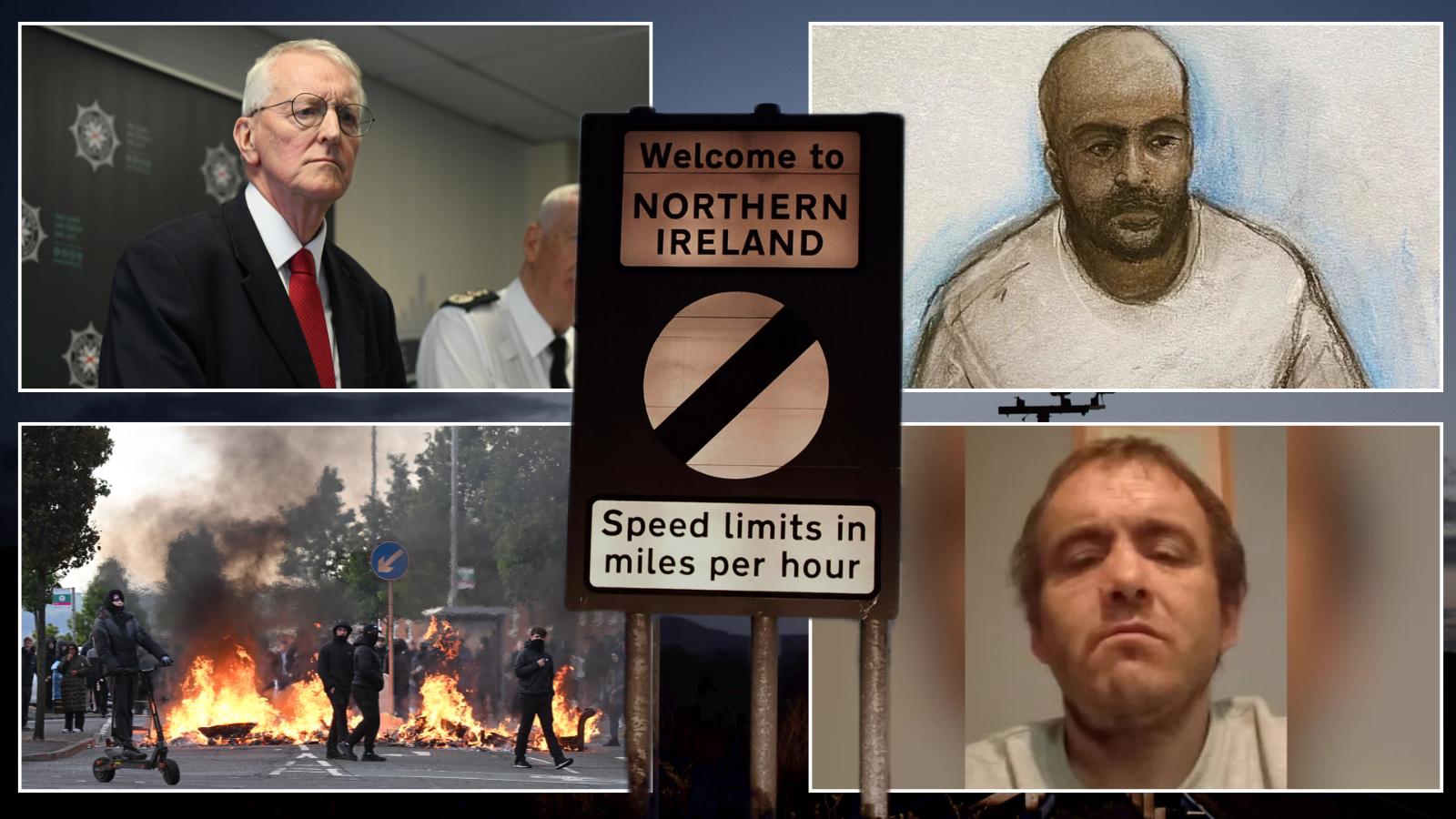
The CTA, which was first introduced in 1923, is being brought into question after it was revealed Hadi Alodid, a 30-year-old Sudanese national who has been charged with attempted murder in Belfast, travelled to Northern Ireland from the Republic before claiming asylum in the UK.
Mr Alodid had travelled from Sudan to Paris, then to Dublin, before taking a bus to Belfast, where he claimed asylum in 2023.
The Sudanese national was granted asylum in the UK on the Conservatives' "fast-track" programme, in which he had to fill out a 10-page form.
This system, which ditched face-to-face interviews to clear a 92,000-strong asylum application backlog, was implemented under Rishi Sunak's Government.
The alleged stabbing attack, which resulted in victim Stephen Ogilvie losing his left eye and sustaining serious knife wounds to his neck, head and back, triggered disorder throughout Belfast and Northern Ireland.
The Irish Government said on Thursday it shared the "deep concern" over the violence in Belfast and was working closely with the British Government on the issue.
Without physical checks on the Irish border, neither Government can verify the precise number of people crossing illegally, with both sides acknowledging the CTA is open to abuse.
Dublin policymakers are looking to revive a post-Brexit agreement which has so far only seen one asylum seeker returned to Ireland from the UK.
The deal, agreed in 2020, was delayed after the Irish High Court ruled the UK's policy on returning asylum seekers to Rwanda meant Britain was not legally defined as a "safe country".
Since the Rwanda deal has been shelved by Labour, Ireland will now aim to redesignate the UK as "a safe third country", the Dfat said.
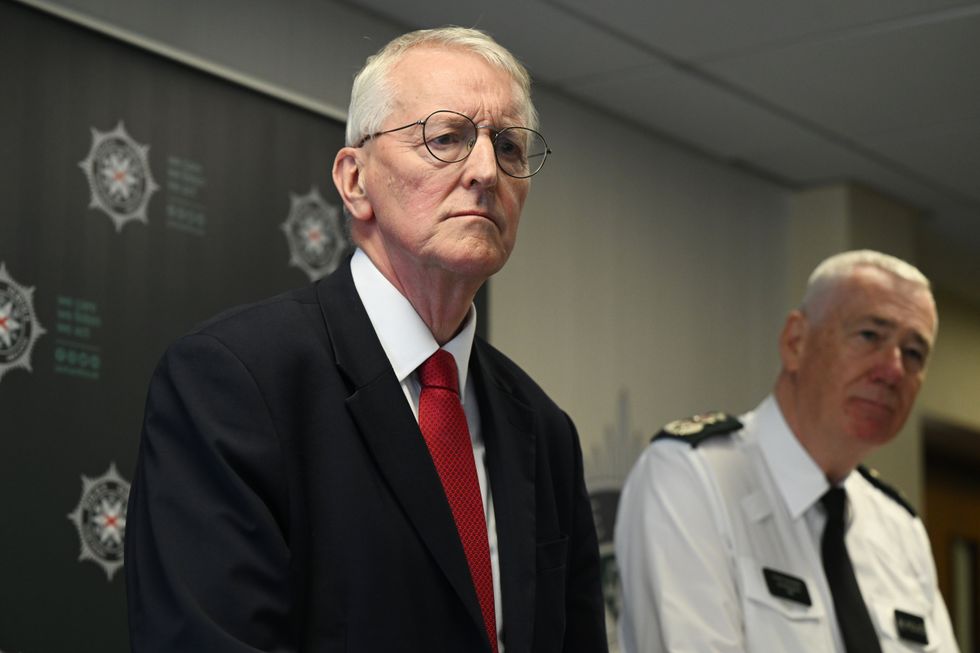
Hilary Benn, the Northern Ireland Secretary, spoke to Ireland's Justice Minister Jim O'Callaghan and Foreign Minister Helen McEntee earlier this week.
They discussed the importance of cross-border cooperation in protecting the CTA.
Northern Ireland's Deputy First Minister Emma Little-Pengelly said there were "questions to be asked" about immigration policy and about the checks taking place in Dublin.
Irish Taoiseach Micheál Martin acknowledged the CTA was broadly positive for both nations but said it constantly needed to be managed as people would "endeavour to abuse it".
The Home Office is now looking to ramp up immigration enforcement in Northern Ireland, confirming £3.7 billion worth of investment over the next three years.
The new investment will see a surge in intelligence-led operations led by Immigration Enforcement and Border Force, which have taken place along routes to detect, track down, arrest and remove illegal migrants.
A Whitehall source said that a multi-agency crackdown targeting abuse of the Common Travel Areas has already carried out 250 arrests and seized over £435,000 since the 2024 General Election.
GB News has approached the Home Office for comment.
Our Standards: The GB News Editorial Charter


ملاحظة تحريرية | Editorial Note: نُشر هذا المقال في الأصل بواسطة GB News. خبر (Khabr) هي منصة إعلامية أردنية مرخّصة تعمل بالذكاء الاصطناعي. نضيف قيمة تحريرية من خلال: تحليل ذكي للأخبار، ملخصات تلقائية، رواية صوتية بالذكاء الاصطناعي، ترجمة متعددة اللغات، وتدقيق الحقائق. هدفنا جعل الأخبار أكثر وضوحاً وسهولةً للقارئ العربي.
This article was originally published by GB News. Khabr is a licensed Jordanian AI-powered news platform (Registration #82086). We add editorial value through: AI-powered news analysis, automated summaries, AI audio narration, multi-language translation (Arabic, English, French, Turkish), and AI fact-checking. Our mission is to make news more accessible and understandable for Arabic-speaking audiences worldwide.