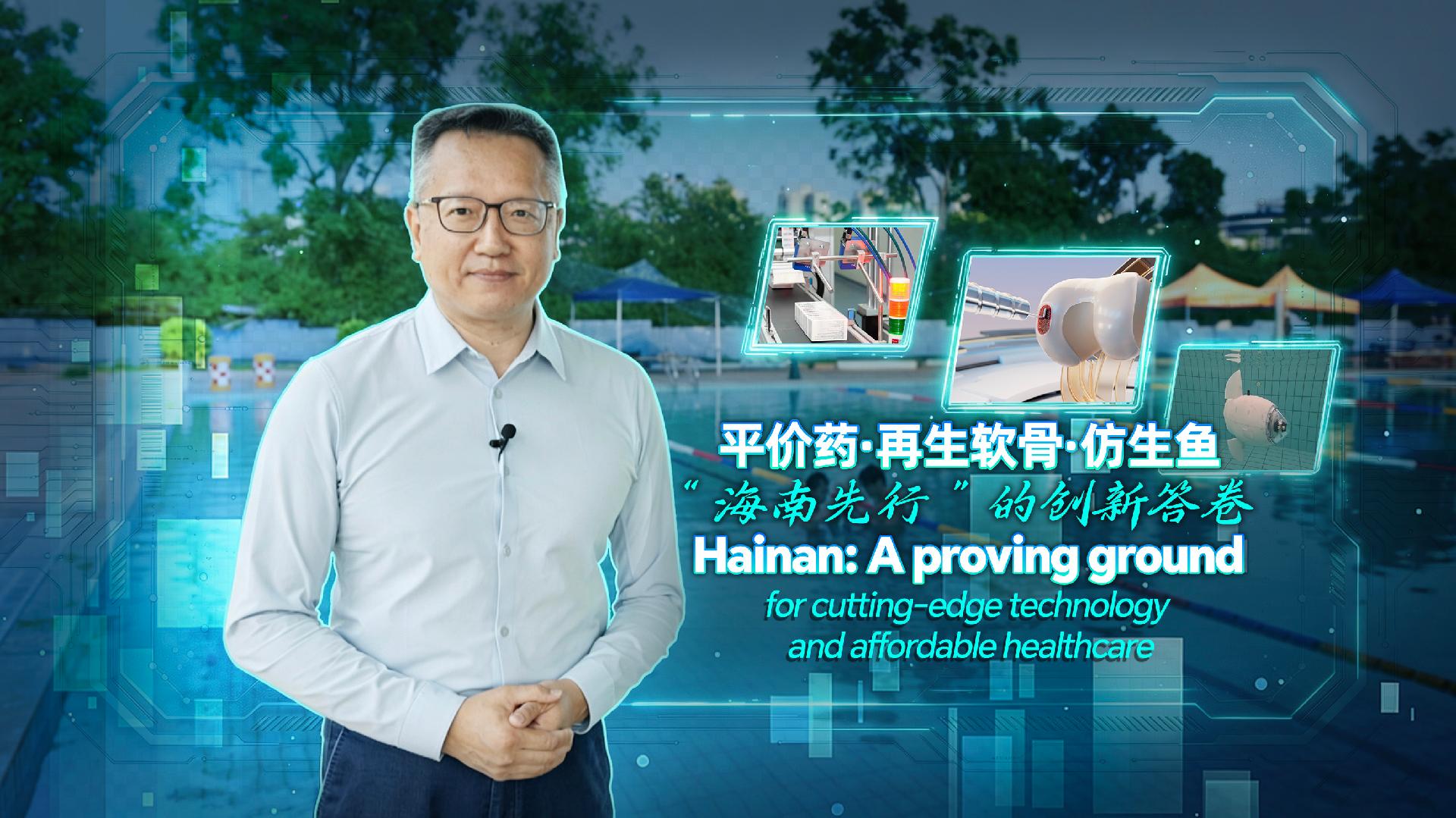
Hainan fosters cutting-edge technology and affordable healthcare
•In southern China's island province of Hainan, futuristic innovations are moving from labs to reality in cutting-edge technology and affordable healthcare, backed by the Hainan Free Trade Port's prefe...
•Huang envisions brain-computer interfaces that could enable human-machine symbiosis, potentially assisting stroke patients or enabling remote deep-sea operations.
•He says his team also wants to leverage this platform, as the Free Trade Port offers an ideal testing ground for open-source data and marine robot facilities.
هذا الخبر من CGTN EN. خبر يقدم أدوات ذكاء اصطناعي للتلخيص والترجمة والاستماع.
المصدر: CGTN EN | Source: CGTN ENIn southern China's island province of Hainan, futuristic innovations are moving from labs to reality in cutting-edge technology and affordable healthcare, backed by the Hainan Free Trade Port's preferential policies.
At Hainan University, Professor Huang Zhong's team has built a bionic fish that can swim 50 metres in under 20 seconds, beating the previous world record of 22.16 seconds.
Inspired by living organisms, robots like fish and snakes have the potential to work in extreme environments, from deep-sea exploration to radiation-prone industrial sites.
Huang envisions brain-computer interfaces that could enable human-machine symbiosis, potentially assisting stroke patients or enabling remote deep-sea operations. He says his team also wants to leverage this platform, as the Free Trade Port offers an ideal testing ground for open-source data and marine robot facilities.
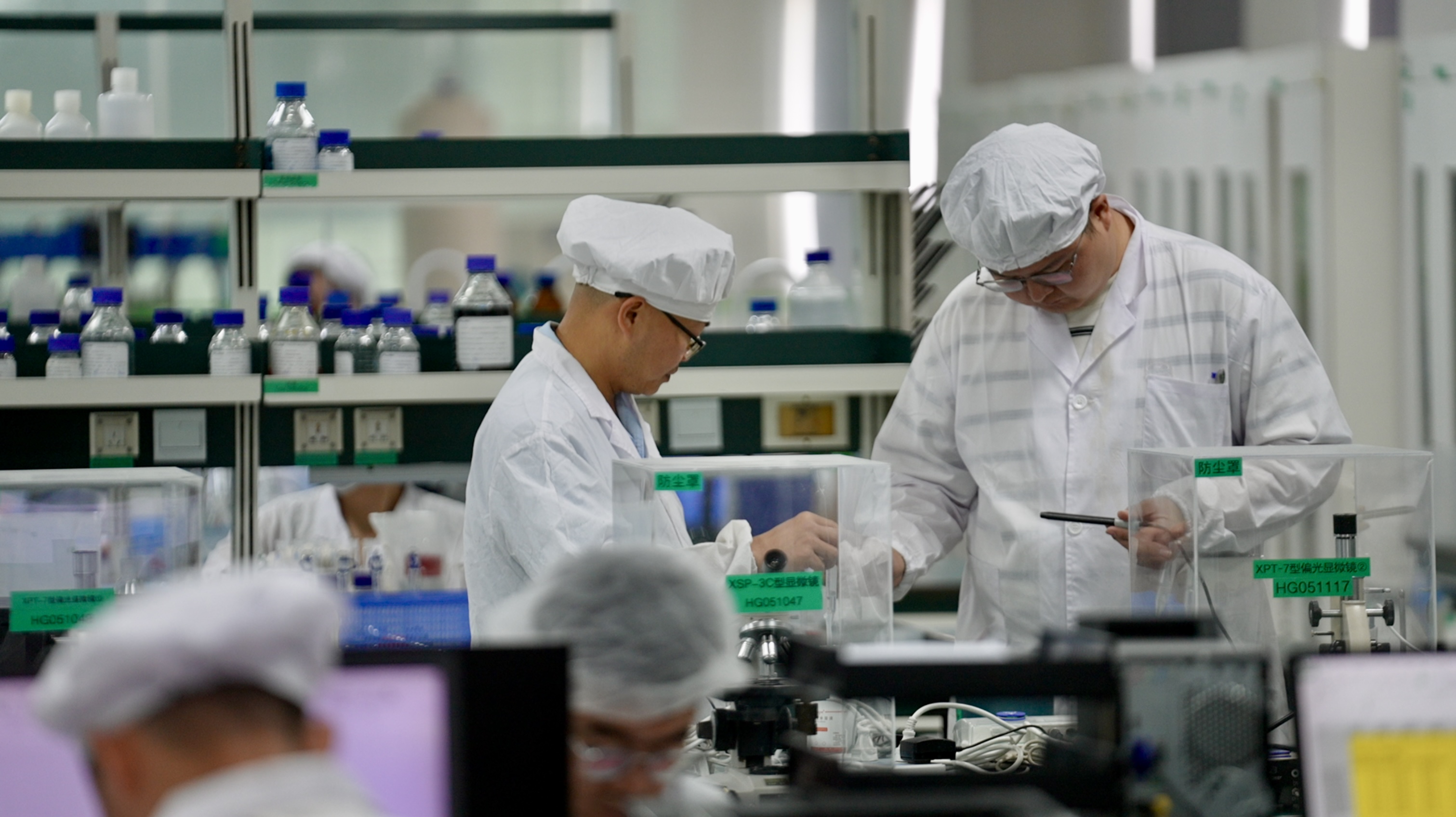
Meanwhile, a biotech firm based in the capital city of Haikou has localized a cartilage-regeneration therapy once deemed irreversible. This makes therapy affordable for ordinary patients by reducing costs.
The team turned bovine cartilage into a decellularized matrix and demonstrated that this material can effectively support cartilage cell growth.
Using this, the team has confirmed regrowth in over 60 patients, according to Zeng Sheng, founder of Susheng Biotech.
Zeng noted that the material, which costs roughly $1,000 (a little over 6,700 yuan) per gram overseas, is now available in Hainan for about $68 (460 yuan) per gram.
This price drop is partly thanks to waived import duties there and a 15% corporate tax rate, one of the lowest in the world.
International patients from the Middle East and Southeast Asia are already coming for treatment, he said.
A local pharmaceutical company in Hainan brought a chemotherapy-protection drug to market just 17 months after US approval, compared with the usual three to five years.
Local production slashed the price from $1,400 (close to 9,500 yuan) in the US to $68 (460 yuan) in China.
Yu Qingzhu, chairman of Simcere, said that in 2025 the company signed an intellectual property export deal worth $5 billion with a US firm, effectively using Hainan as its gateway to global markets.
From deep-sea biomimicry to cell regeneration and cross-border drug innovation, Hainan is proving that institutional reform and scientific research can work hand in hand – turning breakthroughs into accessible benefits for patients worldwide. The story here has only just begun.
Executive Producer: Zhang Jingwen
Producer: Yang Sha
Directors: Lu Wei, Zhong Xia
Virtual Art Director: Tan Lei
Copy Editors: Laurie Lew, Liao Dong
Videographers: Chen Yizhe, Gao Shengwei, Chen Jiazheng
Cover Image Designer: Jia Jieqiong


ملاحظة تحريرية | Editorial Note: نُشر هذا المقال في الأصل بواسطة CGTN EN. خبر (Khabr) هي منصة إعلامية أردنية مرخّصة تعمل بالذكاء الاصطناعي. نضيف قيمة تحريرية من خلال: تحليل ذكي للأخبار، ملخصات تلقائية، رواية صوتية بالذكاء الاصطناعي، ترجمة متعددة اللغات، وتدقيق الحقائق. هدفنا جعل الأخبار أكثر وضوحاً وسهولةً للقارئ العربي.
This article was originally published by CGTN EN. Khabr is a licensed Jordanian AI-powered news platform (Registration #82086). We add editorial value through: AI-powered news analysis, automated summaries, AI audio narration, multi-language translation (Arabic, English, French, Turkish), and AI fact-checking. Our mission is to make news more accessible and understandable for Arabic-speaking audiences worldwide.