GITEX Future Health Africa 2026: Where Africa’s Biomedical Sovereignty Meets Its Institutional Moment
•Marrakech – When Casablanca hosts the inaugural edition of GITEX Future Health Africa from May 4 to 6, it will bring the continent’s most consequential conversation on healthcare and technology...
•Organized by KAOUN International in partnership with Morocco’s Ministry of Health and Social Protection and the Mohammed VI Foundation for Sciences and Health (FM6SS), the three-day summit and exhibit...
•This trajectory positions Africa as the second-largest healthcare economy globally and, when looked at closely, reframes the continent not as a site of perpetual intervention but as a locus of emergen...
هذا الخبر من Morocco World News. خبر يقدم أدوات ذكاء اصطناعي للتلخيص والترجمة والاستماع.
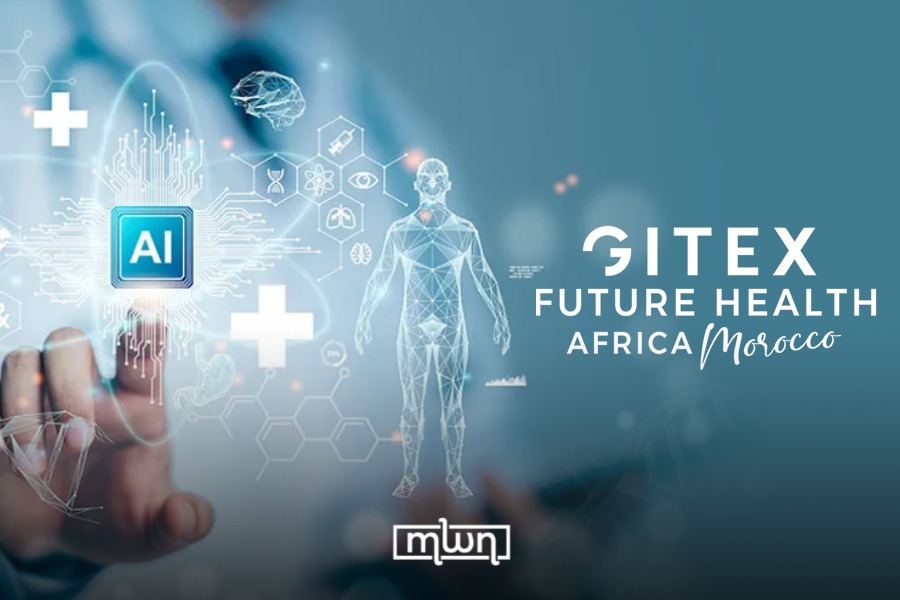
المصدر: Morocco World News | Source: Morocco World NewsMarrakech – When Casablanca hosts the inaugural edition of GITEX Future Health Africa from May 4 to 6, it will bring the continent’s most consequential conversation on healthcare and technology under one roof at a moment when the discursive and material conditions for systemic transformation have, by all measurable indicators, converged.
Organized by KAOUN International in partnership with Morocco’s Ministry of Health and Social Protection and the Mohammed VI Foundation for Sciences and Health (FM6SS), the three-day summit and exhibition will convene policymakers, tech leaders, investors, and over 300 exhibitors in the context of a continental healthcare market projected to reach $259 billion by 2030.
This trajectory positions Africa as the second-largest healthcare economy globally and, when looked at closely, reframes the continent not as a site of perpetual intervention but as a locus of emergent biomedical capital.
The event opens with an Executive Summit gathering ministers, institutional leaders, and some 50 international investors for closed-door discussions on financing, regulation, and universal coverage. Confirmed speakers include former French Health Minister Agnès Buzyn, Huma CEO Dan Vahdat, and GIZ’s Jan Schwaab, signaling that the forum is being calibrated as a space where North-South and South-South epistemologies of care are brought into deliberate, and at times uncomfortable, dialogue.
More than 200 startups will showcase solutions spanning AI diagnostics, telemedicine, and hospital information systems. Morocco’s Health Minister Amine Tehraoui has framed the initiative as a structural lever for territorial equity, noting the North African country’s ambition to digitize all patient records by 2030, complete nationwide health system integration by 2028, and open 15 major hospitals this year alone.
Thus, the summit constitutes far more than a trade event; it functions, in effect, as a counter-hegemonic institutional apparatus for the reimagination of African health governance.
The pandemic literalized what theory had long diagnosed
Among the central themes shaping this intellectual architecture is one that transcends the technocratic and enters the terrain of what postcolonial scholars would recognize as epistemic self-determination: health sovereignty, understood not merely as a policy aspiration but as the continent’s demand that it design, produce, regulate, and govern its own health systems rather than remain a terminal node in supply chains engineered elsewhere, by others, for extractive logics that have historically rendered African bodies as sites of consumption rather than production.
The urgency, by far, is structural before it is rhetorical. Africa carries roughly 17% of the global disease burden yet commands only 3% of the world’s health workforce, a disparity that reproduces what dependency theorists have long identified as the peripheralization of the Global South within the international division of biomedical labor.
The continent imports between 70% and 90% of all pharmaceuticals consumed, its local vaccine production capacity meets less than 1% of domestic demand, and African nations collectively spend upward of $65 billion annually on medical imports they could feasibly manufacture themselves – a hemorrhaging of capital that, in other words, functions as a structural subsidy to the pharmaceutical economies of the Global North.
The COVID-19 pandemic laid these asymmetries bare with devastating clarity: when wealthy nations imposed export bans and hoarded doses, African populations received barely 6% of the 13.5 billion vaccine doses administered worldwide, exposing what was not a market failure but rather the clinical expression of decades of institutionalized dependency and the biopolitical consequences of subaltern positioning within global health architectures.
The African Union’s response has been correspondingly decisive in its decolonial ambition. A Presidential Declaration adopted at the 39th AU Summit in Addis Ababa in February this year explicitly elevated local pharmaceutical manufacturing to a continental security priority.
The declaration calls for the full operationalization of the African Pooled Procurement Mechanism as a “Buy African” instrument while mobilizing sustainable financing and accelerating technology transfer through Africa CDC’s Regional Capacity and Capability Networks.
This institutional framework, when examined through the lens of subaltern agency, represents a deliberate inversion of the aid-dependency paradigm that has historically governed Africa’s relationship to global pharmaceutical supply chains.
Simultaneously, the newly inaugurated North Africa Medicines Regulatory Authority has completed a continent-wide regulatory harmonization architecture under the African Medicines Regulatory Harmonisation initiative – a framework essential for making African markets viable for indigenous manufacturers. The AU’s target: shift from importing over 99% of vaccines to producing 60% locally by 2040.
It is precisely this rupture that GITEX Future Health Africa seeks to operationalize, and the event’s stated mission of building health systems that are “more accessible, resilient, and less reliant on external support” reads, in the vocabulary of critical theory, as decolonial praxis translated into institutional design.
It is, as Africa CDC Director General Jean Kaseya has called the broader manufacturing agenda, “the second independence of Africa.”
The host nation embodies this question directly
When the summit’s Future Hospitals Forum examines AI-driven diagnostics and next-generation hospital design, or when its Future Care Forum interrogates data governance and interoperability frameworks, the subtext remains consistent and irreducible: who owns the infrastructure of African health, on whose epistemological terms does it operate, and to what extent can technological sovereignty become the vehicle through which the continent dismantles the inherited architectures of biomedical subordination.
Morocco’s positioning as host is, in this regard, deliberately paradigmatic, as the country is simultaneously expanding compulsory health insurance, rolling out a National Digital Health Card projected to save MAD 100 million ($10 million) annually, and investing in hospital infrastructure at a scale that models the very transition the summit theorizes.
Morocco launched the SENSYO Pharmatech facility in Benslimane, a $500 million public-private partnership with Swedish CDMO Recipharm designed to become the largest vaccine fill-and-finish platform on the African continent, with a projected capacity exceeding 116 million units and the ambition to cover more than 70% of Morocco’s vaccine needs and over 60% of the continent’s by the end of the production cycle.
Morocco is, alongside South Africa, Tunisia, Egypt, and Senegal, one of only five African nations with active vaccine manufacturing capacity – and the country has moved further still, pledging $5 million to Gavi, the Vaccine Alliance in its first-ever donor contribution, the largest by any North African country, a gesture that Gavi CEO Sania Nishtar described as reflecting a strategic vision for continental vaccine manufacturing that sets a standard for other nations.
It was Morocco, too, that hosted the inaugural Africa CDC-Gavi Manufacturers Marketplace in Marrakech in 2023, out of which 25 vaccine manufacturing initiatives were identified continent-wide.
In other words, the country is not merely convening the discourse on health sovereignty – it is constructing the industrial, financial, and institutional architecture through which that sovereignty becomes operationally legible, thereby embodying the proposition that health sovereignty is not an abstraction but the material condition under which 1.4 billion people cease to be supplicants in the governance of their own survival.
The post GITEX Future Health Africa 2026: Where Africa’s Biomedical Sovereignty Meets Its Institutional Moment appeared first on Morocco World News.
ملاحظة تحريرية | Editorial Note: نُشر هذا المقال في الأصل بواسطة Morocco World News. خبر (Khabr) هي منصة إعلامية أردنية مرخّصة تعمل بالذكاء الاصطناعي. نضيف قيمة تحريرية من خلال: تحليل ذكي للأخبار، ملخصات تلقائية، رواية صوتية بالذكاء الاصطناعي، ترجمة متعددة اللغات، وتدقيق الحقائق. هدفنا جعل الأخبار أكثر وضوحاً وسهولةً للقارئ العربي.
This article was originally published by Morocco World News. Khabr is a licensed Jordanian AI-powered news platform (Registration #82086). We add editorial value through: AI-powered news analysis, automated summaries, AI audio narration, multi-language translation (Arabic, English, French, Turkish), and AI fact-checking. Our mission is to make news more accessible and understandable for Arabic-speaking audiences worldwide.