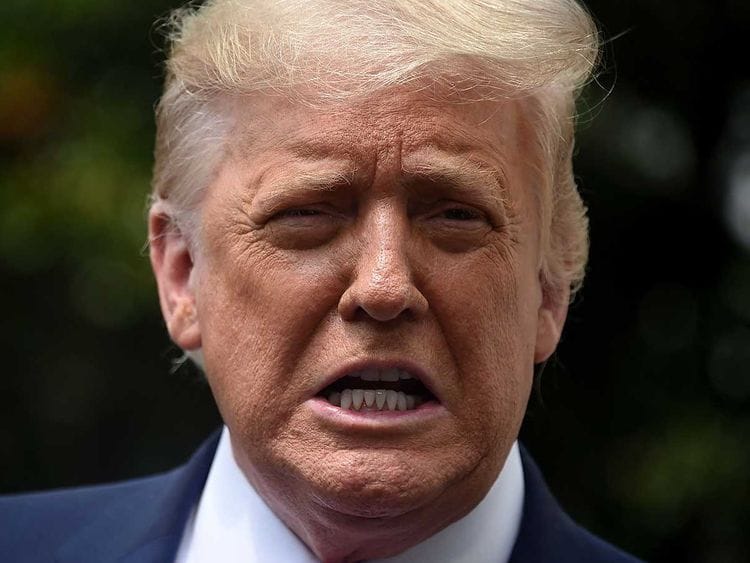
Dubai: US President Donald Trump has been labelled “NACHO” — short for “Not A Chance Hormuz Opens” — as criticism grows over his handling of the Strait of Hormuz crisis.
Coined by Javier Blas, the term reflects scepticism that Washington can secure a breakthrough as the on-and-off blockade disrupts oil flows and pushes up fuel prices.
“We thought we were getting a TACO, ‘Trump Always Chickens Out.’ But so far we are getting a NACHO, ‘Not A Chance Hormuz Opens,’” Blas wrote on X.
We thought we were getting a TACO
— Javier Blas (@JavierBlas) April 29, 2026
"Trump Always Chickens Out"
But so far we are getting a NACHO
"Not A Chance Hormuz Opens"
(With appreciation to the trader who told me)
The earlier nickname “TACO” — short for “Trump Always Chickens Out” — was popularised by a Financial Times columnist to describe Trump’s pattern of making aggressive threats that later ease, often calming markets after initial volatility.
Responding to the label last year, Trump dismissed the criticism. “I chicken out? Oh, I’ve never heard that,” he said, calling his approach “negotiation.”
How the Hormuz blockade unfolded
Late Feb 2026: War erupts after US and Israeli strikes on Iran
Early March: Iran moves to restrict traffic in the Strait of Hormuz, a key global oil route
Mid-March: Mid-March: US imposes blockade on Iranian ports, disrupting flows through the Strait of Hormuz
Late March: Shipping slows sharply; insurance costs and risks surge
Early April: Oil prices spike as flows through the strait remain disrupted
April 17: Ceasefire announced, but restrictions and tensions persist
Now: Disruptions continue, with uncertainty over full reopening
The new label underscores growing public and market frustration with the prolonged Hormuz standoff, which has rattled energy markets and raised doubts about how quickly a deal can be reached.
Separately, Iran’s leadership struck a defiant tone, warning that the United States has no place in the Gulf region. A statement attributed to Mojtaba Khamenei said the only place Americans belong in the Gulf is “at the bottom of its waters.”
“By God’s help and power, the bright future of the [Arabian] Gulf region will be a future without America,” the statement said, describing the region as a vital artery for global trade and prosperity.
Reinforcing that stance, Iran’s parliament speaker Mohammad Bagher Ghalibaf said Tehran’s control over the Strait of Hormuz would shape a future free of US influence. “Today, by managing the Strait of Hormuz, Iran will provide itself and its neighbours with the precious blessing of a future free from American presence and interference,” he wrote on X.