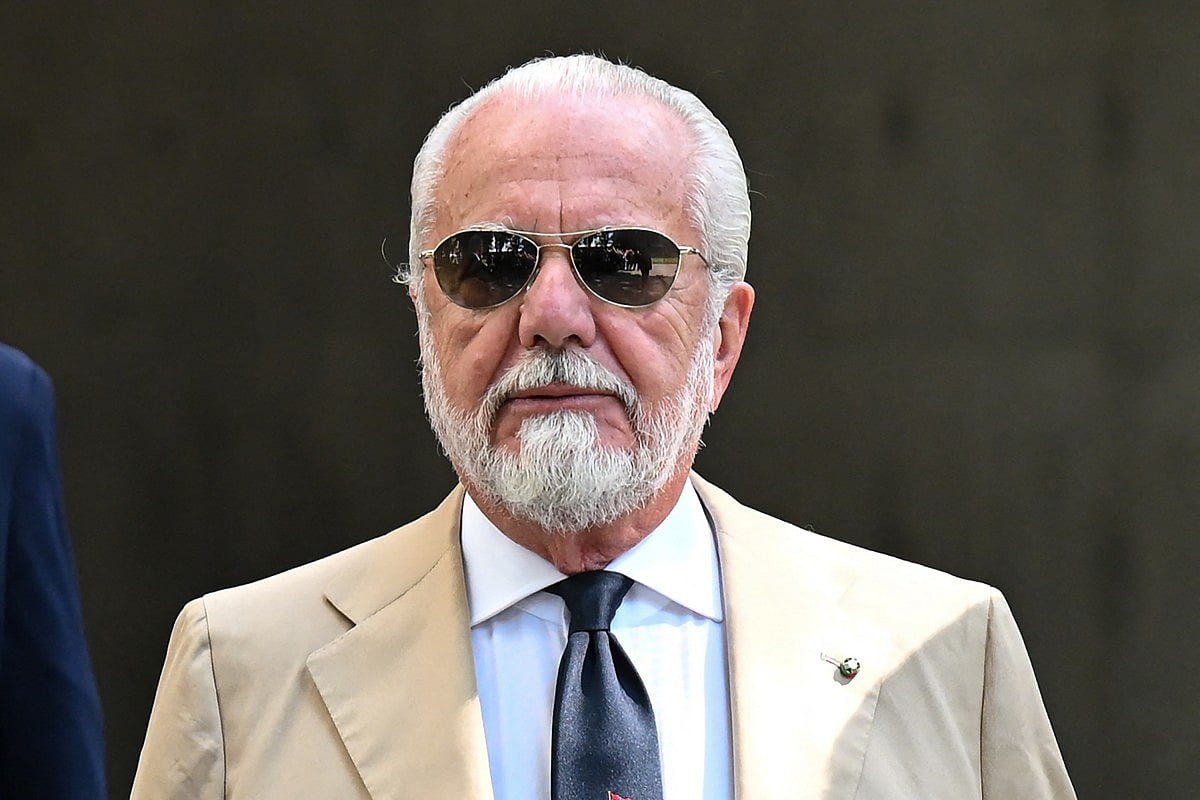
Napoli owner Aurelio De Laurentiis has sparked a fresh debate across the football world after proposing sweeping changes to the sport, but the reaction on social media has been just as loud as the idea itself.
The veteran club president was speaking to The Athletic and believes football must evolve to keep younger audiences engaged. However, many fans online are not convinced he is the right voice to define what the next generation actually wants.
A shorter, sharper game
At the centre of De Laurentiis’ proposal is a major shift in match duration. He wants football to move away from the traditional 90 minutes and instead adopt two 25 minute halves.
His reasoning comes from personal experience. He claimed younger viewers, including his own grandchild, often lose interest midway through games and switch to gaming instead.
Stop clock to end time wasting
To complement the shorter format, he also suggested introducing a stop clock system. This would pause the timer every time play is halted, removing the need for stoppage time.
The idea is aimed at increasing actual playing time and cutting down on delays.
"I will reduce from 45 minutes each half to 25 minutes.”
— The Athletic | Football (@TheAthleticFC) April 14, 2026
Aurelio De Laurentiis, owner of Napoli, believes football will lose the younger generation.
But he has ideas. Lots of them, including no red and yellow cards and changing the rules so there are more goals... pic.twitter.com/qzlFkKdvvl
No more cards, bring in sin bin
One of the boldest changes is the removal of yellow and red cards.
Instead, De Laurentiis wants a sin bin system:
Five minute temporary dismissal for yellow card offences
Twenty minute suspension for red card offences
He believes this would create more balance and keep matches competitive.
Tougher stance on simulation
De Laurentiis also called for stricter action against players who exaggerate injuries. In his view, anyone seen “acting” should be immediately taken off the pitch.
It is a move aimed at improving the flow and fairness of the game.
It's always some 108 year old man in a suit convincing us that they know what the younger generation needs
— La Liga Systems (@janufooty) April 14, 2026
the less we’re exposed to a terrible product the more we enjoy it? that’s one way of looking it
— Tien (@tiendrid) April 14, 2026
the problem is definitely the rules
> not the shit officiating
> not the boring “system” coaches
> not the over advertising
> not the €20/mo subscription on 4 different channels
Social media pushes back
A lot of fans online are not buying the idea. Many feel that those making these calls are out of touch with what younger viewers actually enjoy. One line that keeps popping up is that it is “older voices trying to decide what kids want,” with plenty arguing that football’s magic comes from its roots, not from changing it every few years.
Some also believe the issue is being misunderstood. For them, it is not about how long the match lasts, but how the sport is packaged, shared and experienced in today’s digital world. Even the refereeing standards and football being overly tactical are also discussed online.
Too many games, not too long games?
One point many fans do seem to agree on is the number of matches. There is a growing feeling that the football calendar is simply too crowded. With games coming thick and fast across leagues, cups and international breaks, it can become overwhelming even for the most dedicated viewers.
Some believe trimming the number of matches might actually do more good than changing the format itself. Fewer games could mean better quality, more anticipation and less fatigue for both players and fans, rather than risking burnout from constant action.
Football’s future debate continues
De Laurentiis has certainly reignited an important conversation about where football is headed.
Whether his ideas are seen as forward thinking or out of touch, one thing is clear. The debate between tradition and change is far from over, and fans are not afraid to make their voices heard.