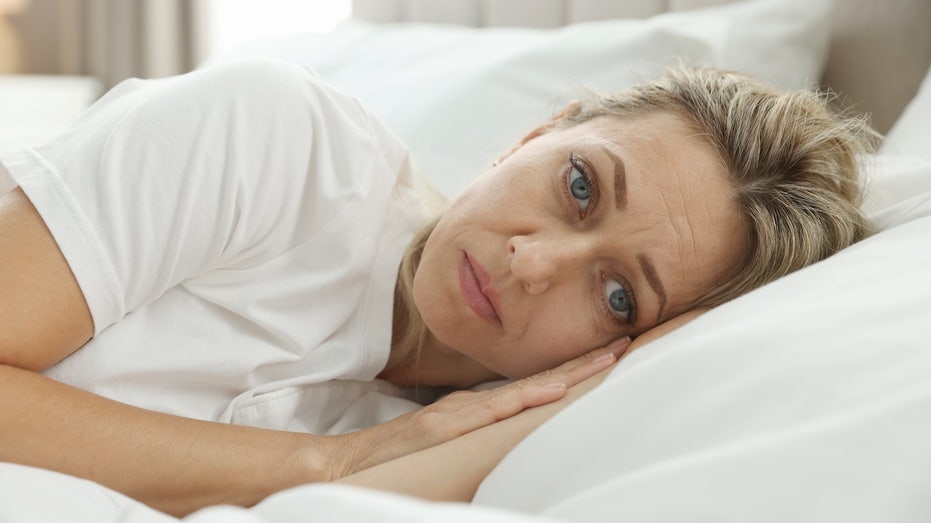
Finding the sleep 'sweet spot' could help you live longer, study suggests
•How long you sleep could be linked to how long you’ll live.A new study, published in the journal Nature, found that people who slept too little or too long showed signs of "older biology."Researchers...
•They were also associated with a higher risk of future diseases and all-cause mortality, the researchers found.In nine of the aging clocks, the researchers found "statistically significant" links betw...
•As it was observational in design, it does not prove that sleeping exactly six to eight hours will slow aging.Saema Tahir, MD, a New York-based board-certified sleep medicine physician, reflected on t...
هذا الخبر من Fox News. خبر يقدم أدوات ذكاء اصطناعي للتلخيص والترجمة والاستماع.
المصدر: Fox News | Source: Fox NewsHow long you sleep could be linked to how long you’ll live.
A new study, published in the journal Nature, found that people who slept too little or too long showed signs of "older biology."
Researchers from Columbia University in New York used global biobank data from about 500,000 people who disclosed self-reported sleep duration in a 24-hour period, including naps.
DEEP SLEEP CAN KEEP TWO BIG HEALTH PROBLEMS AT BAY, NEW STUDIES SUGGEST
Reported sleep times were compared with 23 biological aging clocks, estimating whether various parts of the body looked biologically older or younger than the individual’s actual age.
Short and long sleep were both linked with signals of a higher biological age. They were also associated with a higher risk of future diseases and all-cause mortality, the researchers found.
In nine of the aging clocks, the researchers found "statistically significant" links between sleep and aging, including in the brain, heart, immune system and skin.
Those with the "lowest biological age gap" were women who slept for 6.5 to 7.8 hours and men who slept for 6.4 to 7.7 hours, according to the study.
Longer sleep had a stronger link to psychiatric-related outcomes, while short sleep had more physical impacts on cardiovascular, metabolic, musculoskeletal, psychiatric, neurological, pulmonary and gastrointestinal conditions.
HERE'S WHY 90% OF AMERICANS DON'T SLEEP THROUGH THE NIGHT, ACCORDING TO EXPERT
The U-shaped results also showed that shorter sleep led to a 50% higher relative risk for all-cause mortality, while longer sleep had about a 40% higher risk.
The researchers noted that self-reported sleep poses a limitation to the study. As it was observational in design, it does not prove that sleeping exactly six to eight hours will slow aging.
Saema Tahir, MD, a New York-based board-certified sleep medicine physician, reflected on these findings in an interview with Fox News Digital.
"Sleep is really when the body does its most critical repair work, including cellular restoration, immune regulation, hormonal balance, and even clearing out metabolic waste from the brain through what we call the glymphatic system," said Tahir, who was not involved in the study.
AGING PROCESS COULD ACCELERATE DUE TO 'FOREVER CHEMICALS' EXPOSURE, STUDY FINDS
"When sleep is consistently too short or too long, those processes get disrupted. Over time, that disruption accumulates at the cellular level."
This effect is proven in increased inflammatory markers and cellular changes, which are "hallmarks of accelerated aging," Tahir noted.
"So, the relationship isn't just correlational; there are real physiological mechanisms connecting poor sleep to the body aging faster than it should."
Tahir cautions her patients not to treat the six- to eight-hour recommendation as a "rigid prescription," as sleep is individualized.
For example, a healthy 25-year-old and a 70-year-old with cardiovascular disease have "very different sleep architecture and needs," according to the expert.
DO WOMEN NEED MORE SLEEP THAN MEN? HERE’S WHAT EXPERTS THINK
"What I tell my patients is to use that range as a starting framework, but pay attention to how you feel," she advised. "Are you waking up refreshed? Can you stay alert throughout the day without caffeine propping you up? Those functional cues matter just as much as the number on the clock."
For certain people, like pregnant women, athletes and people recovering from illness, these sleep needs can shift "considerably."
"Sleep duration is important, but ... getting adequate sleep and REM sleep that allows our bodies to heal, clear, process and repair is much more important," Tahir said.
Regardless of sleep time, those who don’t achieve quality sleep often struggle, she shared.
CLICK HERE FOR MORE HEALTH STORIES
"I've seen patients who log seven hours but spend most of that time in light sleep, barely touching the deep slow-wave or REM stages that are most restorative," Tahir said. "They age just as poorly, sometimes worse, than someone getting six hours of genuinely consolidated, high-quality sleep."
Deep sleep is the phase when growth hormone is released and tissue repair peaks, and REM sleep is "critical" for cognitive health and emotional regulation, according to the expert.
CLICK HERE TO SIGN UP FOR OUR HEALTH NEWSLETTER
"So, chasing hours without addressing sleep fragmentation, sleep apnea or poor sleep architecture is missing the bigger picture," she said.
The takeaway from this study, according to Tahir, is that sleep is not a "lifestyle luxury," but a "biological necessity with measurable consequences for how we age and how healthy we are."
There's still a cultural tendency to see sleep deprivation as a "badge of productivity," which she pushes back against. "But I also want people to avoid the other extreme — health anxiety about their sleep can actually make sleep worse."
TEST YOURSELF WITH OUR LATEST LIFESTYLE QUIZ
The sleep expert concluded that "consistent, good-quality sleep is one of the most accessible tools we have for healthy aging."
"It doesn't require a prescription or expensive intervention — it requires prioritization."
ملاحظة تحريرية | Editorial Note: نُشر هذا المقال في الأصل بواسطة Fox News. خبر (Khabr) هي منصة إعلامية أردنية مرخّصة تعمل بالذكاء الاصطناعي. نضيف قيمة تحريرية من خلال: تحليل ذكي للأخبار، ملخصات تلقائية، رواية صوتية بالذكاء الاصطناعي، ترجمة متعددة اللغات، وتدقيق الحقائق. هدفنا جعل الأخبار أكثر وضوحاً وسهولةً للقارئ العربي.
This article was originally published by Fox News. Khabr is a licensed Jordanian AI-powered news platform (Registration #82086). We add editorial value through: AI-powered news analysis, automated summaries, AI audio narration, multi-language translation (Arabic, English, French, Turkish), and AI fact-checking. Our mission is to make news more accessible and understandable for Arabic-speaking audiences worldwide.