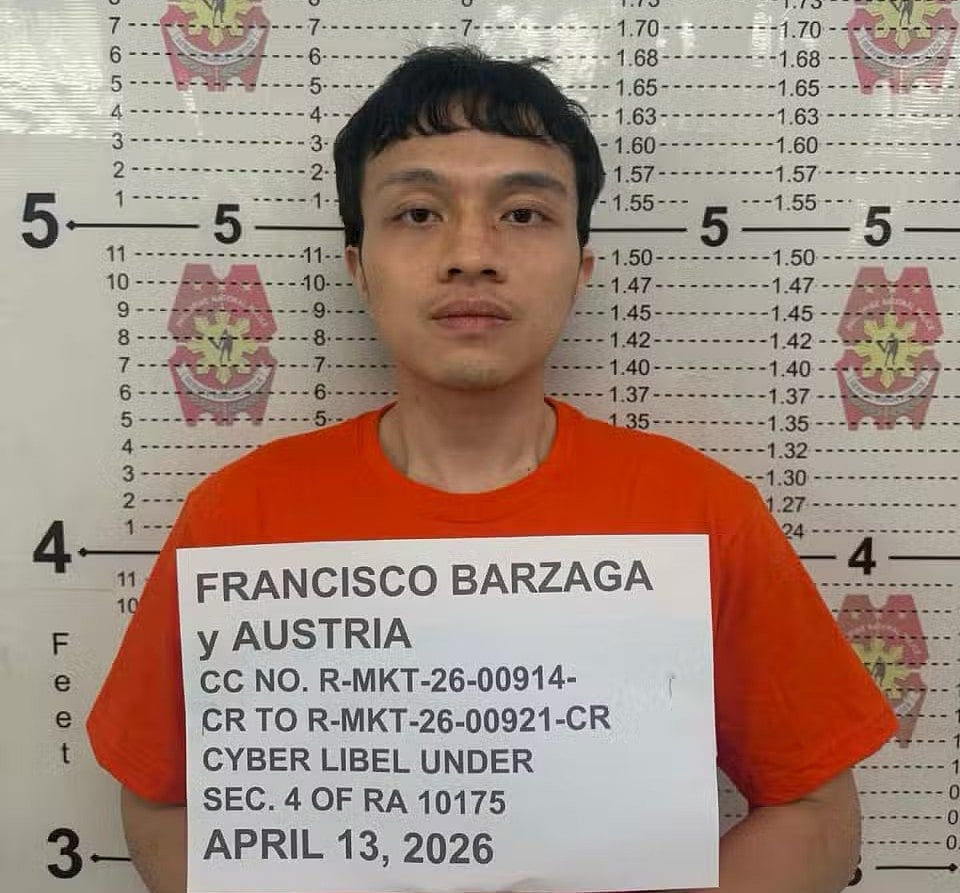
Filipino congressman arrested over cyberlibel case
المصدر: Gulf News | Source: Gulf NewsManila: Suspended Filipino Congressman Kiko Barzaga surrendered to authorities on Monday (April 13) hours after a Makati court issued an arrest warrant for eight counts of cyberlibel.
This marks a dramatic turn in his legal woes.
Barzaga, a neophyte lawmaker representing the 4th District of Cavite, turned himself in at the Dasmariñas City Police Station at 6:59 pm on Monday, accompanied by counsel, following the Regional Trial Court Branch 147 order.
Bail is recommended at ₱48,000 per count, totaling ₱384,000.
Barzaga remains in police custody.
CYBERLIBER TEST CASE: This cyberlibel case tests Republic Act 10175's teeth, where online defamation carries prison terms up to 6 years per count. Barzaga's plight underscores tensions between lawmakers' speech freedoms and accountability in the digital age, as courts balance libel laws against public discourse.What the case is about
The charges stem from the accusations he made against Filipino billionaire tycoon Enrique Razon, Antipolo Rep. Ronaldo Puno and Manila Rep. Rolando Valeriano
It came following the Cavite representative’s allegations that members of the National Unity Party (NUP) were bribed by Razon to support former House Speaker Martin Romualdez.
On January 9, 2026, Barzaga alleged on Facebook that Filipino business tycoon Razon "masterminded" corruption in Congress and bribed members of the NUP to support the leadership of Speaker Martin Romualdez.
The post included the hashtag #IkulongSiRazon ("Jail Razon").
The complaints argued that Barzaga's claims were false, malicious, and damaged Razon's reputation.
The case also noted that, while legislators have immunity for speeches in Congress, this protection does not extend to personal social media posts.
Razon filed two counts of cyberlibel against Barzaga, seeking at least ₱100 million in moral damages and ₱10 million in exemplary damages.
Barzaga's apology
Barzaga later issued a public apology, but Razon pressed forward with the complaint under the Cybercrime Prevention Act (RA 10175).
Specifically, Razon, Puno and Valeriano filed a cyberlibel complaint against Barzaga over Facebook posts and public statements that allegedly linked the businessman to irregularities and wrongdoing.
The complaint was filed under the cyberlibel provision of RA 10175, which penalises libel committed through online platforms.
The dispute largely centres on whether Barzaga’s statements crossed from protected political speech into defamatory factual accusations made with malice.
Position of Razon’s camp:
The billionaire's camp alleges the ports magnate was defamed by Barzaga:
The statements were defamatory accusations presented as fact
They were publicly posted and widely shared on social media
They named or clearly referred to him, making him identifiable
They allegedly damaged his reputation as a businessman
Barzaga’s position
Barzaga has maintained that his posts and remarks were:
Part of his duty as a public official raising issues of public concern
Fair comment on matters involving public interest and accountability
Not made with malice, which is a required element for libel conviction
Covered by freedom of speech, especially in the context of governance and public spending
His defence leans on the principle that speech involving public issues, public funds, and powerful private interests is given wider protection under Philippine jurisprudence.
Why the case is significant
The case is being closely watched because it sits at the intersection of:
A powerful private businessman’s right to protect his reputation, and
An elected official’s right to speak out on issues he frames as matters of public interest.
Its outcome may help clarify how Philippine courts treat social media speech by public officials when it involves allegations against prominent private individuals.
Controversy
Barzaga's surrender caps months of controversy.
Suspended by the House of Representatives since December 2025 for reckless social media posts — including jests about torching the Batasang Pambansa that prompted inciting-to-sedition raps — his initial 60-day penalty lapsed in February 2026.
Colleagues extended it another two months, citing ongoing misconduct: online attacks on the late Antipolo Rep. Romeo Acop and unruly conduct toward peers and Razon.
House suspension, the second-harshest sanction short of expulsion, strips Barzaga of voting rights and committee roles, sidelining him amid a polarised Congress.
Critics decry his "keyboard warrior" antics as emblematic of eroding decorum in Philippine politics, while supporters frame it as free speech under attack.
What the court will examine
For cyberlibel, prosecutors must establish:
A defamatory imputation
Publication online
Clear identifiability of the complainant
Actual malice in making the statement
Key details of the case include
January 9, 2026: Barzaga alleged on Facebook that Razon "masterminded" corruption in Congress and bribed members of the National Unity Party (NUP) to support the leadership of Speaker Martin Romualdez, including using the hashtag #IkulongSiRazon ("Jail Razon").
The lawsuit: Razon filed two counts of cyberlibel against Barzaga, seeking at least ₱100 million in moral damages and ₱10 million in exemplary damages.
Response and apology: Barzaga initially stated he would face the charges, but later apologized, admitting his accusations were fueled by a personal grudge. Despite the apology, the legal case proceeded.
April 13, 2026: Representative Barzaga surrendered to police after the Makati City Regional Trial Court issued an arrest warrant in connection with eight counts of cyberlibel, with bail set at ₱48,000 per count.
Cybercrime Act (RA 10175)
Section 5. Other Offenses. — The following acts shall also constitute an offense:
(a) Aiding or Abetting in the Commission of Cybercrime. – Any person who willfully abets or aids in the commission of any of the offenses enumerated in this Act shall be held liable.
(b) Attempt in the Commission of Cybercrime. — Any person who willfully attempts to commit any of the offenses enumerated in this Act shall be held liable.
Section 6. All crimes defined and penalised by the Revised Penal Code, as amended, and special laws, if committed by, through and with the use of information and communications technologies shall be covered by the relevant provisions of this Act: Provided, That the penalty to be imposed shall be one (1) degree higher than that provided for by the Revised Penal Code, as amended, and special laws, as the case may be.
Section 7. Liability under Other Laws. — A prosecution under this Act shall be without prejudice to any liability for violation of any provision of the Revised Penal Code, as amended, or special laws.
ملاحظة تحريرية | Editorial Note: نُشر هذا المقال في الأصل بواسطة Gulf News. خبر (Khabr) هي منصة إعلامية أردنية مرخّصة تعمل بالذكاء الاصطناعي. نضيف قيمة تحريرية من خلال: تحليل ذكي للأخبار، ملخصات تلقائية، رواية صوتية بالذكاء الاصطناعي، ترجمة متعددة اللغات، وتدقيق الحقائق. هدفنا جعل الأخبار أكثر وضوحاً وسهولةً للقارئ العربي.
This article was originally published by Gulf News. Khabr is a licensed Jordanian AI-powered news platform (Registration #82086). We add editorial value through: AI-powered news analysis, automated summaries, AI audio narration, multi-language translation (Arabic, English, French, Turkish), and AI fact-checking. Our mission is to make news more accessible and understandable for Arabic-speaking audiences worldwide.