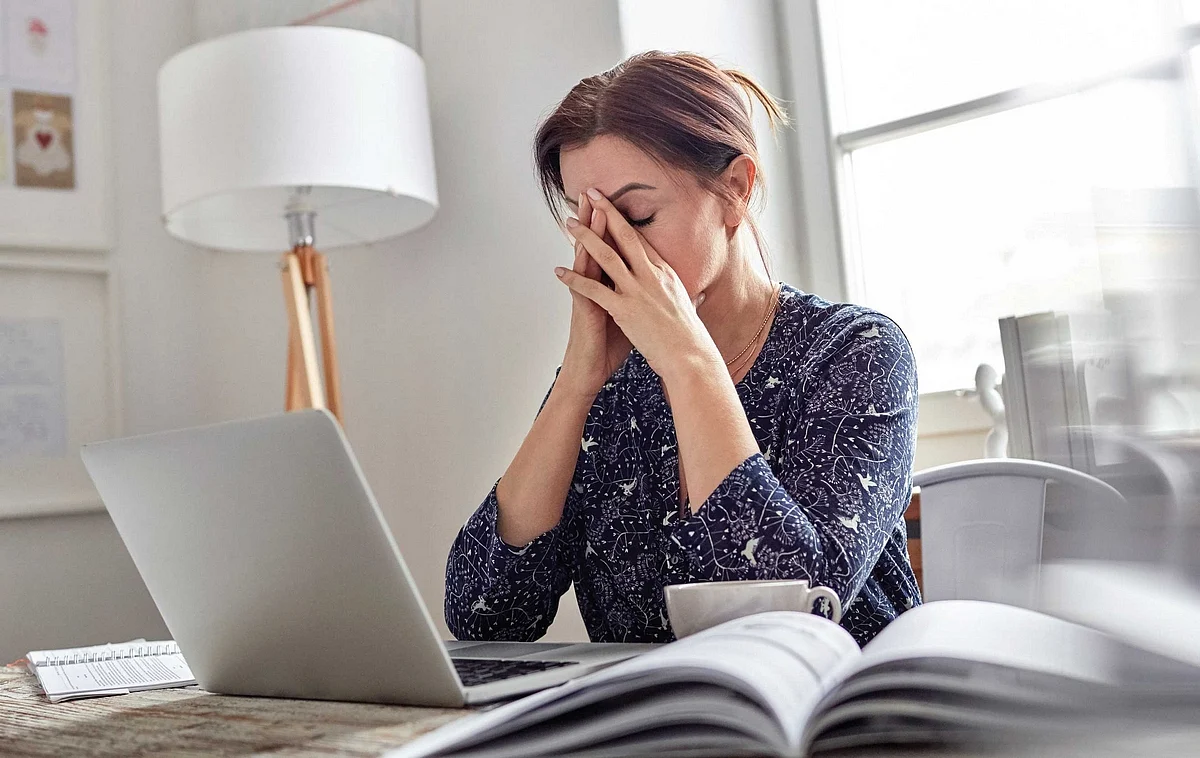
Feeling drained amid US-Iran ceasefire? UAE-based expert explains the 'let-down' effect
•From the first moments of uncertainty to the cautious calm following a ceasefire in the US-Israel-Iran war, residents across the UAE have been riding an emotional wave, one that experts say is far fro...
•“During acute stress, the body prioritises survival,” Jamie Richards, Chief Wellbeing Officer at Valeo Health, told Khaleej Times.
•“Systems like heart rate and stress hormone production increase, while others such as digestion and immunity are temporarily suppressed.”Stay up to date with the latest news.
هذا الخبر من Khaleej Times. خبر يقدم أدوات ذكاء اصطناعي للتلخيص والترجمة والاستماع.
المصدر: Khaleej Times | Source: Khaleej TimesFrom the first moments of uncertainty to the cautious calm following a ceasefire in the US-Israel-Iran war, residents across the UAE have been riding an emotional wave, one that experts say is far from over.
In the early days of the crisis, many people slipped into what health specialists describe as “survival mode” — a state where the body and mind focus almost entirely on immediate safety.
“During acute stress, the body prioritises survival,” Jamie Richards, Chief Wellbeing Officer at Valeo Health, told Khaleej Times. “Systems like heart rate and stress hormone production increase, while others such as digestion and immunity are temporarily suppressed.”
Stay up to date with the latest news. Follow KT on WhatsApp channels.
As tensions begin to ease, that high-alert state gradually fades. Physically, the body starts to rebalance — heart rate slows, muscle tension reduces, and normal bodily functions resume. Emotionally, many people report a lift in mood and improved interactions with those around them. But the transition is not always smooth.
Experts point to what is known as the “let-down effect” a phase where individuals may actually feel worse after the peak of stress has passed. “When the immediate threat disappears, the body doesn’t instantly switch off,” Richards said. “There is often a delayed response where fatigue, headaches, or even low mood begin to surface.”
“When the immune system starts to recover, people can temporarily feel more run down,” he added. “This can show up as minor illnesses or physical discomfort, which often confuses people because they expect to feel better, not worse.”
During the height of uncertainty, stress manifested in different ways. Some residents experienced heightened anxiety, disrupted sleep, and constant alertness, while others appeared outwardly composed.
“Stress is not one-size-fits-all,” Richards said. “Some individuals internalise it, while others may not show obvious signs. But that doesn’t mean the body isn’t under strain it simply processes it differently.”
Now, as stability begins to return, many are finding themselves in what experts describe as an “in-between phase”, no longer in crisis, but not fully back to normal either.
“It’s essentially a recovery period,” Richards said. “Even if the external situation improves, the body and mind remain cautious. That lingering alertness is the nervous system trying to protect you.”
“People often say they don’t feel like themselves yet,” he added. “That’s because the sense of safety hasn’t fully returned. It takes time for the body to trust that the environment is stable again.”
For some, this phase is marked by unexpected exhaustion. After weeks of heightened alertness, the body begins to slow down often revealing just how much energy was being used to cope.
“Sustained stress is incredibly demanding,” Richards said. “You’re dealing with disrupted sleep, irregular eating, shallow breathing all of which drain your energy reserves over time.”
“It’s like completing a marathon,” he said. “During the race, adrenaline keeps you going. But once it’s over, the body needs rest, recovery, and rebuilding. That exhaustion is not weakness, it’s part of the healing process.”
As residents adjust to calmer conditions, experts emphasise the importance of intentional recovery rather than simply pushing forward.
“Movement is one of the most effective ways to process stress,” Richards said. “It helps regulate hormones, stabilise blood sugar, and signal to the body that it’s safe to come out of survival mode.”
“Spending time outdoors, getting natural light, and slowing your breathing can make a significant difference,” he added. “These small actions help the nervous system reset.”
Equally important is mental processing. “Taking time to reflect, even writing down your thoughts can help release internal tension,” Richards said. “You don’t have to hold onto everything you’ve experienced.” Ultimately, recovery is not immediate and it is not linear.
“This phase is about regaining control,” he said. "It’s about caring for your body and mind, and gradually shifting your focus back to the present."
ملاحظة تحريرية | Editorial Note: نُشر هذا المقال في الأصل بواسطة Khaleej Times. خبر (Khabr) هي منصة إعلامية أردنية مرخّصة تعمل بالذكاء الاصطناعي. نضيف قيمة تحريرية من خلال: تحليل ذكي للأخبار، ملخصات تلقائية، رواية صوتية بالذكاء الاصطناعي، ترجمة متعددة اللغات، وتدقيق الحقائق. هدفنا جعل الأخبار أكثر وضوحاً وسهولةً للقارئ العربي.
This article was originally published by Khaleej Times. Khabr is a licensed Jordanian AI-powered news platform (Registration #82086). We add editorial value through: AI-powered news analysis, automated summaries, AI audio narration, multi-language translation (Arabic, English, French, Turkish), and AI fact-checking. Our mission is to make news more accessible and understandable for Arabic-speaking audiences worldwide.