Fatty liver disease spirals in India since 1990, driven by diabetes and obesity: Study raises red flags
•Weather ePaper Today’s Paper Journalism of Courage Home ePaper India Cities UPSC Premium Entertainment Politics Sports World Explained Opinion Business Lifestyle Tech Subscribe Sign In TrendingUPSC Of...
•Experts push early lifestyle change as condition is reversible if detected early Written by: Anuradha Mascarenhas4 min readNew DelhiApr 14, 2026 10:07 AM IST Dr Palnitkar said it was not uncommon for...
•(Representational image/File) Make us preferred source on Google Whatsapp twitter Facebook Reddit PRINT About one in six people worldwide — 16% of the global population — were living with metabolic dy...
هذا الخبر من Indian Express. خبر يقدم أدوات ذكاء اصطناعي للتلخيص والترجمة والاستماع.
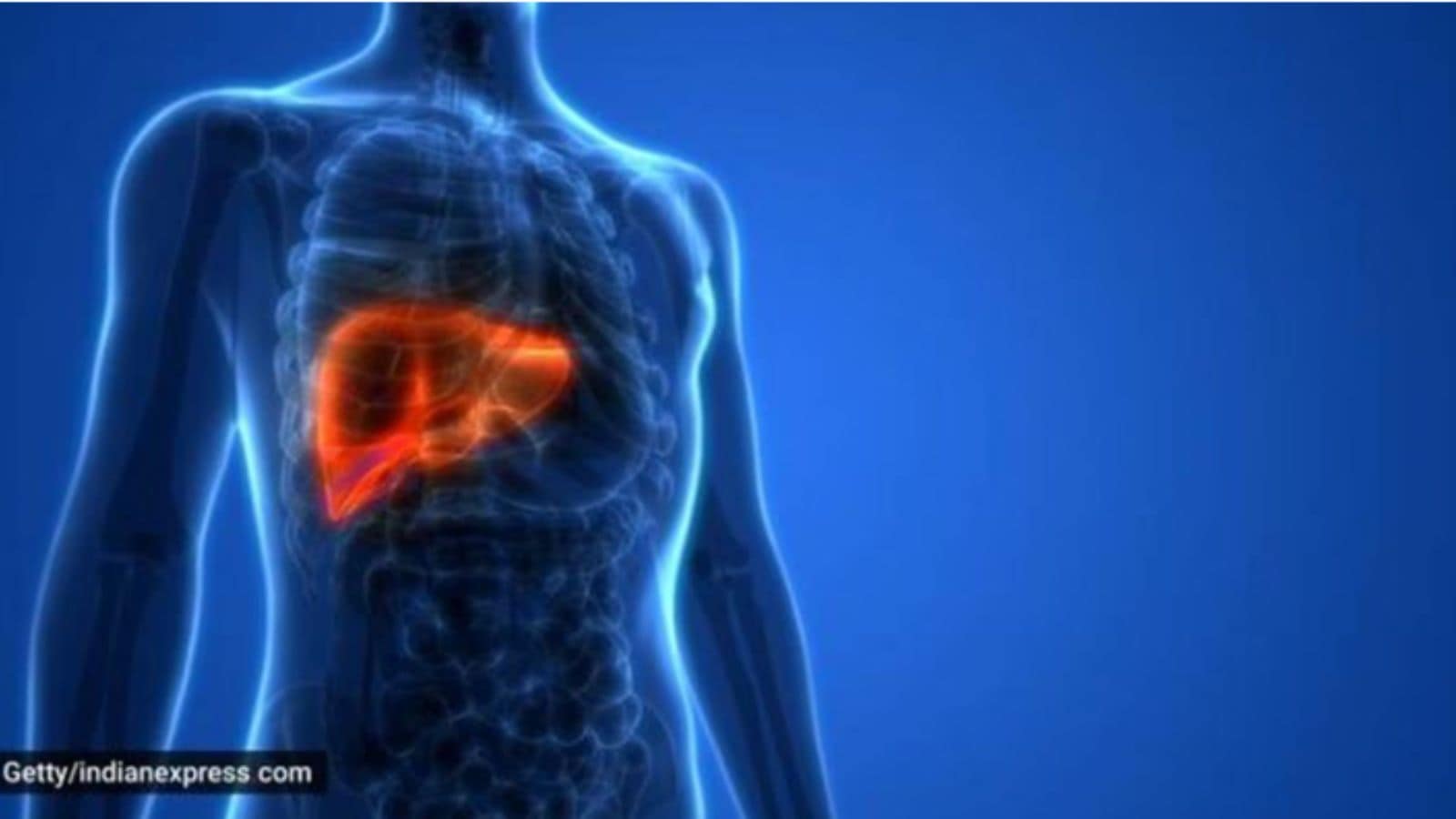
Weather ePaper Today’s Paper Journalism of Courage Home ePaper India Cities UPSC Premium Entertainment Politics Sports World Explained Opinion Business Lifestyle Tech Subscribe Sign In TrendingUPSC OfferIPL 2026US NewsPuzzles & GamesLegal NewsFresh TakeHealthResearch🎙️ Podcast Advertisement function checkAndLoadWindowSizeScript() { if (window.jQuery) { // jQuery is loaded, include your script jQuery(document).ready(function($) { // Your existing script for checking window width if (window.innerWidth) var page_w = window.innerWidth; else if (document.all) var page_w = document.body.clientWidth; if (page_w > 1024) { $(".add-left, .add-right").show(); } else { $(".add-left, .add-right").hide(); } }); } else { // jQuery is not loaded, check again after 0.2 seconds setTimeout(checkAndLoadWindowSizeScript, 200); } } // Initial call to the function checkAndLoadWindowSizeScript(); NewsHealth and WellnessFatty liver disease spirals in India since 1990, driven by diabetes and obesity: Study raises red flags Fatty liver disease spirals in India since 1990, driven by diabetes and obesity: Study raises red flags One in six people worldwide live with metabolic liver disease. Experts push early lifestyle change as condition is reversible if detected early Written by: Anuradha Mascarenhas4 min readNew DelhiApr 14, 2026 10:07 AM IST Dr Palnitkar said it was not uncommon for practically every health facility to have a fatty liver clinic. (Representational image/File) Make us preferred source on Google Whatsapp twitter Facebook Reddit PRINT About one in six people worldwide — 16% of the global population — were living with metabolic dysfunction-associated steatotic liver disease (MASLD) or what we know as non-alcoholic fatty liver disease in 2023, marking a 143% increase since 1990. India has shown a sharp rise in MASLD prevalence, up 23.19 per cent from 1990 to 2023. India’s age-standardised MASLD prevalence rate rose from 10,191 per 100,000 in 1990 to 12,555 per 100,000 in 2023. The findings, published in The Lancet Gastroenterology and Hepatology, show that the spike is increasingly driven by rising metabolic risk factors, including high blood sugar and obesity. “India’s case spiral aligns with South Asian patterns, driven by metabolic risks amid population expansion,” Dr Mahaveer Golechha, Professor, IIPH-Gandhinagar and contributing author of the Global Burden of Diseases, 2023, told The Indian Express. He also explained that there had been a slight drop in DALYs (Disability-Adjusted Life Years, a metric representing years of healthy life lost due to illness, disability, or premature death). As per the study, the age-standardised DALY rate for MASLD in India fell slightly from 23.8 per 100,000 in 1990 to 21.1 per 100,000 in 2023, a 11.3 per cent decrease. What are the key risk factors for fatty liver? “High fasting plasma glucose, followed by high BMI (body mass index) and smoking in India mirror global patterns where blood glucose levels drive 2.2 DALYs per 100,000. Lower healthcare access correlates with higher DALYs in nations like India,” Dr Goleccha explains. “It is critical to raise awareness about liver health, the second largest organ in the human body. The 2026 theme is ‘Solid Habits, Strong Liver,’ and focusses on consistent lifestyle choices — such as a healthy diet, exercise and limiting alcohol — which are crucial for preventing liver diseases, 90% of which are preventable,” said Dr Sachin Palnitkar, consulting hepatologist at Deenanath Mangeshkar Hospital, Pune. The study provides an assessment of the global, regional, and national burden of MASLD across 204 countries. MASLD prevalence rose nearly 29% from 1990 to 2023, while the DALY rate remained stable—suggesting improved care may be delaying severe disease, but also leaving a growing population at risk of complications like cirrhosis and liver cancer. MASLD is projected to affect 1.8 billion people by 2050, a 42% increase from 2023, with growth driven largely by population expansion rather than aging alone. MSALD rising in India but data still scarce In an earlier study in the Lancet Regional Health South Asia this year, authors Meghana Arvind and others had flagged that community-based data remain scarce. They had stated, while there are limited studies available for community-wide prevalence of MASLD in the general population in India, the prevalence of NAFLD is alarmingly high, ranging from 9 to 32% in urban areas, with certain regions reporting a prevalence of nearly 60%, attributed to rapid urbanisation, sedentary lifestyles and dietary shifts toward processed, calorie-dense foods. Dr Palnitkar said it was not uncommon for practically every health facility to have a fatty liver clinic. “The main cause is insulin resistance. The number of cases has increased significantly over the years. Earlier, only about 5–10% of patients were diagnosed with fatty liver, but now nearly 15–20 out of every 60 patients have this condition at my daily OPD,” he said. Increasing number of younger adults with MASLD What is more concerning is that younger people are increasingly being affected. “There is an urgent need for structured awareness programmes, especially since fatty liver is a reversible condition if detected early,” Dr Palnitkar said. As per the study too, the largest number of people living with MASLD was in younger adults (around ages 35-39 for men and 55-59 for women). High blood sugar the leading trigger High blood sugar was the leading driver of MASLD-related health loss globally, followed by high BMI and smoking, highlighting strong links to diabetes and obesity. What was a concern is also the asymptomatic nature of early-stage MASLD often leads to delayed diagnosis. So, strengthening prevention, expanding screening and improving treatment will be critical —particularly in settings with lower health-care access and quality. Anuradha Mascarenhas is a Senior Editor at The Indian Express, based in Pune. With a career spanning three decades, she is one of the most respected voices in Indian journalism regarding healthcare, science and environment and research developments. She also takes a keen interest in covering women's issues . Professional Background Education: A gold medalist in Communication and Journalism from Savitribai Phule Pune University and a Master’s degree in Literature. Author: She authored the biography At The Wheel Of Research, which chronicles the life and work of Dr. Soumya Swaminathan, the former Chief Scientist at the WHO. Key Focus: She combines scientific accuracy with storytelling, translating complex medical research into compelling public and human-interest narratives. Awards and Recognition Anuradha has won several awards including the Press Council of India's national award for excellence in journalism under the gender based reporting category in 2019 and the Laadli Media award (gender sensitivity -2024). A recipient of the Lokmat journalism award (gender category-2022), she was also shortlisted for the RedInk awards for excellence in journalism-2021. Her debut book At The Wheel Of Research, an exclusive biography of Dr Soumya Swaminathan the inaugural chief scientist of World Health Organisation was also nominated in the Popular Choice Category of JK Paper AUTHER awards. She has also secured competitive fellowships including the Laadli Media Fellowship (2022), the Survivors Against TB – New Research in TB Media Fellowship (2023) and is part of the prestigious 2025 India Cohort of the WomenLift Health Leadership Journey.” Recent Notable Articles (Late 2025) 1. Cancer & Specialized Medical Care "Tata Memorial finds way to kill drug-resistant cancer cells" (Nov 26, 2025): Reporting on a breakthrough for triple-negative breast cancer, one of the most aggressive forms of the disease. Discipline, diet and purpose; How a 97-year-old professor defies ageing'' (Nov 15, 2025) Report about Prof Gururaj Mutalik, the first Head of Department at Pune's B J Government Medical College who at 97 credits his longevity to healthy habits and a strong sense of purpose. 2. Environmental Health (The "Breathless Pune" Series) Long-term exposure even to 'moderate' air leads to chronic heart, lung, kidney issues" (Nov 26, 2025): Part of an investigative series highlighting that even "safe" pollution levels are damaging to vital organs. "For every 10 µg/m3 increase in PM2.5 level, there was 6-8% jump in medicine sales" (Nov 23, 2025): Using commercial data to prove the direct link between air quality and respiratory illnesses in Pune. 3. Lifestyle & Wellness News "They didn't let cancer, diabetes and heart disease stop them from travelling" (Dec 22, 2025): A collaborative piece featuring survivors who share practical tips for traveling with chronic conditions. At 17, his BP shot up to 200/120 mmHG; Lancet study flags why child and teen hypertension doubled between 2000 and 2020'' (Nov 12,2025)--A report that focusses on 17-year-old-boy's hypertensive crisis and reflects the rising global trend of high blood pressure among children and adolescents. 4. Scientific Recognition & Infrastructure For promoting sci-comm, gender diversity: IUCAA woman prof highlighted in Nature" (Nov 25, 2025): Covering the global recognition of Indian women scientists in gender studies and physics. Pune researchers find a spiral galaxy like the Milky Way from early universe'' (December 3, 2025)- A report on how Indian researchers discovered a massive galaxy that existed when the universe was just 1.5 billion years old , one of the earliest to have been observed so far. Signature Beat: Health, Science & Women in Leadership Anuradha is known for her COVID-19 reportage, where she was one of the first journalists to provide detailed insights into the Covishield and Covaxin trials. She has a dedicated interest in gender diversity in health and science, often profiling women researchers who are breaking the "leaky pipeline" in STEM fields. Her writing style is scrupulous, often featuring interviews with top-tier scientists and health experts from various institutions. ... Read Moreالمصدر: Indian Express | Source: Indian Express
ملاحظة تحريرية | Editorial Note: نُشر هذا المقال في الأصل بواسطة Indian Express. خبر (Khabr) هي منصة إعلامية أردنية مرخّصة تعمل بالذكاء الاصطناعي. نضيف قيمة تحريرية من خلال: تحليل ذكي للأخبار، ملخصات تلقائية، رواية صوتية بالذكاء الاصطناعي، ترجمة متعددة اللغات، وتدقيق الحقائق. هدفنا جعل الأخبار أكثر وضوحاً وسهولةً للقارئ العربي.
This article was originally published by Indian Express. Khabr is a licensed Jordanian AI-powered news platform (Registration #82086). We add editorial value through: AI-powered news analysis, automated summaries, AI audio narration, multi-language translation (Arabic, English, French, Turkish), and AI fact-checking. Our mission is to make news more accessible and understandable for Arabic-speaking audiences worldwide.