EXPOSED: Inside 'evil' world of UK's most secretive religion, as survivors tell JANE FRYER of abuse, bizarre sewage customs, Cotswolds property empire - and chilling fate of followers' cats and dogs…
•Published: 00:30, 24 May 2026 | Updated: 00:30, 24 May 2026 For those of us who are not members, any mention of the Plymouth Brethren Christian Church (PBCC) tends to ring a few alarm bells.
•For starters, they are notorious for the closed and highly secretive nature of their communities and interminable religious services – seven days a week and five, or even six, times on a Sunday – in t...
•Not to mention their astonishing wealth and strict rules – no eating, drinking, socialising or living with outsiders.
هذا الخبر من Daily Mail. خبر يقدم أدوات ذكاء اصطناعي للتلخيص والترجمة والاستماع.
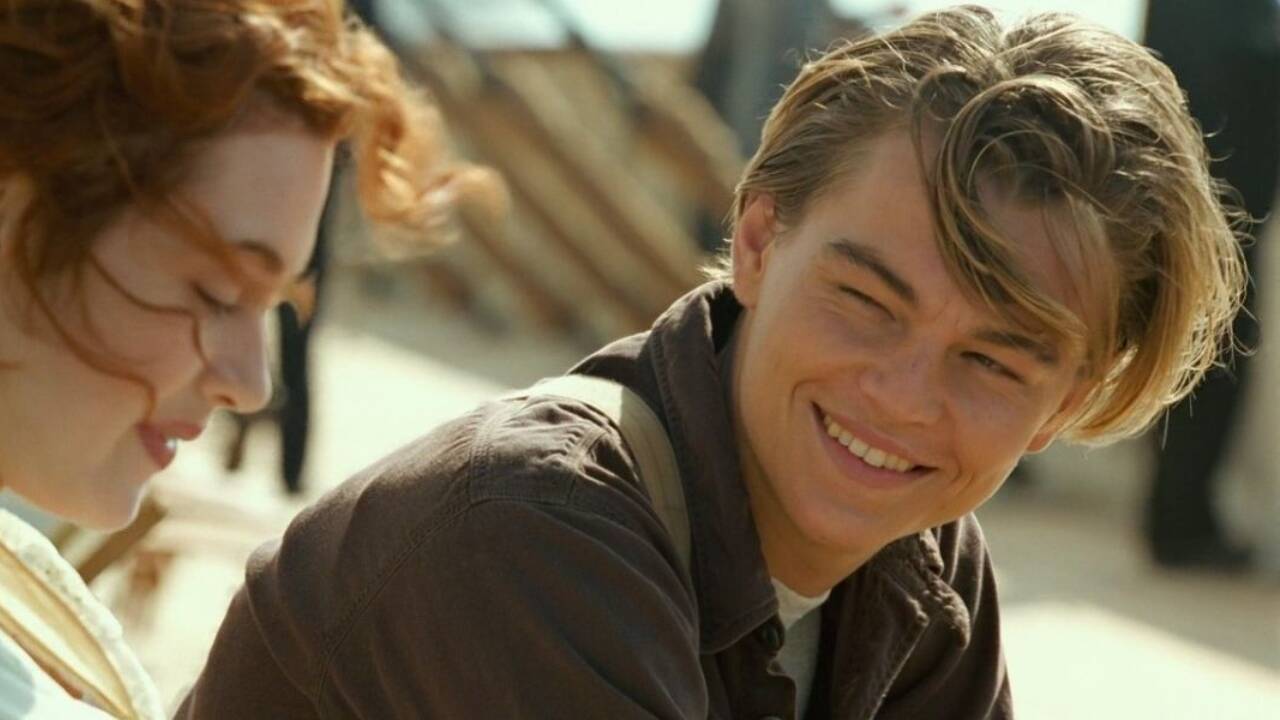
Published: 00:30, 24 May 2026 | Updated: 00:30, 24 May 2026 For those of us who are not members, any mention of the Plymouth Brethren Christian Church (PBCC) tends to ring a few alarm bells. For starters, they are notorious for the closed and highly secretive nature of their communities and interminable religious services – seven days a week and five, or even six, times on a Sunday – in their nondescript Gospel Halls. Not to mention their astonishing wealth and strict rules – no eating, drinking, socialising or living with outsiders. No travel without an official permit. No non-Brethren schooling. No university. No employment outside the organisation. No terraced or semi-detached houses or shared rooms for their many offspring. Speaking of which, no contraception. Oh yes, and the overt sexism – no haircuts, make-up, trousers or jobs in authority (or out of the home) for women. We’ve recently had our eyes opened further by Netflix’s hit show Unchosen, starring Sex Education’s Asa Butterfield, a fictional drama based on the secretive Christian sect. But it seems that the truth might be even stranger. Because, just this week, came the extraordinary news that the PBCC has ordered its 55,000 members around the world to purge their homes of pets – ‘dogs, cats, birds and mice’ – after a young relative of the group’s supreme leader, Bruce Hales, who lives in Australia, was bitten by a dog. In a letter circulated around the world, the leadership reminded its global parishioners that it was ‘clearly wrong’ to keep a dog in their house. It continued: ‘There are reports of some Brethren owning pets, including dogs and other animals, which practice has been clearly spoken about in ministry. Every household should be freshly exercised [concerned] to ensure the standard... is carried forward and maintained.’ Let’s be clear here, the rationale is nothing to do with hygiene, allergies, or even danger. More, it seems, the worry that if members love their pets too much, they’re in danger of becoming idols, distracting from their owners’ total devotion to God. And mad though it sounds, such is their slavish devotion that, in response, some parishioners have already started having their beloved pets put down. This week, one member from New Zealand posted a photo of her beautiful white long-haired kitten, wearing a pretty collar and curled up cold in a pink blanket, freshly euthanised, with the words ‘Rest in peace my little girl’. Sex Education's Asa Butterfield stars in Netflix's fictional drama based on the secretive Christian sect, Unchosen PBCC leader Bruce Hales, who has been the head of the group for the past 30 years, speaks at a gathering The Brethren then released a second statement, suggesting that while members were ‘minded to rehome them, they should do so appropriately and with no harm to the animal’. It seems others have been putting their pets in crates, driving them hours from home and dumping them in the hope they won’t come back. Some have simply released small animals – guinea pigs, rabbits, budgerigars – belonging to their children, into the wild. And one parishioner in the UK was witnessed sobbing on their doorstep, pleading for another 24 hours with their beloved cats, before they were ‘dealt with’. Yes, you read that correctly – in the UK. While this all sounds like something that would happen in a crazy cult in California, or maybe Nevada or Utah – even, plausibly, Australia – there are currently 18,500 members of the PBCC in the UK, in communities everywhere from Northern Ireland to Scotland, Sussex, Suffolk, Bristol and Yorkshire. And lately, apparently, it has expanded to the Cotswolds, where in some villages in South Gloucestershire and Oxfordshire wealthy Brethren members have reportedly been snapping up detached houses, swathes of land and applying for planning permission to build even bigger homes. But while they live among us, they don’t mix, and many of them sound very unhappy. Partly thanks to their core ‘doctrine of separation’, based on the fundamental belief that they are the chosen ones, the rest of us are evil and that they must be protected from us at all costs, so their world is sealed off from ours. But also because, I’m told, many want to leave but can’t. Not without losing everything: families, children, homes, friends, jobs, community and money. There is also the astonishing wealth of the sect’s top tier in Australia, the excessive alcohol consumption of members, the extraordinary control the organisation has over their lives, the multiple allegations of abuse among elders and the crippling fear that overrides everything. Fear, partly, of being caught out for breaking the endless ridiculous rules – no beach visits, no homes with shared drainage systems, no social media, no TV – and as a result being withdrawn from and shunned. Punished, locked away and then frozen out of society. But even more, fear of God and ‘The Rapture’ – a moment when, according to doctrine, Jesus will gather deserving Brethren and whisk them off to Heaven and leave the rest of us, along with any Brethren who have sinned, alone to face the horrors of the Tribulation. ‘I spent my childhood terrified I’d get left behind,’ says Maria Compton (not her real name), 57 and a fourth-generation Brethren, who left in 2013,after becoming suicidal having been raped and sexually abused by her husband. She has written a book, Out of Faith, about her experience. ‘If my mum was late home from the shops, I’d assume it had happened and I’d been singled out. I still have nightmares.’ It was never supposed to be like this. The Plymouth Brethren was formed in 19th-century England by members of the Anglican Church (led by John Nelson Darby) who believed the church was too closely linked to worldly matters, too hierarchical and had lost its way. I’m told many want to leave but can’t, writes Jane Fryer. Not without losing everything: families, children, homes, friends, jobs, community and money The PBCC has ordered its 55,000 members around the world to purge their homes of pets So, to better focus on the teachings of Jesus from the Bible, they ditched the clergy and any leader, and decreed they’d ‘break bread’ as equals in fellowship. Which sadly didn’t work out because, ever since, there have been endless splits and power struggles amongst members and dominant leaders. Until it all culminated in what became known as the ‘Aberdeen incident’ – a reference to 1970 when James Taylor Jr, the then leader, ‘Man of God’ or ‘Elect Vessel’, and a mad, bad, alcoholic adulterer, decreed that members could no longer eat or drink with non-members, thus ending mixed marriages, splitting families and ruining livelihoods virtually overnight. It was he who also outlawed pets for the first time. Not surprisingly, more than a third of Brethren members left the church. But those who stayed called it ‘a test of loyalty to the truth’ and, as the rules became tighter, became even more devout. This week I have spoken to quite a few ex-Brethren – some still too scared to give their full names, others who want to tell the world how awful it was. And one insider, who could not tell me his name, where he was from, or how many children he had (in case he was tracked) and made me delete his number immediately. We’ll call him Tom. ‘It was terribly hard – I remember my mum showing me photos of her cat she’d had put to sleep,’ says Tom, of the decree almost 60 years ago. ‘So many animals; it was awful for the children. There wasn’t much else for them to do. Guide dogs weren’t even allowed for the blind. ‘It could all blow over this time, but the trouble with this sort of edict is how quickly you act is a test of your loyalty. The elders will be checking up on their communities.’ Today – and for the past 30 years – the leader of the PBCC is a 73-year-old Australian called Bruce Hales. ‘Everyone regards him with awe and thinks everything he says is the word of God,’ says ex-Brethren Richard Marsh. The 54-year-old left his community in Cambridgeshire in 2015 and has not spoken to his wife or five children since. He now lives in Canada with his second wife and their three-year-old and runs a podcast which helps ex-Brethren called Get A Life, with Cheryl Hope. Cheryl, now 45, got out in 1992 when she was 17, leaving her entire family, and has subsequently bought charges against the organisation for serial child abuse when she was a small girl. Richard explained: ‘When you’ve seen through it, you wonder you were ever taken in by it. Now I don’t think he [Bruce] is remotely religious. I don’t think he believes any of the stuff he puts out. He’s not even charismatic, he’s just a big, fat, very ordinary-looking Australian businessman.’ Certainly Hales, whose father, John, was supreme leader before him, is laser-focused on business and money. Under his leadership, a thriving and astonishingly far-reaching network of Brethren businesses – all interconnected under the Brethren business arm UBT (Universal Business Team) – has sprung up and made billions, most notably £2.2billion from UK government Covid PPE contracts. While not all the millions sloshing around at the top filter down to the rule-abiding parishioners, there are perks to being in the Brethren. The Church helps young couples buy their first home by giving them enhanced salaries in UBT companies. Poverty is virtually unheard of. The elderly are cared for at home where possible. And certain Brethren rules in relation to tech and computers have been relaxed to help smooth business along. But some say the community is becoming increasingly isolated – and partly because of schooling. Many of the ex-Brethren I spoke with went to mainstream schools. So while they were banned from eating and playing with their ‘worldly’ classmates, or taking part in sport, religious education or anything else the brotherhood disapproved of, they did have an exposure to the outside world. And an inkling that everyone else was perhaps not evil. ‘At least we had a glimpse of it,’ says Maria. ‘Now it’s much harder. They’ve no idea of the outside world so it’s much harder to leave, because where would you even start?’ Under Hales they all attend special Brethren schools, often travelling hours by car to get there. No one goes to university, though online business courses are encouraged . . . for men. Women, meanwhile, stay at home, keep house, shop at Campus & Co (a Brethren-owned supermarket), raise endless children, cook and dabble in cottage industries. ‘You could have neighbours in your street, in a big, detached house, who are in the Brethren and completely cut off from the world,’ says Maria. ‘It’s conditioning. They’ve never known anything else. It should be illegal – just look at the pets. It’s coercive control. It’s evil.’ As well as stories of all the mad rules and isolation, those who have left are overflowing with terrible stories of abuse within their communities, much of which are fuelled by alcohol. ‘There’s a massive drinking culture. What else is there to do – eat drink, socialise. You can’t even watch sport,’ says Tom, a recovering alcoholic himself. ‘So many people die each year of alcohol-related issues and they sweep it all under the carpet. If they wanted to sort something out, focus on that and leave our pets alone.’ ‘Bottom of the tank are single women. They get no financial support, no help. The only thing worse than being a single woman is being gay. Or being a dog, of course,’ says Tom. ‘There are a huge number of terrible stories about what happens if you’re gay – conversion therapy, people being fed hormone suppressants, chemical castration drugs. Then, when none of that works, they’re thrown out, shamed and filled with guilt.’ While most of the people I speak to agree that the Netflix series Unchosen is a bit old-fashioned in parts – ‘Most of us have tech now,’ says Tom – some things are spot on. The detached houses; the women still not allowed to work (‘It’s better than it was, but it’s still not great,’ Tom tells me); and the punishment meted out for any rule transgressions, which is usually separation from your family. Often in a locked room in the family house – like Maria’s sister was in the 1980s when she was imprisoned in her home for a week for watching Charles and Diana’s wedding on a TV in the window of the local Woolworths. ‘I could hear her. It was awful,’ says Maria. ‘She was affected by it for a long time.’ But sometimes – if the elders consider they have not sufficiently repented – the sinner will be completely shunned by society. Photos of them destroyed. Treated as if they never existed. And then they have to leave and somehow join the rest of society. Learn how to put on make-up, wear jeans and get a job. ‘It’s very, very hard,’ says one survivor. ‘We sort of have our own language inside, we have to learn how to communicate.’ But it is possible, and, according to Richard and Cheryl, ‘survivors’ are on the up. ‘When we started the podcast in 2022, we were shouting into the dark,’ says Cheryl. ‘Now we’re inundated with messages. A change is coming. People have had enough and are finally seeing the light.’ Let’s hope so, even if sadly not quite in time to save their dogs and cats. No comments have so far been submitted. Why not be the first to send us your thoughts, or debate this issue live on our message boards. By posting your comment you agree to our house rules. Do you want to automatically post your MailOnline comments to your Facebook Timeline? Your comment will be posted to MailOnline as usual. Do you want to automatically post your MailOnline comments to your Facebook Timeline? Your comment will be posted to MailOnline as usual We will automatically post your comment and a link to the news story to your Facebook timeline at the same time it is posted on MailOnline. To do this we will link your MailOnline account with your Facebook account. We’ll ask you to confirm this for your first post to Facebook. You can choose on each post whether you would like it to be posted to Facebook. Your details from Facebook will be used to provide you with tailored content, marketing and ads in line with our Privacy Policy.المصدر: Daily Mail | Source: Daily Mail
ملاحظة تحريرية | Editorial Note: نُشر هذا المقال في الأصل بواسطة Daily Mail. خبر (Khabr) هي منصة إعلامية أردنية مرخّصة تعمل بالذكاء الاصطناعي. نضيف قيمة تحريرية من خلال: تحليل ذكي للأخبار، ملخصات تلقائية، رواية صوتية بالذكاء الاصطناعي، ترجمة متعددة اللغات، وتدقيق الحقائق. هدفنا جعل الأخبار أكثر وضوحاً وسهولةً للقارئ العربي.
This article was originally published by Daily Mail. Khabr is a licensed Jordanian AI-powered news platform (Registration #82086). We add editorial value through: AI-powered news analysis, automated summaries, AI audio narration, multi-language translation (Arabic, English, French, Turkish), and AI fact-checking. Our mission is to make news more accessible and understandable for Arabic-speaking audiences worldwide.