Expert Explains | India’s nuclear pivot: FBRs the future, PHWRs to anchor growth until technology matures
•Weather ePaper Today’s Paper Journalism of Courage Home ePaper Politics Explained Opinion India Business Premium Cities UPSC Entertainment Sports World Lifestyle Tech Subscribe Sign In TrendingUPSC Of...
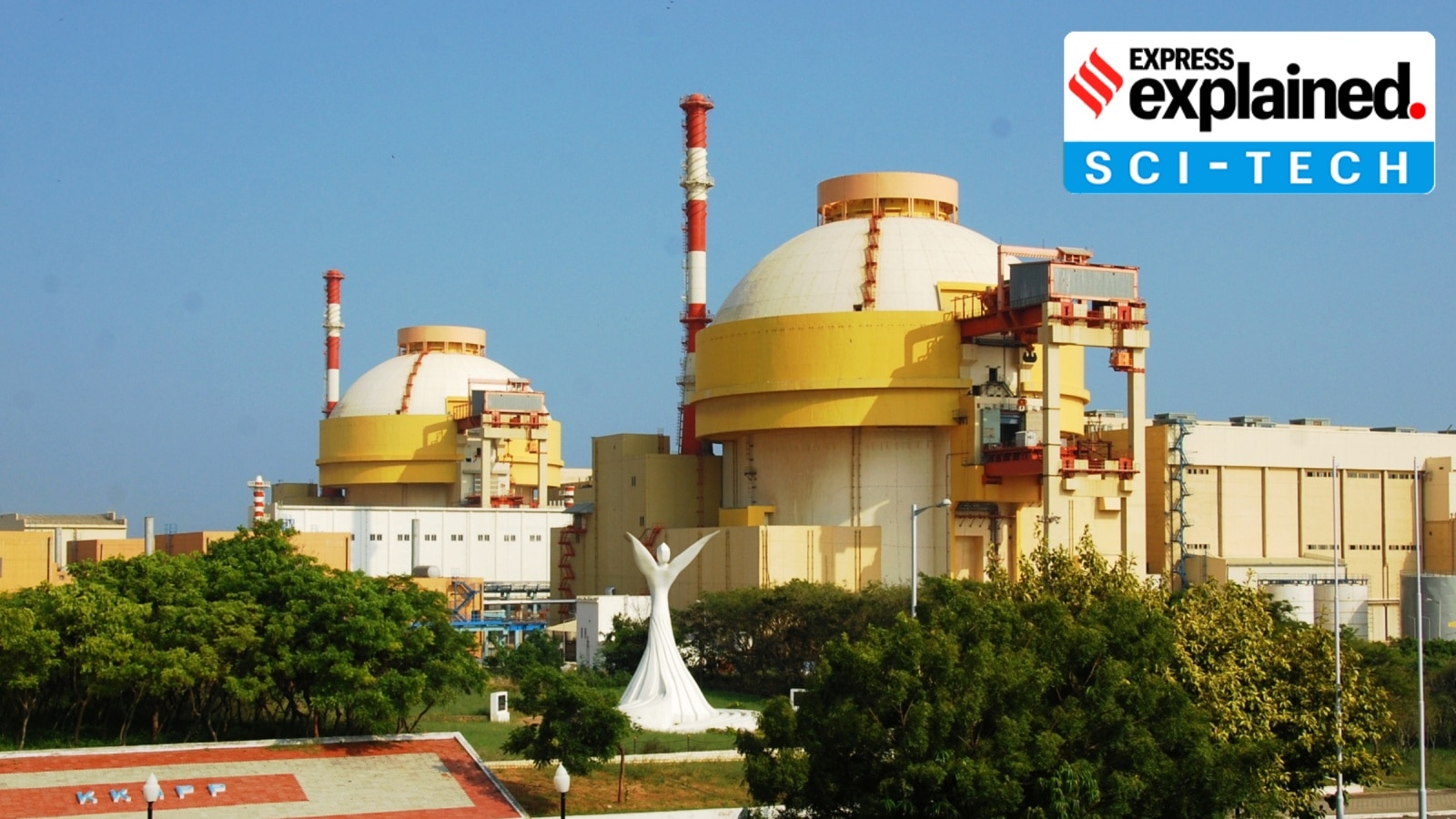
•Written by: Pratyush Deep13 min readNew DelhiUpdated: Apr 19, 2026 04:57 PM IST Kudankulam Nuclear Power Plant Units 1 and 2 at Kudankulam in Tirunelveli district of Tamil Nadu.
•Photo: Wikimedia Commons Make us preferred source on Google Whatsapp twitter Facebook Reddit PRINT With India’s first indigenous fast breeder reactor (FBR) at Kalpakkam reaching criticality, indigenou...
هذا الخبر من Indian Express. خبر يقدم أدوات ذكاء اصطناعي للتلخيص والترجمة والاستماع.
Weather ePaper Today’s Paper Journalism of Courage Home ePaper Politics Explained Opinion India Business Premium Cities UPSC Entertainment Sports World Lifestyle Tech Subscribe Sign In TrendingUPSC OfferIPL 2026US NewsPuzzles & GamesLegal NewsFresh TakeHealthResearch🎙️ Podcast Advertisement function checkAndLoadWindowSizeScript() { if (window.jQuery) { // jQuery is loaded, include your script jQuery(document).ready(function($) { // Your existing script for checking window width if (window.innerWidth) var page_w = window.innerWidth; else if (document.all) var page_w = document.body.clientWidth; if (page_w > 1024) { $(".add-left, .add-right").show(); } else { $(".add-left, .add-right").hide(); } }); } else { // jQuery is not loaded, check again after 0.2 seconds setTimeout(checkAndLoadWindowSizeScript, 200); } } // Initial call to the function checkAndLoadWindowSizeScript(); NewsExplainedExplained Sci-TechExpert Explains | India’s nuclear pivot: FBRs the future, PHWRs to anchor growth until technology matures Expert Explains | India’s nuclear pivot: FBRs the future, PHWRs to anchor growth until technology matures As India deregulates the nuclear power sector, NPCIL CMD Bhuwan Chandra Pathak explains how the company will play a “motherly role" in fostering private participation through technology, project development, and design. Written by: Pratyush Deep13 min readNew DelhiUpdated: Apr 19, 2026 04:57 PM IST Kudankulam Nuclear Power Plant Units 1 and 2 at Kudankulam in Tirunelveli district of Tamil Nadu. Photo: Wikimedia Commons Make us preferred source on Google Whatsapp twitter Facebook Reddit PRINT With India’s first indigenous fast breeder reactor (FBR) at Kalpakkam reaching criticality, indigenous FBRs are likely to play a critical role in the country’s long term energy security, according to Bhuwan Chandra Pathak, Chairman and Managing Director at Nuclear Power Corporation of India Limited (NPCIL). While FBRs represent the future, pressurised heavy water reactors (PHWRs) will continue to play their pivotal role until the technology matures, he told The Indian Express. As India deregulates the nuclear power sector, Pathak said NPCIL will play a “motherly role” in fostering private participation through technology, project development, and design. With India’s first FBR at Kalpakkam attaining criticality, marking a significant milestone in the second stage of India’s three-stage nuclear programme, how do you see the technological trajectory of India’s nuclear sector? In the long term, what roles do thorium-based reactors, light water reactors (LWRs), and other technologies play in the overall energy mix? Our nuclear power programme is based on the sequential three-stage programme where in the first stage is PHWR using natural uranium. The fuel for FBR (in the second stage) comes from PHWR, which is plutonium. Because the yield of plutonium is very good in PHWR. As stated, the fuel for FBR is plutonium plus depleted uranium. FBRs initially use plutonium plus depleted uranium to obtain Uranium-233 (U-233) from the Thorium-232 (Th-232), which is used as a blanket in such reactors. Thus, we breed more fuel than we consume and hence it is named Breeder Reactor. In the third stage, it is Th-232 that will get converted into U-233, which would be fuel for the advanced reactors. This is how it completes the whole nuclear power programme and we will become self-independent as far as fuel is concerned. FBR is basically one of the intermediate steps in completion of our three stage programme. Worldwide, people usually opt for pressurised water reactors (PWR, a type of LWR) wherein enriched uranium is used because they have a good stock of uranium. However, we were in the technology denial regime, (so) we did not go for PWR and opted for PHWR. While natural uranium is in modest amounts in the country, we have a huge amount of thorium. So, it is really a major achievement for the country and paves way for energy security in all respects, including the fuel. There could be various technologies within nuclear power. Firstly, we have PHWR, a technology that we have mastered. We have now developed 700 megawatt electrical (MWe) capacity size of PHWRs. Three of such units have been operating very successfully now. Secondly, we also have two reactors at Kudankulam of 1,000 MWe capacity based on PWR technology. The technology for this has been provided by the Russian Federation and of course we were responsible for its construction, commissioning, operation, and maintenance. Further, we also have two reactors based on boiling water reactor technology, namely TAPS-1 and 2 at Tarapur in Maharashtra. Similarly, FBRs will also be one of the components of this clean electricity source. The fuel for PHWR is available in adequate quantity for the present needs. However, with the kind of clean energy expansion planned, it may pose some challenges. So, subsequently FBRs are likely to fill the gap. That is why FBRs will support the rising requirement in future, but until the technology attains maturity, PHWRs will keep playing their pivotal role. As India opens its nuclear power sector to greater private participation, how does NPCIL envision its role in supporting the country’s long-term energy security in an evolving ecosystem? NPCIL is a pioneering company in nuclear power development as well as generation. In the journey, we have evolved and developed the 700 MWe PHWR, which is going to be a mainstay of our indigenous nuclear power programme. We already have a programme to take the current level of installed capacity to 22 gigawatt electrical (GWe) by 2031-32, and by 2047 our plan is to take it to about 54 GWe from NPCIL alone. So, NPCIL will continue to play a pivotal role in supporting the industry and all players who want to enter the nuclear power sector in terms of providing technology. NPCIL will support them in setting up projects if they wish to adopt PHWR-based technology. So, it will play a kind of motherly role, supporting the industry to reach the scale it aspires to. This support is not limited to technology: NPCIL is a company with capabilities across multiple domains. We are involved in site selection, design, engineering, construction, commissioning, operation and maintenance, waste management, upgradation, ageing management, and quality assurance. These are the areas where NPCIL may play, or rather will play, a role — of course within resource constraints, as we have our own programme to execute. In addition to these areas, we are also involved in renovation and modernisation of plants, as we have been operating reactors for the past 40-50 years. Some reactors have already been modernised, and we have developed this capability at a very low cost. There are some reactors, which we have modernised. So, we have that technology available at a very low cost. We now have expertise in complex in-core jobs, that too at a very low cost. Despite India’s longstanding civil nuclear programme, capacity addition has been relatively gradual over the past five decades. From NPCIL’s perspective, what structural, technological, and policy-level factors have influenced this trajectory, and how are these challenges being addressed today? Of course, our programme started in the 1950s-60s, and there was a technology denial and embargo regime from 1974 onwards. So, we had to be on our own and develop everything — from technology to manufacturing. That took considerable time. We focused on modernising and standardising our 220 MWe reactors, and then moved to the 540 MWe reactors at Tarapur, which were completed in a record time of less than five years. Subsequently, we developed the 700 MW reactors with only limited changes from the 540 MWe design. These reactors are now operating very well. At present, we have 24 reactors in operation, excluding one which is under prolonged shutdown. Seventeen reactors are at different stages of implementation. Once these 17 reactors are completed, our total installed capacity will increase to 22 GWe. Initially, there were delays, but after the 1-2-3 agreement, the fuel supply improved, and our capacity factors improved significantly. Now, as many reactors are under construction and planned, we have a clear roadmap to move from 22 GWe to 54 GWe. We have already acquired most of the land required for upcoming reactors, the technology for the 700 MWe units is largely frozen. There is also a very positive ecosystem now. When we started, there was limited support from industry, and we had to develop vendors ourselves, as we were the only agency placing orders. Now, multiple agencies will be active in the sector, creating more opportunities for manufacturers and contractors across electrical, mechanical, and civil segments among others. This ecosystem is expanding, which will help scale up the programme. Of the 17 reactors under implementation, the first one — RAPS-8 at Rajasthan — is expected to be commissioned this year. Overall, everything is now in the pipeline. With supportive policies and growing trust — not just in NPCIL and sectoral players but in the industry as a whole — there is a positive momentum. I am confident that progress will further accelerate going forward. Looking ahead, what is likely to define India’s nuclear expansion strategy? Do you foresee a balanced mix of LWRs and indigenous PHWRs, or will the focus remain primarily on PHWR-led capacity additions? We need to have a basket that includes all types of technology. It should be a combination of various technologies because, worldwide, most reactors are based on PWRs or LWR-based technology. The individual capacity of LWRs is much higher, typically ranging from 1000 MWe to 1200 MWe, 1400 MWe, or even 1700 MWe. In my opinion, the basket should include both indigenous reactors as well as LWRs. The most important factor, however, is cost. If we go for indigenous reactors, they are currently among the cheapest in the world. So, from a cost perspective, PHWRs are very competitive. But if we are able to procure reactors from abroad at competitive rates, then LWRs are equally welcome, as they can help rapidly increase overall installed capacity. Therefore, there has to be a combination of PHWRs, LWRs, and possibly other technologies, including small modular reactors in the future. These could serve specific requirements such as remote areas, captive use, or data centres. Such technologies will be necessary. However, for overall energy security and large-scale, rapid implementation, the core combination should be PHWRs along with LWRs. How has the industry responded to Bharat Small Reactors and Bharat Small Modular Reactor projects? We have got industry offers and it’s in process. The industry response has been good. It is a good option for electricity intensive industries such as steel and aluminium to source clean electricity. Could you provide an update on the current status and future pipeline of LWR projects in India? The world’s oldest operational reactors — TAPS 1 and 2 — which are boiling water reactors (BWRs) are located in Tarapur in Maharashtra. These two reactors have completed around 55 years of operation, and we have now renovated and upgraded them. We have carried out their renovation ourselves, which reflects our expertise Tarapur Unit 1 has already resumed operations after renovation, and Unit 2 is expected to come online by next month. The next set of LWRs (in India) are at Kudankulam, Units 1 and 2, each of 1000 MWe capacity. These are already operating at very high capacity factors. In addition, four more units of the same technology — Kudankulam Units 3, 4, 5, and 6 — are under implementation at the same site. Unit 3 is at a very advanced stage of completion and is expected to come online next year, followed by Units 4, 5, and 6. As of now, this is our overall plan for LWRs. Emerging fuel concepts such as Advanced Nuclear Energy for Enriched Life (ANEEL) have been proposed for potential use in PHWR fleets. Has NPCIL undertaken any studies or assessments regarding the feasibility, safety, or economic viability of such advanced fuel options? As I mentioned, there are different reactor technologies available worldwide — be it BWRs, PWRs, PHWRs, and many others. Similarly, there are multiple fuel technologies and different kinds of fuels available. However, the reactors we have designed are based on natural uranium. So, if we were to use a different type of fuel, the reactor design would need to be modified accordingly. At present, our reactors are already operating with natural uranium, and we have assured availability of this fuel. That is why we have not thought of other fuel types, although multiple technologies do exist. As far as thorium is concerned, the commissioning of the FBR opens the pathway for large-scale utilisation of thorium. At the same time, a significant amount of research is ongoing globally in this domain. In the future, it is possible that we may also develop the fuel design if at all such a need arises in respect of a specific technology. But as of now, our PHWRs are designed to operate on natural uranium. A Parliamentary Standing Committee recently highlighted the divergence between revenue growth and profit contraction at NPCIL and suggested an independent performance audit of the corporation’s cost structure. How does NPCIL interpret this observation, and what measures are being considered to enhance operational and financial efficiency? You would have seen our balance sheet — we have been consistently increasing our revenue year by year. Profit before tax has also been strong. There was a temporary dip during the period when one or two reactors were commercialised. Commercialisation typically leads to a short-term impact because financial costs increase significantly at that stage. However, overall profitability continues to rise. So far, we have been constructing our reactors with government support. However, the latest four 700 MWe PHWRs — out of which three have already been commissioned and the fourth is complete and ready for commercialisation — have been funded through NPCIL’s own reserves and surpluses. We have not taken any government support. Kudankulam Unit 3 and Unit 4, again very big reactors in terms of finance and capacity, are also funded by NPCIL only, without taking any equity support. NPCIL has been exploring the possibility of an initial public offering. Could you share the current status of these plans and the strategic rationale behind considering such a step, particularly in the context of financing future expansion? In view of the large expansion plan, we will require additional funding. Because we want to become self independent in terms of financing. Our balance sheet, track record, safety performance, and financial support in this direction. We will approach the market at an appropriate time.المصدر: Indian Express | Source: Indian Express
ملاحظة تحريرية | Editorial Note: نُشر هذا المقال في الأصل بواسطة Indian Express. خبر (Khabr) هي منصة إعلامية أردنية مرخّصة تعمل بالذكاء الاصطناعي. نضيف قيمة تحريرية من خلال: تحليل ذكي للأخبار، ملخصات تلقائية، رواية صوتية بالذكاء الاصطناعي، ترجمة متعددة اللغات، وتدقيق الحقائق. هدفنا جعل الأخبار أكثر وضوحاً وسهولةً للقارئ العربي.
This article was originally published by Indian Express. Khabr is a licensed Jordanian AI-powered news platform (Registration #82086). We add editorial value through: AI-powered news analysis, automated summaries, AI audio narration, multi-language translation (Arabic, English, French, Turkish), and AI fact-checking. Our mission is to make news more accessible and understandable for Arabic-speaking audiences worldwide.