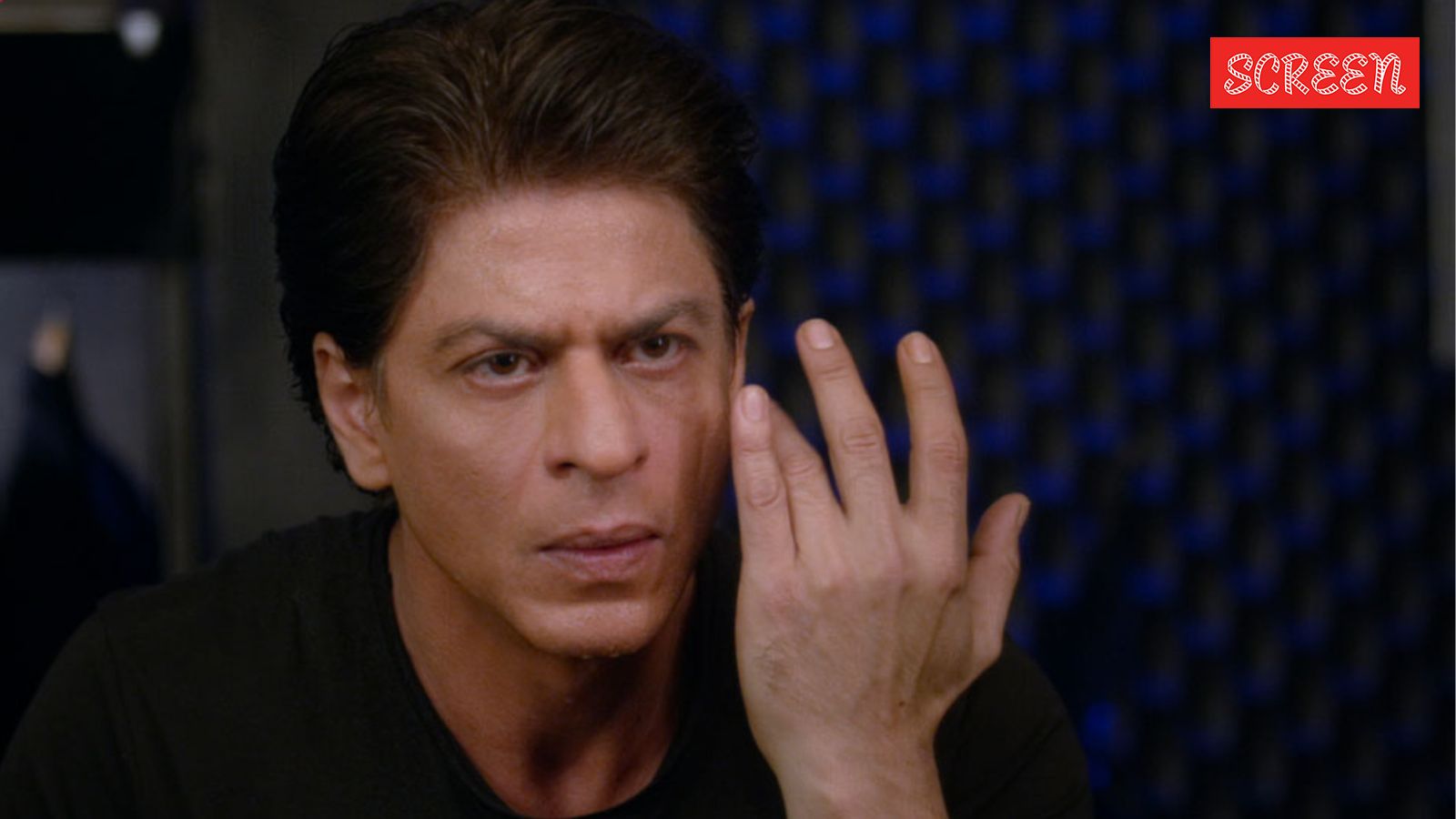
There’s a moment in Fan, directed by Maneesh Sharma, that strikes at the heart of the film’s polarising second half. It’s where we see Gaurav Chandna, a die-hard fan and lookalike of his idol Aryan Khanna (both played by Shah Rukh Khan, in what is arguably the finest performance of the last decade) storming into the luxurious seaside home of the star he worshipped, moving into his private study: a room filled with trophies, posters, and every tangible memory of Aryan’s career. It’s in this study, where in one terrific long take, Gaurav begins to dismantle it piece by piece, his bitterness seeping through. What was once adoration has now turned into bitter resentment. The scene is a masterstroke, a deep dive into the darkness of fandom, and how it evolves into something that can claim ownership over the very stars they adore, a sort of a sentiment that has only become more relevant in today’s time. Though the film may not have made a big splash at the box office, it has since become a seminal talking point in both SRK’s and Sharma’s careers. A decade later, Sharma, in an exclusive chat with SCREEN, reflects on the film’s thematic motifs, some of its key scenes, and his experience of working with Khan. Excerpts edited for clarity and brevity: What you’re deducing about Gaurav owning a cyber cafe is partly a directorial choice. When we were writing the character, the larger idea was that he comes from a middle-class family, not the brightest kid, so running an internet cafe was just a way to earn a living. The idea was that at 24, his only aspiration was to be like Aryan Khanna. As for foreshadowing, I’m not sure how much of it was planned from the start. This choice came up during discussions with my screenwriters, Habib Faisal and Sharat Katariya. And filmmaking is a process, and such choices evolve when they fit the larger theme of the story. For all of us, myself, my writers, Aditya Chopra (the producer), and even Shah Rukh, the film was never conceived in halves. We viewed it as a continuous journey of an eccentric young man and his obsessive admiration for a star. In that journey, there’s a pivotal shift that occurs, and once it does, the story becomes a relentless, no-holds-barred ride. The goal was always to introduce Gaurav, establish his world, his devotion to his idol, and then show a turning point that alters him completely. And, by the midpoint, the intent was that the audience is so deeply invested in his emotional journey, making them ready to follow him wherever his path leads. That scene was the very first thing we shot. Actually, we had a test shoot before, where we wanted to test Gaurav’s look, and we filmed that train sequence where he’s heading to Mumbai. But we later reshot it as we were just experimenting with a lot of things, including the shooting style. So, the first proper thing we shot was this mirror scene, which set the tone for both characters right away. Everyone was like, ‘Aren’t you nervous?’ But I was very excited because I thought, if I can pull this off, then we’re sorted. What you’re saying about them mirroring each other is absolutely true: reflection was always the thematic core of Fan. I told Manu Anand (the Director of Photography) that I wanted many reflections in the film, but none of the mirror shots should be too obvious; they had to carry a psychological layer. For example, Gaurav never looks at the mirror; he’s only seen in it. Or, one of my favorite shots is when Aryan looks at the mirror on the plane and gives a fake smile. These were the kinds of thematic motifs we aimed to weave throughout the film. Also Read | Dhurandhar 2: Aditya Dhar genuflects and the story sinks into subservience What you see in the film is the first take. When I saw it, it hit me in the heart. I was shaking when I watched it. The first thing my DOP said was that he thought he lost camera’s focus, and I told him, ‘You can’t tell me that after such a performance.’ I said, ‘This take will go, even if it’s out of focus,’ which it was. He kept asking to do another, but I told him, ‘Do as many as you want, but this one is it.’ It’s not that Shah Rukh couldn’t do it all over again, but some moments just happen, and you have to be there to witness that magic. Absolutely. What Shah Rukh brought to Aryan is truly one of a kind. In many of our discussions, he kept adding very intricate details to Aryan’s character. For instance, the moment in the wedding sequence where the businessman shuts Aryan down was actually Shah Rukh’s idea. Or, there’s a close-up shot where Aryan is looking at his phone. These small, subtle moments are very difficult to explain, but you can sense the vulnerability he brought to the performance, and he did so with such gravitas. Anas Arif is a prolific Entertainment Journalist and Cinematic Analyst at The Indian Express, where he specializes in the intersection of Indian pop culture, auteur-driven cinema, and industrial ethics. His writing is defined by a deep-seated commitment to documenting the evolving landscape of Indian entertainment through the lens of critical theory and narrative authorship. Experience & Career As a core member of The Indian Express entertainment vertical, Anas has cultivated a unique beat that prioritizes the "craft behind the celebrity." He has interviewed a vast spectrum of industry veterans, from blockbuster directors like Vijay Krishna Acharya, Sujoy Ghosh, Maneesh Sharma to experimental filmmakers and screenwriters like Anurag Kashyap, Vikramaditya Motwane, Varun Grover, Rajat Kapoor amongst several others. His career is characterized by a "Journalism of Courage" approach, where he frequently tackles the ethical implications of mainstream cinema and the socio-political subtext within popular media. He is also the host of the YouTube series Cult Comebacks, where he talks to filmmakers about movies that may not have succeeded initially but have, over time, gained a cult following. The show aims to explore films as works of art, rather than merely commercial ventures designed to earn box office revenue. Expertise & Focus Areas Anas's expertise lies in his ability to deconstruct cinematic works beyond surface-level reviews. His focus areas include: Auteur Studies: Detailed retrospectives and analyses of filmmakers such as Imtiaz Ali, Anurag Kashyap, and Neeraj Ghaywan, often exploring their central philosophies and creative evolutions. Cinematic Deconstruction: Examining technical and narrative choices, such as the use of aspect ratios in independent films (Sabar Bonda) or the structural rhythm of iconic soundtracks (Dilwale Dulhania Le Jayenge). Industrial & Social Ethics: Fearless critique of commercial blockbusters, particularly regarding the promotion of bigoted visions or the marginalization of communities in mainstream scripts. Exclusive Long-form Interviews: Conducting high-level dialogues with actors and creators to uncover archival anecdotes and future-looking industry insights. Authoritativeness & Trust Anas Arif has established himself as a trusted voice by consistently moving away from standard PR-driven journalism. Whether he is interrogating the "mythology of Shah Rukh Khan" in modern sequels or providing a space for independent filmmakers to discuss the "arithmetic of karma," his work is rooted in objectivity and extensive research. Readers look to Anas for an educated viewpoint that treats entertainment not just as a commodity, but as a critical reflection of the country's collective conscience. ... Read More Click here to follow Screen Digital on YouTube and stay updated with the latest from the world of cinema.
المصدر: Indian Express
| Source: Indian Express