Even camels can't cope: Africa's ships of the desert hit by rising temperatures
•Even camels can't cope: Africa's ships of the desert hit by rising temperaturesImage source, ReutersImage caption, Livestock herders in the Horn of Africa and North Africa have switched to camels over...
هذا الخبر من BBC News. خبر يقدم أدوات ذكاء اصطناعي للتلخيص والترجمة والاستماع.
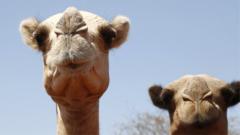
Even camels can't cope: Africa's ships of the desert hit by rising temperaturesImage source, ReutersImage caption, Livestock herders in the Horn of Africa and North Africa have switched to camels over the years because of their famed resilienceByNavin Singh KhadkaEnvironment correspondentPublished23 July 2026Camels are famously known as the ships of the desert, but even these hardy animals are not being spared from the extremes of rising temperatures in Africa.The Afar region of north-eastern Ethiopia is one of the hottest and driest places on Earth, where nomads often lead camel caravans carrying salt through the desert."I can see my camels suffering from extreme heat," Ali Umer, a camel herder from Semera in Afar, told the BBC."They get blisters on their feet, their eyes become watery and the hot sand burns their skin and eats up their hair when they are sitting," said the 40-year-old who owns around 500 camels."Within the past one month I have lost eight camel calves because of the extreme heat, it has become much more intense and difficult."Even the wind, which used to bring cool air, now carries heat," he said, adding he had noticed these drastic changes in the temperature in recent years.He is not alone in his observations: scientists, animal welfare workers and various studies all mention stress, fatigue, dehydration, disease prevalence as direct impacts of extreme heat.The higher temperatures also indirectly make camels suffer by causing severe loss of water, vegetation, and reduced shaded areas.Image source, Corbis via Getty ImagesImage caption, Camels carry bricks of salt cut from the mineral-laden lakes in the Danakil Depression, where temperatures can top 50CNorth Africa and the Horn of Africa host around 80% of the world's largest population of dromedary camels - those with one hump.Over the years, farmers and cattle herders in these regions have switched to these animals because of their resilience to h...المصدر: BBC News | Source: BBC News
ملاحظة تحريرية | Editorial Note: نُشر هذا المقال في الأصل بواسطة BBC News. خبر (Khabr) هي منصة إعلامية أردنية مرخّصة تعمل بالذكاء الاصطناعي. نضيف قيمة تحريرية من خلال: تحليل ذكي للأخبار، ملخصات تلقائية، رواية صوتية بالذكاء الاصطناعي، ترجمة متعددة اللغات، وتدقيق الحقائق. هدفنا جعل الأخبار أكثر وضوحاً وسهولةً للقارئ العربي.
This article was originally published by BBC News. Khabr is a licensed Jordanian AI-powered news platform (Registration #82086). We add editorial value through: AI-powered news analysis, automated summaries, AI audio narration, multi-language translation (Arabic, English, French, Turkish), and AI fact-checking. Our mission is to make news more accessible and understandable for Arabic-speaking audiences worldwide.