EU proposes slowing down cuts to carbon emissions for businesses
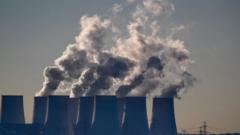
•EU proposes slowing down cuts to carbon emissions for businessesImage source, Getty ImagesImage caption, The ETS, introduced in 2005, is the EU's main tool for curbing greenhouse gases.Published5 minu...
•The changes would mean some industries could obtain emission allowances until 2038 instead of 2034, if they commit to investing in decarbonisation efforts.The proposals still need to be approved by EU...
•"We are adopting a more business-friendly and, may I say so, savvy approach," said EU climate commissioner Wopke Hoekstra.The European Commission, which develops legislation for the EU's 27 member sta...
هذا الخبر من BBC News. خبر يقدم أدوات ذكاء اصطناعي للتلخيص والترجمة والاستماع.
EU proposes slowing down cuts to carbon emissions for businessesImage source, Getty ImagesImage caption, The ETS, introduced in 2005, is the EU's main tool for curbing greenhouse gases.Published5 minutes agoThe European Union has unveiled proposals that would slow cuts to businesses' greenhouse gas emissions limits, as part of a major climate policy overhaul.The reforms would relax the rules of the bloc's emissions trading system (ETS) to give businesses more time to reduce their carbon output than previously planned. The changes would mean some industries could obtain emission allowances until 2038 instead of 2034, if they commit to investing in decarbonisation efforts.The proposals still need to be approved by EU countries and lawmakers - a process that could take a year. "We are adopting a more business-friendly and, may I say so, savvy approach," said EU climate commissioner Wopke Hoekstra.The European Commission, which develops legislation for the EU's 27 member states, said the changes would ensure the ETS was aligned with the EU's goal to reduce carbon emissions by 90% by 2040, compared with 1990 levels. The ETS, which was introduced in 2005, is the EU's main tool for curbing greenhouse gases. But it has come under criticism from a number of member states, with Italy in particular condemning the trading scheme as a de facto tax that has helped keep energy prices artificially high.Under the ETS, Europe's industries and power plants are required to buy a permit, or allowance, for every tonne of carbon dioxide they emit, creating a financial incentive to invest in cleaner technologies. Companies can buy extra permits or trade them. Some businesses are given permits for free to help them compete with foreign firms that do not pay carbon costs. The ETS also caps the number of permits released each year to make sure missions decrease.The European Commission has proposed slowing the rate at which this cap is lowered each...المصدر: BBC News | Source: BBC News
ملاحظة تحريرية | Editorial Note: نُشر هذا المقال في الأصل بواسطة BBC News. خبر (Khabr) هي منصة إعلامية أردنية مرخّصة تعمل بالذكاء الاصطناعي. نضيف قيمة تحريرية من خلال: تحليل ذكي للأخبار، ملخصات تلقائية، رواية صوتية بالذكاء الاصطناعي، ترجمة متعددة اللغات، وتدقيق الحقائق. هدفنا جعل الأخبار أكثر وضوحاً وسهولةً للقارئ العربي.
This article was originally published by BBC News. Khabr is a licensed Jordanian AI-powered news platform (Registration #82086). We add editorial value through: AI-powered news analysis, automated summaries, AI audio narration, multi-language translation (Arabic, English, French, Turkish), and AI fact-checking. Our mission is to make news more accessible and understandable for Arabic-speaking audiences worldwide.