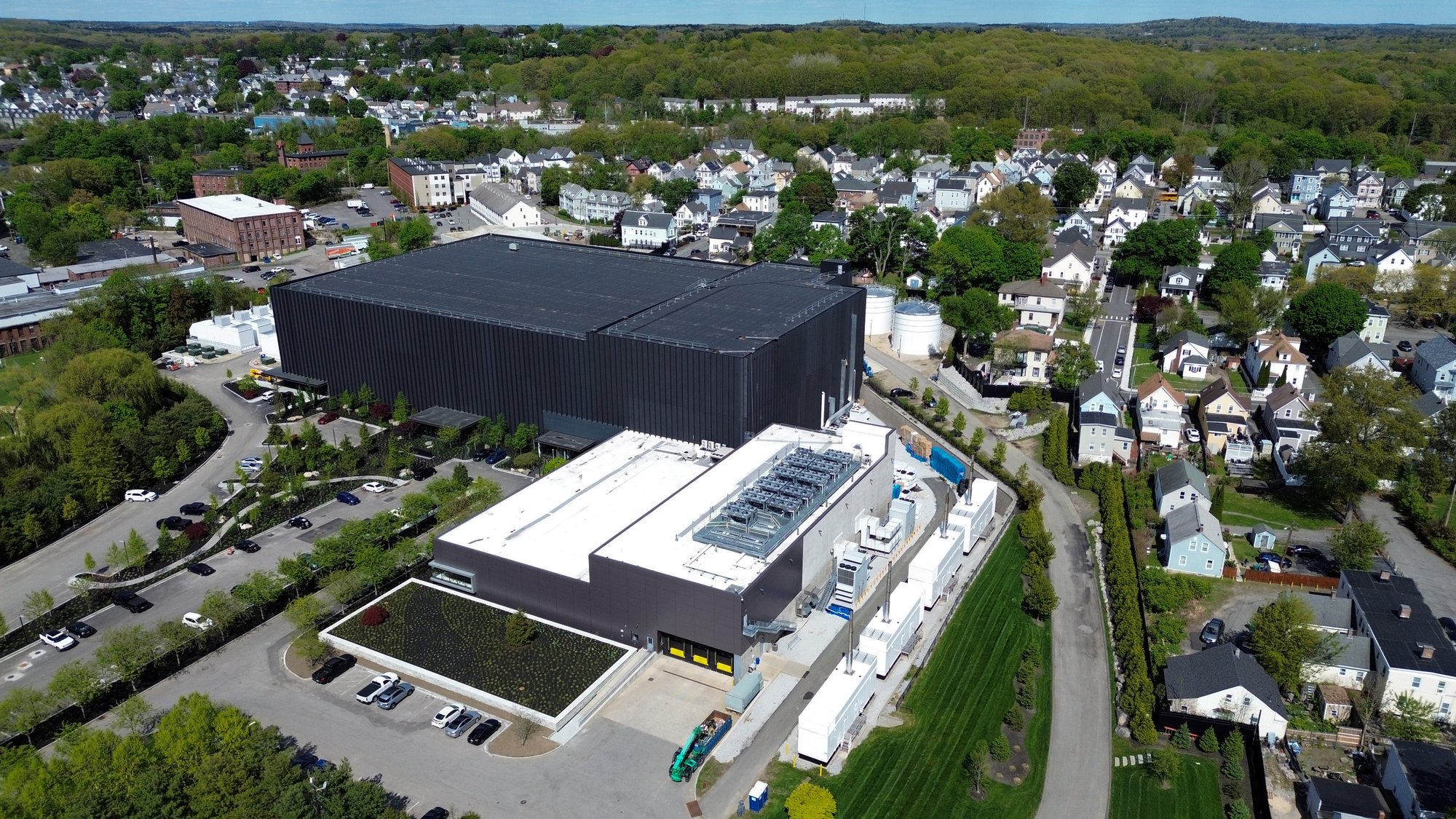
Energy could be diverted away from American homes to power US data centres, Donald Trump's ex-energy chief warns
•Energy could be diverted away from people’s homes and into US data centres during times of grid stress, Donald Trump's ex-energy chief has warned.
•In an interview with GB News, Neil Chatterjee, who chaired the Federal Energy Regulatory Commission (FERC) under President Donald Trump, broke down the political football that is energy-intensive data...
•TRENDING Stories Videos Your Say "I can tell you with absolute certainty that if the grid operator is confronted with the choice of sending power to a 24/7 data center to support AI or to a resid...
هذا الخبر من GB News. خبر يقدم أدوات ذكاء اصطناعي للتلخيص والترجمة والاستماع.
المصدر: GB News | Source: GB NewsEnergy could be diverted away from people’s homes and into US data centres during times of grid stress, Donald Trump's ex-energy chief has warned.
In an interview with GB News, Neil Chatterjee, who chaired the Federal Energy Regulatory Commission (FERC) under President Donald Trump, broke down the political football that is energy-intensive data centres — the vast, power-hungry facilities that underpin everything from AI chatbots to streaming and cloud computing.
The former regulator warned electricity bills could rocket by as much as 30 to 40 per cent by 2030 as the AI boom collides with a power grid that hasn't been upgraded in two decades.
Asked directly what happens when supply runs short, Mr Chatterjee explained it could be disastrous for regular American households.
TRENDINGStoriesVideosYour Say"I can tell you with absolute certainty that if the grid operator is confronted with the choice of sending power to a 24/7 data center to support AI or to a residential household for air conditioning on the hottest day of summer, it's going to that data center," he said.
"That's where I think the controversy starts," he added, pointing to surging electricity prices in regions where data centres are concentrated.
Mr Chatterjee, who lives in Virginia's so-called "Data Center Alley", said his own community had largely welcomed the facilities so far, telling the People’s Channel how there has been a huge injection of tax revenue that has funded local schools, roads and parks.
But he conceded the tech industry has badly mishandled its own PR, focusing on efficiency and job cuts rather than explaining to ordinary Americans why the build-out matters — including, he argued, its role in the race against China and its potential to accelerate breakthroughs in cancer research.
He also pushed back on Donald Trump's own plan to revive coal power, including new gigawatt-scale plants earmarked for Alaska and Virginia.
Keeping ageing coal plants running longer, he said, "is not additive. It's not new electrons," and he doubted new coal capacity could come online fast enough to meet AI's soaring demand.
The scale of that demand is staggering. Analysts at Bloomberg project data centres will devour close to a fifth of all US electricity by 2035 — roughly a fourfold jump from today's share.
Mr Chatterjee went on to issue a blunt warning about who pays the price if the backlash against data centres succeeds in slowing construction.
LATEST DEVELOPMENTS:
- Donald Trump teases another White House run at rescheduled Correspondents' Dinner
- Andy Burnham scrambles to calm 'genuine anger' in America ahead of crunch decision
- Gold price surge should be seen as ‘alarm bell’, financial analyst warns
"If you resist AI and you drive up the cost of compute, what will wind up happening is people who can afford the cost of compute will become almost superhuman in their jobs," he said.
"Whereas people who can't afford the cost of compute will be relegated to lower quality AI, to more hallucinations, to more misinformation," he warned.
The comments come as public patience with the data centre boom wears thin.
A Reuters/Ipsos poll in June found just one in three Americans back the rapid pace of construction, while more than half said they would oppose a data centre being built in their own community.
That unease has spilled onto the streets. Data centre opponents staged more than 140 protests across 42 states last month, in what organisers called the first coordinated national effort to channel anger at the AI infrastructure boom.
Extreme weather has only sharpened the stakes. A punishing heatwave across the US this summer has already forced grid operators to order data centres onto backup generators to free up power for homes, according to reporting from Al Jazeera.
Mr Chatterjee said such episodes expose how unprepared America's grid is for shocks.
He pointed back to Winter Storm Uri in Texas, when solar, wind, gas and even a nuclear plant all failed simultaneously in the cold.
He insisted grid planners "have to be prepared for different challenges in different regions" but admitted the system is playing catch-up after decades of flat demand.
Mr Chatterjee warned: "It's very easy to oppose something and say, ‘this AI thing is scary, I don't want these data centers’.
"You got to think through. There's a lot more nuance to it.
"Unfortunately, the nuance doesn't fit on a bumper sticker. It's much easier to put up an anti-data centre bumper sticker than it is to think through some of these complex questions."
Our Standards: The GB News Editorial Charter


ملاحظة تحريرية | Editorial Note: نُشر هذا المقال في الأصل بواسطة GB News. خبر (Khabr) هي منصة إعلامية أردنية مرخّصة تعمل بالذكاء الاصطناعي. نضيف قيمة تحريرية من خلال: تحليل ذكي للأخبار، ملخصات تلقائية، رواية صوتية بالذكاء الاصطناعي، ترجمة متعددة اللغات، وتدقيق الحقائق. هدفنا جعل الأخبار أكثر وضوحاً وسهولةً للقارئ العربي.
This article was originally published by GB News. Khabr is a licensed Jordanian AI-powered news platform (Registration #82086). We add editorial value through: AI-powered news analysis, automated summaries, AI audio narration, multi-language translation (Arabic, English, French, Turkish), and AI fact-checking. Our mission is to make news more accessible and understandable for Arabic-speaking audiences worldwide.