Earth will become unhabitable due to oxygen loss, not asteroid strike
•Must ReadScience & TechnologyEarth will become unhabitable due to oxygen loss, not asteroid strikeBy Kumail Shah-Apr 22, 2026It is assumed that the end of the world would occur either due to an as...
•However, the scientific community indicates a much quieter and more gradual scenario in the very long term.
•According to various studies, the real risk is that the atmosphere will become unsuitable for life long before the planet physically fades.
هذا الخبر من ARY News EN. خبر يقدم أدوات ذكاء اصطناعي للتلخيص والترجمة والاستماع.
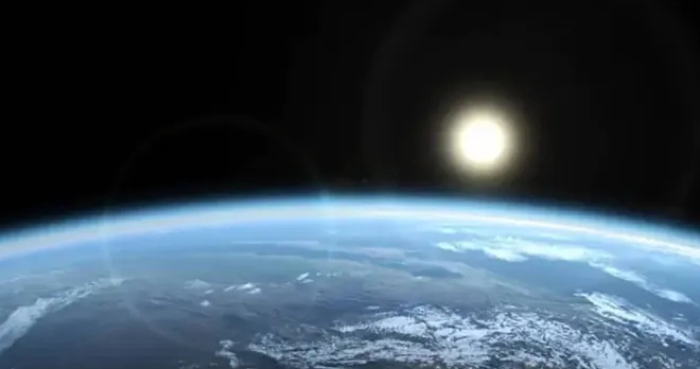
Must ReadScience & TechnologyEarth will become unhabitable due to oxygen loss, not asteroid strikeBy Kumail Shah-Apr 22, 2026It is assumed that the end of the world would occur either due to an asteroid impact or to the Sun engulfing Earth. However, the scientific community indicates a much quieter and more gradual scenario in the very long term. According to various studies, the real risk is that the atmosphere will become unsuitable for life long before the planet physically fades. This process would be driven by the Sun’s natural evolution, which makes it hotter as it ages. It is not a visible change on a human scale, but it is accumulative over billions of years. According to a NASA scientific review, Earth could become uninhabitable for complex life forms in just over 1 billion years. In the faraway future, the Sun will ultimately expand into a red giant in about 5 billion years. Yet problems could occur much earlier due to a feedback loop: Earth’s rising temperature causes more water to evaporate, and increased water vapor further accelerates warming, leading to a runaway greenhouse effect. NASA confirms that the end of life on Earth has a projected date, and the cause won’t be an asteroid impact. A study in Nature Geoscience, led by Kazumi Ozaki from Toho University and Christopher Reinhard from Georgia Tech, used climate and chemical models to simulate Earth’s future. After around 400,000 simulations, they found that the oxygen-rich atmosphere might last another 1.1 billion years. The key finding is the sequence of changes: the model indicates that a significant loss of oxygen may happen before Earth loses a substantial amount of its water to space. This means that the atmosphere could become unbreathable even before the planet is fully dehydrated. Another 2024 paper, led by Keming Zhang (University of California, San Diego), estimates that Earth would remain habitable “for around another billion years” before the oceans disappear completely. Researchers...المصدر: ARY News EN | Source: ARY News EN
ملاحظة تحريرية | Editorial Note: نُشر هذا المقال في الأصل بواسطة ARY News EN. خبر (Khabr) هي منصة إعلامية أردنية مرخّصة تعمل بالذكاء الاصطناعي. نضيف قيمة تحريرية من خلال: تحليل ذكي للأخبار، ملخصات تلقائية، رواية صوتية بالذكاء الاصطناعي، ترجمة متعددة اللغات، وتدقيق الحقائق. هدفنا جعل الأخبار أكثر وضوحاً وسهولةً للقارئ العربي.
This article was originally published by ARY News EN. Khabr is a licensed Jordanian AI-powered news platform (Registration #82086). We add editorial value through: AI-powered news analysis, automated summaries, AI audio narration, multi-language translation (Arabic, English, French, Turkish), and AI fact-checking. Our mission is to make news more accessible and understandable for Arabic-speaking audiences worldwide.