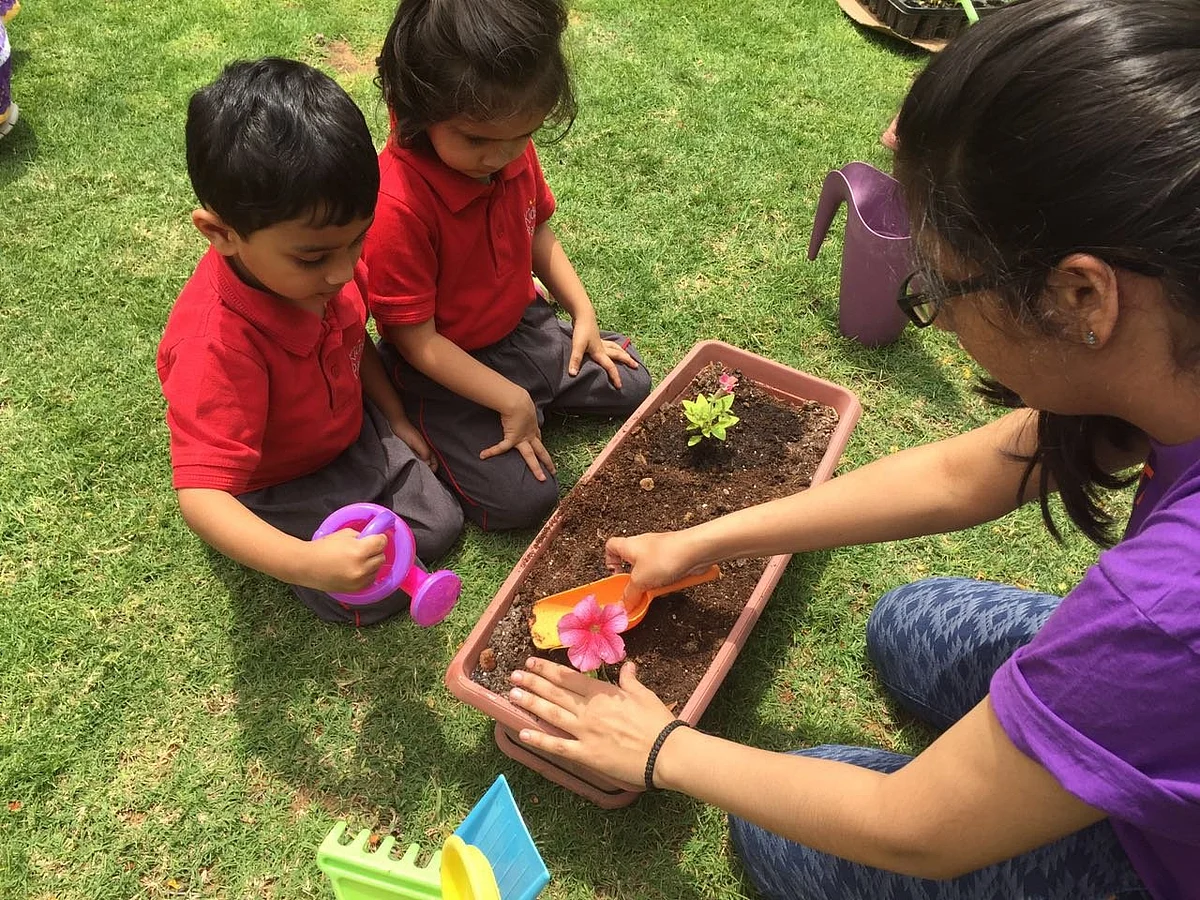
Dubai parents are cautiously welcoming the new home-based learning model for young children, with many seeing it as a structured alternative during disruptions like the ongoing US-Israel-Iran conflict.
While the flexibility of small learning groups for under-6s and in-home educators is being welcomed, families are also voicing concerns about affordability and access.
Some parents say the reassurance of trained teachers stepping into home settings could ease the burden on working households.
Stay up to date with the latest news. Follow KT on WhatsApp channels.
However, questions remain on pricing, rollout clarity, and how nurseries will communicate options under the new framework by the Knowledge and Human Development Authority (KHDA).
Parents weigh flexibility against cost concerns
For many families, the option of structured home learning is a welcome shift from ad hoc arrangements seen in past disruptions. Parents highlight having trained educators lead sessions offers reassurance.
“I think it’s reassuring to see nurseries under KHDA, stepping in with structured home learning instead of parents having to figure everything out alone,” said Chitra Sharma, an Indian mother of a four-year-old in Dubai.
Highlighting the appeal of guided support, she added, “The idea of a trained educator coming home or micro learning clusters sounds helpful, especially during disruptions. But I do wonder how pricing will work-- will this be significantly more expensive than regular nursery fees or be the same, and will there be flexible options for working parents?”
Others see potential in hosting small groups at home, especially in households with existing childcare support.
“For families like ours, flexibility is essential," said Vlad Rusu, a Moldovan expat father of a three-year-old. "I would be open to hosting a small learning hub at home, especially since we have a fairly large space. We also have support from a nanny who is very efficient." He added that while both him and his wifemare working, she has the option of hybrid work
Notably, the KHDA framework includes strict approval requirements for home-based hubs, including risk assessments, parental consent, child protection measures and insurance coverage.
Emphasising the importance of consistency, Rusu added, “Having continuity with familiar teachers would make a real difference for young children adapting to home-based settings. At the same time, I hope nurseries and the education regulator communicates clearly, explains the approval process, and gives families enough notice and choice when rolling out these options.”
Why nurseries remain essential at this stage
Katrina Mankani, managing director, Jumeirah International Nurseries and Chairman of Dubai Nursery Business Group, pointed to the developmental limits of screen-based learning for the youngest children, stressing that nurseries remain essential at this stage.
“For children under three, distance education through a screen is neither practical nor developmentally appropriate on a long term. Young children learn through touch, movement, relationships, and routine — not through a laptop. That is precisely why the re-opening of nurseries is crucial.”
Building on this, she explained how the sector has tried to adapt under the KHDA’s CLHL framework, combining digital and home-based approaches.
“The CLHL framework from KHDA is a temporary solution. At Jumeirah Nursery, we have already built both — live interactive classes with cameras on for children above 3 years old, and KHDA-approved home visits where our educators deliver the nursery experience in the family’s living room.”
In practice, she said, the idea is to preserve familiarity for children even if the setting has changed. “In practice, it looks like the nursery day your child knows — circle time, phonics, creative play, story time — just delivered from a different chair.”
Foreseeable challenges
But behind the adaptation, Mankani acknowledged there are some operational and structural challenges that nurseries are grappling with.
“The challenges are real and we should be honest about them. First, logistics: every home visit requires transport coordination for staff, educator allocation, and scheduling with individual families — a level of planning that is fundamentally different from operating a nursery site.”
She also highlighted the sensitivity around host families and the financial pressures of running such a model.
“Second, host homes: the CLHL framework requires willing host families, but many parents understandably have reservations about opening their homes to other people’s children. It is a significant ask. Third, financial viability: the ratios required for home-based learning are lower than centre-based care, which means serving fewer children per educator at higher operational cost.”
And ultimately, she said, even the best-designed alternative cannot replace the full nursery environment. “This model — however well-designed — cannot replicate the full nursery environment. Children need outdoor play, specialist resources, peer socialisation, and the stability of a consistent physical space.”
Mankani added that the regulator has been supportive throughout the transition, with clear guidelines and safeguards in place. The nursery sector itself, she noted, supports thousands of families and employs more than 10,000 people across Dubai.
Despite the challenges, she said significant effort has gone into making the system work on the ground.
“We have invested heavily in making this work. Our educators have been trained and deployed. We are coordinating transport across Dubai. We are connecting families in the same communities to form pods. But I want to be candid: the CLHL framework is a valuable temporary measure, not a long-term replacement. We are grateful to KHDA for thinking creatively about the sector and providing a regulated pathway.”
Adapting delivery models
Other education providers also reiterated that the initiative aligns with evolving needs but note that execution will depend on clear operational frameworks.
Dr Vandana Gandhi, CEO and founder of British Orchard Nursery (Bon) and Teacher Training Centre, UAE UK, said the directive underscores a shift towards adaptable learning models.
“KHDA’s directive reflects a proactive approach to ensuring continuity of education while prioritising health and safety. Personalised learning pathways, such as CLHL hubs and educators, enable nurseries to deliver education beyond traditional classroom settings. There is a strong emphasis on flexibility, allowing nurseries to adapt delivery models based on family needs and operational feasibility.
Bon supports families by sending staff home to assist parents through home tutoring. Parental availability and varying home environments may impact consistency. Therefore, we require flexible approaches to keep children engaged while effectively supporting families.”
Additionally, the nursery has introduced its free Bonline Distance Learning and Family Support Programme, designed as a satellite nursery experience at home.
“This includes tailored one-to-one home tutoring, community-based learning pods, home schooling kits to promote hands-on offline learning, and regular parent and caregiver training sessions focused on emotional resilience and positive behaviour. Our staff are supported through free education for their children, along with essential food and care packages delivered to their homes,” added Gandhi.