Doubts about Trump strain Southeast Asia’s US-China balancing act
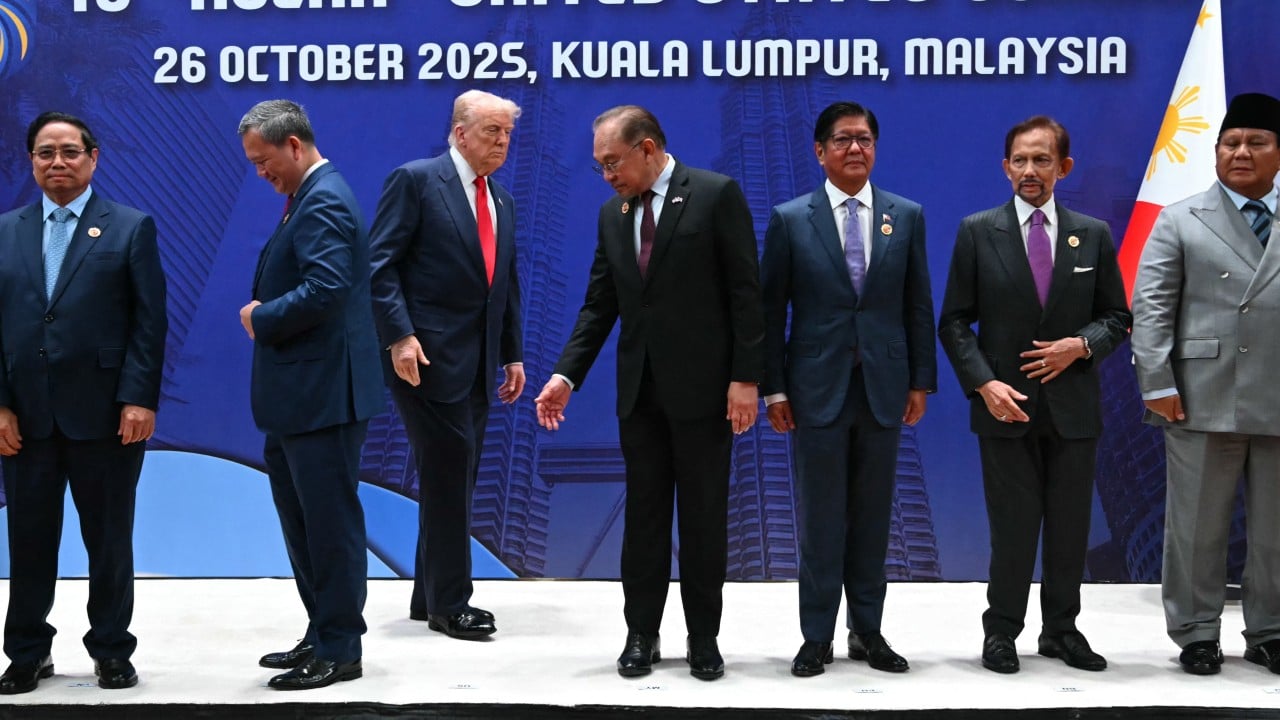
AdvertisementAseanThis Week in AsiaOpinionJoanne LinAsian AngleDoubts about Trump strain Southeast Asia’s US-China balancing actAn increasingly unpredictable Washington is making the region’s traditional hedging strategy harder to sustain 4-MIN READ4-MIN ListenJoanne LinPublished: 12:00pm, 12 Apr 2026For years, Southeast Asian countries have preferred to avoid taking sides between China and the United States. This year’s State of Southeast Asia survey shows that this approach still holds, but a more contested geostrategic environment is making it harder to sustain.The region continues to feel uneasy about China’s entrenched influence, is increasingly troubled by US leadership under President Donald Trump and is more conscious of Asean’s institutional constraints. The weakening of confidence in the US is especially striking against a wider backdrop of mounting regional pressures.Southeast Asia faces a more contested environment in which pressures are building on multiple fronts simultaneously, with the survey making clear that the region’s anxieties are no longer limited to conventional geopolitical flashpoints.AdvertisementEven as major power rivalry remains front and centre, climate change and extreme weather events rank as the region’s top challenge at 60 per cent, rising from 55.3 per cent last year.Houses and farm lands are seen submerged after heavy rains in Tuguegarao City, the Philippines, in 2025. Photo: AFPIt is telling that climate risks are increasingly seen as a direct threat to livelihoods and economic security across the region, even as recent events in the Middle East have reinforced the imperative of energy security. Intensifying economic tensions between major powers come next at 51.7 per cent, followed by domestic political instability at 46.1 per cent. AdvertisementAdvertisementSelect VoiceSelect Speed0.8x0.9x1.0x1.1x1.2x1.5x1.75x00:0000:001.00xالمصدر: South China Morning Post | Source: South China Morning Post
ملاحظة تحريرية | Editorial Note: نُشر هذا المقال في الأصل بواسطة South China Morning Post. خبر (Khabr) هي منصة إعلامية أردنية مرخّصة تعمل بالذكاء الاصطناعي. نضيف قيمة تحريرية من خلال: تحليل ذكي للأخبار، ملخصات تلقائية، رواية صوتية بالذكاء الاصطناعي، ترجمة متعددة اللغات، وتدقيق الحقائق. هدفنا جعل الأخبار أكثر وضوحاً وسهولةً للقارئ العربي.
This article was originally published by South China Morning Post. Khabr is a licensed Jordanian AI-powered news platform (Registration #82086). We add editorial value through: AI-powered news analysis, automated summaries, AI audio narration, multi-language translation (Arabic, English, French, Turkish), and AI fact-checking. Our mission is to make news more accessible and understandable for Arabic-speaking audiences worldwide.