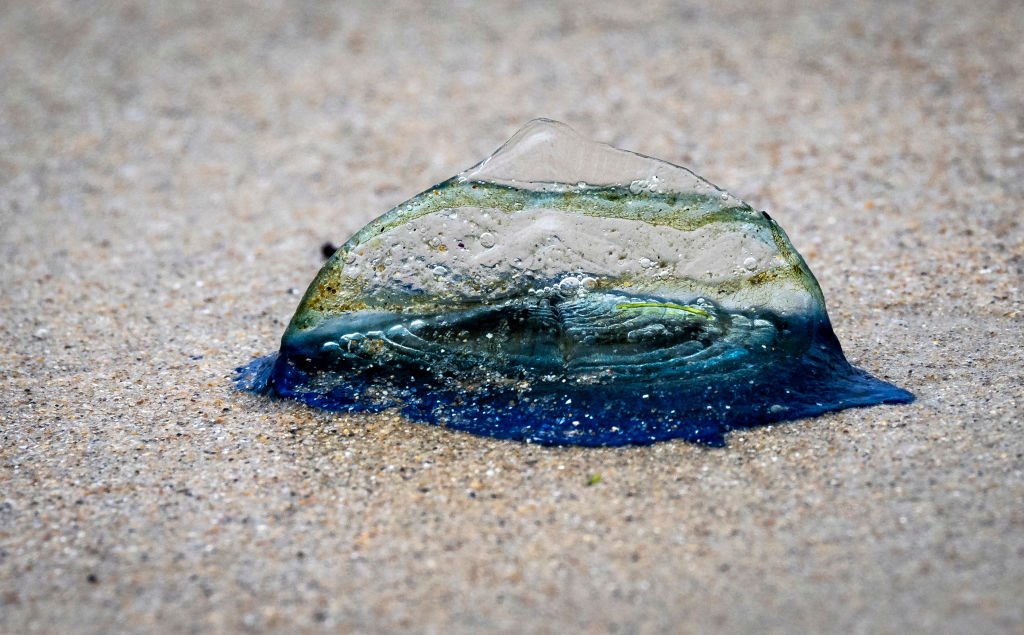
Hundreds of striking blue marine creatures have appeared along the Welsh coast, with beachgoers and their pets issued a warning to keep a safe distance.
The animals, scientifically named Velella but commonly called by-the-wind sailors, have been washing ashore in large numbers across Anglesey, Gwynedd and Tenby regions.
These free-floating creatures are close relatives of the Portuguese man o' war, though they possess a distinctive bright blue colouration that catches and reflects light.
One beachgoer who encountered the creatures on Tenby South beach described the sight as "like looking at a crystal".
Large groups of by-the-wind sailors wash up together because they travel in identical currents and arrive at shorelines at the same time.
Frankie Hobro, marine specialist at Anglesey Sea Zoo, called them "stunningly beautiful", while cautioning visitors not to touch them despite being "generally harmless".
Measuring approximately 7cm in length, they feature a small sail-like bodily structure that gives them their unique name.
This natural sail catches the wind, propelling them across the ocean surface as they drift with currents.

Unlike their more dangerous relative in the Portuguese man o' war, by-the-wind sailors are considerably smaller and display a "brighter blue" hue, according to Ms Hobro.
The creatures are actually colonies of animals, closely related to sea anemones and corals.
They typically appear during autumn and winter months, carried vast distances by ocean currents, before storms or shifting currents deposit them en masse along coastlines.
Despite their relatively mild sting compared to relatives, Ms Hobro urged beachgoers to resist the temptation to pick them up.
LATEST DEVELOPMENTS:
- Boy, just three, 'thrown into' crocodile enclosure at UK zoo as man arrested
- Mourners 'rammed' by sheep at church graveyard tidying gravestones
- Whitehall accused of misleading public with 'disingenuous' denials of Dartmoor pony cull plans

The creatures possess stinging cells that can cause discomfort, even when they appear lifeless on the sand.
"You probably wouldn't feel it through normal fingers because human skin is fairly thick," she said.
"But if you touched your lips, face or another sensitive area, it could be quite painful and cause a tingling sensation."
Ms Hobro explained how stinging cells remain active long after the creatures wash ashore, meaning even seemingly dead specimens can still deliver an unpleasant surprise to unwary handlers.
Maxine Allinson, a 49-year-old nature enthusiast, encountered her first by-the-wind sailor while walking along Tenby South beach on Tuesday.
"It was fantastic," she said, "they are so beautiful."
When sunlight strikes the marine animals, they create what Ms Hobro described as "blue tides" that sparkle brilliantly, although the Portuguese man o' war produces an even more spectacular display with its purple and pink colouration.
Ms Hobro's advice to curious beachgoers remains clear - appreciate the dazzling visitors from a safe distance rather than risking an uncomfortable encounter.
Our Standards: The GB News Editorial Charter