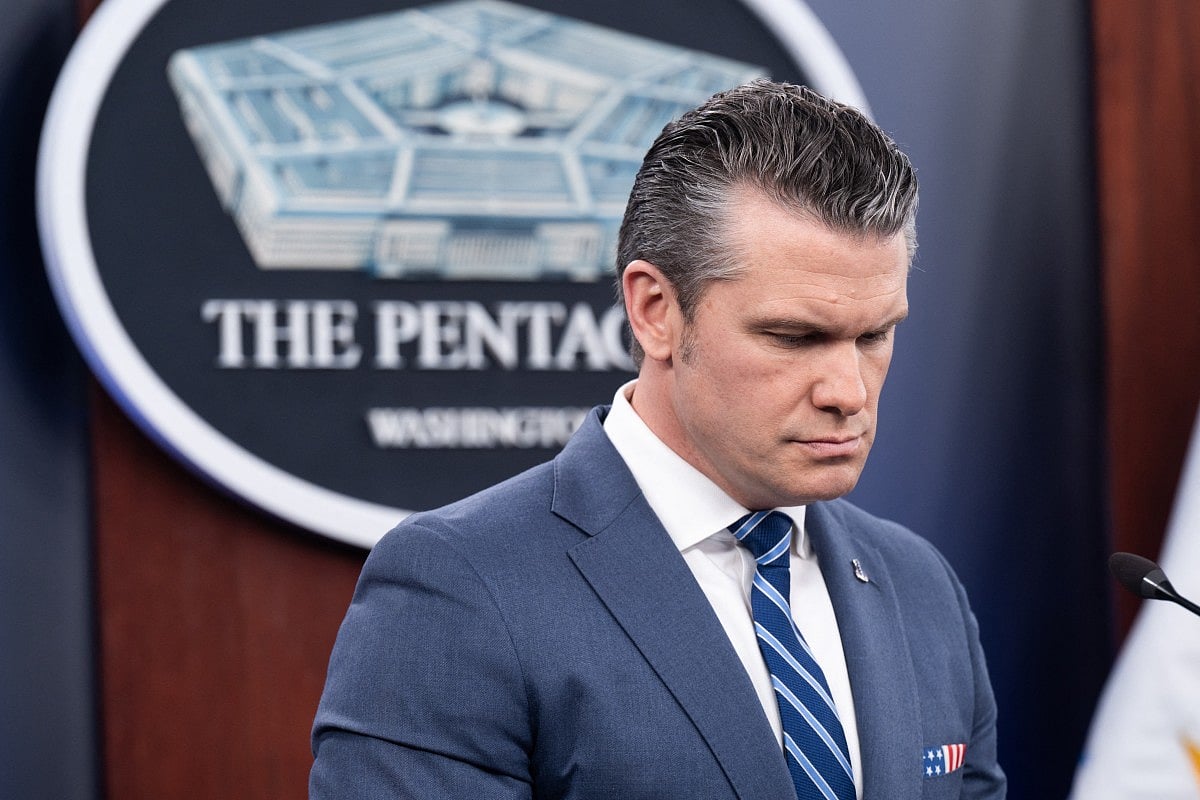
US Defence Secretary Pete Hegseth has sparked discussion after delivering remarks at a Pentagon prayer service that closely echoed dialogue from Quentin Tarantino’s Pulp Fiction, blending military ceremony with language widely recognised from the film.
Pentagon prayer service remarks
During the service, Hegseth referred to a so-called “CSAR 25:17” prayer used by US Air Force combat search and rescue personnel, linking it to the recovery of a downed airman and framing it within themes of duty, loyalty and battlefield rescue.
His remarks included references to “Sandy 1,” a call sign associated with US Air Force rescue operations, and concluded with the word “Amen.”
Get updated faster and for FREE: Download the Gulf News app now - simply click here.
Quote drawn from film, not scripture
The wording he used closely mirrors a fictional monologue from Pulp Fiction (1994), where Samuel L. Jackson’s character Jules delivers a stylised “Bible verse” before carrying out killings on screen.
That scene itself draws inspiration from Ezekiel 25:17 in the Bible’s King James Version, though the film version expands it significantly into a dramatic, fictional passage.
What Hegseth said
Hegseth’s version included lines such as:
“The path of the downed aviator is beset on all sides by the iniquities of the selfish and the tyranny of evil men… And I will strike down upon thee with great vengeance and furious anger…”
He linked the language to camaraderie among service members and the mission of rescuing personnel behind enemy lines.
What pulp fiction actually says
In Pulp Fiction, the monologue reads:
“The path of the righteous man is beset on all sides by the inequities of the selfish and the tyranny of evil men…”
The passage is a cinematic reinterpretation rather than a literal biblical quotation.
Ezekiel 25:17 biblical context
The original scripture from the King James Bible is far shorter, stating:
“And I will execute great vengeance upon them with furious rebukes…”
It bears only partial resemblance to the film’s extended version.
Pentagon response to online debate
The remarks quickly circulated online, prompting clarification from Pentagon spokesperson Sean Parnell, who said Hegseth was referencing a custom combat search and rescue tradition inspired by both scripture and film dialogue.
Parnell rejected claims of misquotation, describing them as inaccurate and disconnected from the operational context.
Pete Hegseth quotes a fake Bible verse from Pulp Fiction during a Pentagon prayer service:
— FactPost (@factpostnews) April 16, 2026
"The path of the downed aviator is beset on all sides by the iniquities of the selfish and the tyranny of evil men. Blessed is he who in the name of camaraderie and duty, shepherd the lost… pic.twitter.com/fBmZ5i09vu
Defense Secretary Pete Hegseth just quoted a fake Bible verse from Pulp Fiction during a Pentagon prayer session.
— Steven Latham (@StevenJLatham1) April 16, 2026
He adapted Samuel L. Jackson’s Ezekiel 25:17 monologue into a military version about downed aviators and vengeance, ending with “you will know my call sign is… pic.twitter.com/roa2ki74By
Religion, politics and military language
Hegseth has increasingly incorporated religious language into public remarks tied to military themes, drawing wider debate over the role of faith-based rhetoric in defence communications.
The episode also comes amid broader international discussion about the use of religious references in political and military settings, including recent comments from global religious leaders cautioning against their use to justify conflict.