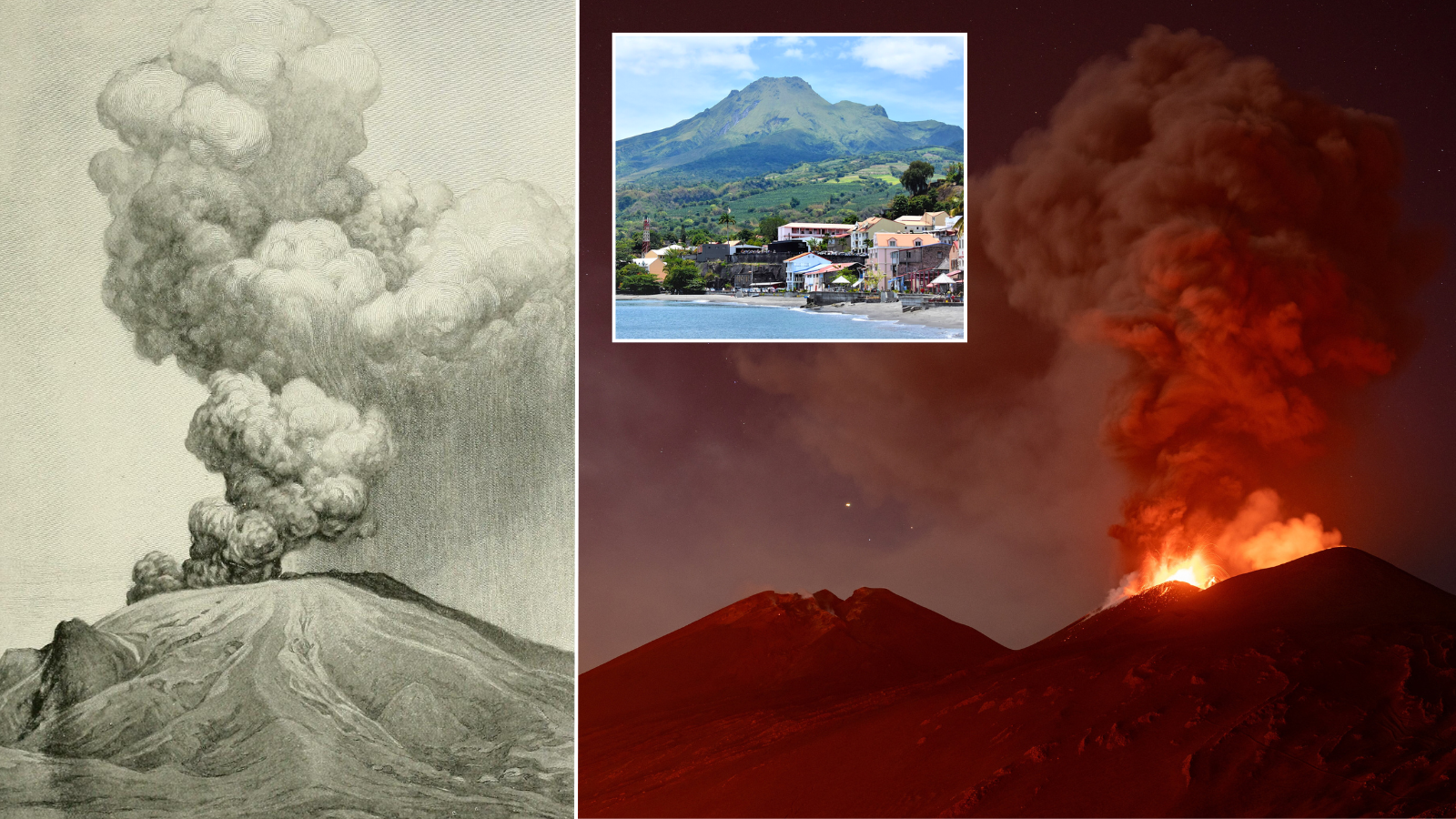
Mount Pelee, one of the most lethal volcanoes in recorded history, is displaying fresh signs of activity decades after it last erupted.
The volcano is on Martinique, a Caribbean island around 1,500 miles southeast of Florida along busy air corridors linking the region to the United States.
Its deadliest eruption fell in 1902, when a searing cloud of gas and debris swept through the town of Saint-Pierre, killing around 30,000 people in minutes.
It last erupted between 1929 and 1932.
Experts have now recorded a dramatic spike in seismic activity, with 124 earthquakes detected in the week ending 31 July - nearly triple the 45 logged the week before.
Across the whole of July, the Martinique Volcanological and Seismological Observatory recorded 331 volcanic earthquakes, an average of roughly 85 per week.
These quakes can result from magma or pressurised fluids fracturing rock beneath the volcano, though seismic activity on its own does not guarantee an eruption.
Since May, scientists have measured several inches of ground movement near the summit, with the surface currently shifting at close to half an inch per month.

The deformation points to a pressurised source about 0.6 miles below the summit.
Mount Pelee's alert level stands at YELLOW, indicating elevated unrest.
The observatory stated in an alert: "The probability of eruptive activity in the short term remains low.
"However, considering the observations accumulated over the past months and years, an evolution of the situation in the medium term (weeks to months) cannot be excluded."
VOLCANO WARNINGS - READ MORE:
- Volcano warning after 'terrifying' 6.0-magnitude earthquake rocks Hawaii
- Thousands of British tourists rocked by earthquake after volcano alert issued in holiday hotspots
- Mysterious light seen rising through night sky after green fireball meteor 'hits' erupting volcano

Almost all of the quakes were shallow, coming between half a mile and just over a mile below the summit, and none exceeded magnitude 1 - too small to be felt on the surface.
The tremors were linked to a network of superheated water and steam that has fuelled unrest since 2019.
However, one earthquake stood out, striking roughly three miles below sea level just west of the summit domes.
It struck in a critical zone between the hydrothermal system and the magma reservoir, where hot fluids and gases can migrate between the two.

A single deep tremor does not mean an eruption is near, but repeated quakes at that depth could reveal important shifts underground.
A major eruption could send deadly clouds of gas, ash and rock across northern Martinique and disrupt Caribbean air travel, as fine volcanic ash can damage aircraft engines and drift hundreds or thousands of miles on high-altitude winds.
Officials have not issued any warning of an imminent eruption, and Florida is not considered to be under direct threat.
The ground around the summit continues to expand outward, though the rate has dipped slightly compared with the previous four-week period.
Scientists view the modest slowdown as a positive sign but say several more weeks of observation are needed to determine whether pressure beneath the volcano is genuinely subsiding.
Our Standards: The GB News Editorial Charter