So-called flesh-eating bacteria have been detected in one of the most luxurious vacation spots in the United States — but experts say beachgoers should use caution and care rather than panic about it.
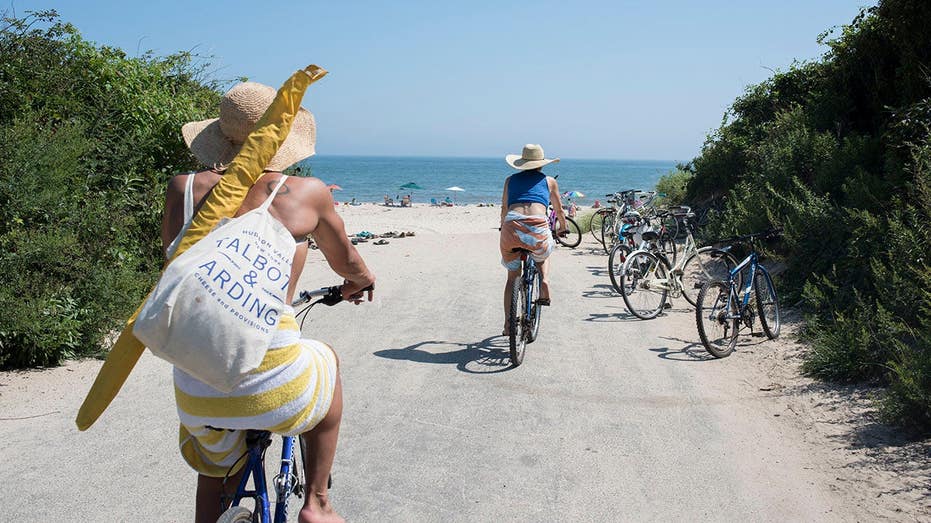
East Hampton and Sagaponac on the South Fork of Long Island are exclusive enclaves where wealthy executives, celebrities and old-money families retreat. Yet there's often an unwanted visitor.
The bacteria, Vibrio vulnificus, occur naturally in coastal waters and are more common in warmer, brackish areas where fresh and salt water mix.
UNSAFE WATER WARNING ISSUED FOR ONE OF AMERICA'S MOST VISITED BEACH DESTINATIONS
It was once more prevalent in Southern states, but scientists have tracked it farther north as water temperatures rise.
Christopher Gobler, a Stony Brook University professor whose recent study set off fresh warnings about Long Island’s summer waters, told Fox News Digital the bacteria poses the greatest risk when it enters the body through an open wound.
"The organism needs a route of entry into the body, which is usually an open and unprotected wound," Gobler said. "People with wounds should have them covered and protected."
Gobler said the organism occurs naturally in marine waters and is not new to New York or Long Island.
VACATION HOT SPOT CRACKS DOWN ON BEACH SETUPS WITH $500 FINES FOR SUN SHADES, CANOPIES
The bacteria have been drawing attention after Gobler’s research found it in parts of the Hamptons and other Long Island waters, including in ponds and bays near the region’s priciest real estate.
Sagaponack ranks among the top three most expensive zip codes in the United States, according to the annual PropertyShark Real Estate Report.
Despite the alarming nickname, experts stress that serious infections are rare.
Exposure does not mean someone is likely to get sick.
POPULAR CRUISE LINE'S BIKINI CRACKDOWN COULD SURPRISE PASSENGERS AT ISLAND PORTS
Peter Topping, executive director and baykeeper for Peconic Baykeeper, a nonprofit environmental organization, told Fox News Digital that Vibrio vulnificus has led to very few illnesses.
"This bacterium has been in Long Island’s waters for years and there have been very few cases of the illness," Topping said. "This is despite millions of Long Islanders enjoying our waters each year."
If an infection occurs, it can move quickly. Symptoms can include swelling and redness around a wound, experts said.
"It causes skin infections in open wounds, so if infected, those wounds would become more swollen and red, and it would spread near the wound and beyond," Gobler said.
TEST YOURSELF WITH OUR LATEST LIFESTYLE QUIZ
The bacteria can be deadly in some cases, especially for people with weakened immune systems.
"Vibrio vulnificus infections are rare, but any suspected infection should be taken very seriously," Topping said, citing CDC data that shows about 20% of infections can be fatal.
Still, both experts said residents and tourists should not avoid Long Island beaches this summer.
"Absolutely not," Gobler said. "Our waters are a treasure to be enjoyed."
Gobler said Long Island beaches are among the cleanest and most highly ranked in the nation.
CLICK HERE TO SIGN UP FOR OUR LIFESTYLE NEWSLETTER
Topping, who is based in Hampton Bays, agreed that most beachgoers face low risk.
"Long Island has some of the most beautiful beaches in the world and the majority are safe for recreation," Topping said.
"People are much more at risk from rip currents," he said.
Topping urged the public to avoid swimming in areas prone to heavy runoff after recent rain.
He also said that a recent surgery or new tattoo "could be a pathway to possible infection."
CLICK HERE FOR MORE LIFESTYLE STORIES
The concern has put pressure on local shellfish workers, who worry that alarming headlines could hurt business, Vanity Fair reported.
Experts say most healthy beachgoers can still enjoy Long Island’s waters — as long as they avoid runoff-prone areas after rain and keep open wounds covered.
"Personally, I’m looking forward to a long, warm summer of open water swimming on Long Island," Gobler said.