⚡ عاجل: كريستيانو رونالدو يُتوّج كأفضل لاعب كرة قدم في العالم●⚡ أخبار عاجلة تتابعونها لحظة بلحظة على خبر●⚡ تابعوا آخر المستجدات والأحداث من حول العالم●
AI اقتراحات ذكية
AI مباشر|--مشاهد مباشر
919,696مقال401مصدر نشط228قناة مباشرة3,803خبر اليوم
آخر تحديث:منذ 8 ثواني
Dangerous Hormuz deadlock: Who gives way first as Iran tightens its grip on the Strait?
•Dubai: In the darkest days of the Cuban Missile Crisis, former US President John F.
•Kennedy reportedly obsessed over one question: Who blinks first?According to an analysis by CNN, that same logic now hangs over the Strait of Hormuz, where Iran and the United States appear locked in...
•The United States, meanwhile, has responded with a blockade on Iranian ports, warning that if Tehran disrupts global shipping, Iran itself will not be allowed normal maritime access either.Defying mar...
هذا الخبر من Gulf News. خبر يقدم أدوات ذكاء اصطناعي للتلخيص والترجمة والاستماع.
Dubai: In the darkest days of the Cuban Missile Crisis, former US President John F. Kennedy reportedly obsessed over one question: Who blinks first?
According to an analysis by CNN, that same logic now hangs over the Strait of Hormuz, where Iran and the United States appear locked in a dangerous test of endurance with no clear off-ramp — and with the global economy caught in the middle.
Iran has effectively shut the strategic waterway to normal commercial transit, insisting vessels pass through Iranian-controlled waters and comply with a new routing and toll system. The United States, meanwhile, has responded with a blockade on Iranian ports, warning that if Tehran disrupts global shipping, Iran itself will not be allowed normal maritime access either.
The result is what CNN described as a “Great Strait Stalemate” — one where both sides believe time and pressure favour them, making compromise increasingly difficult.
The Strait of Hormuz remains one of the world’s most critical energy chokepoints, carrying roughly a fifth of global oil and liquefied natural gas supplies before the conflict erupted.
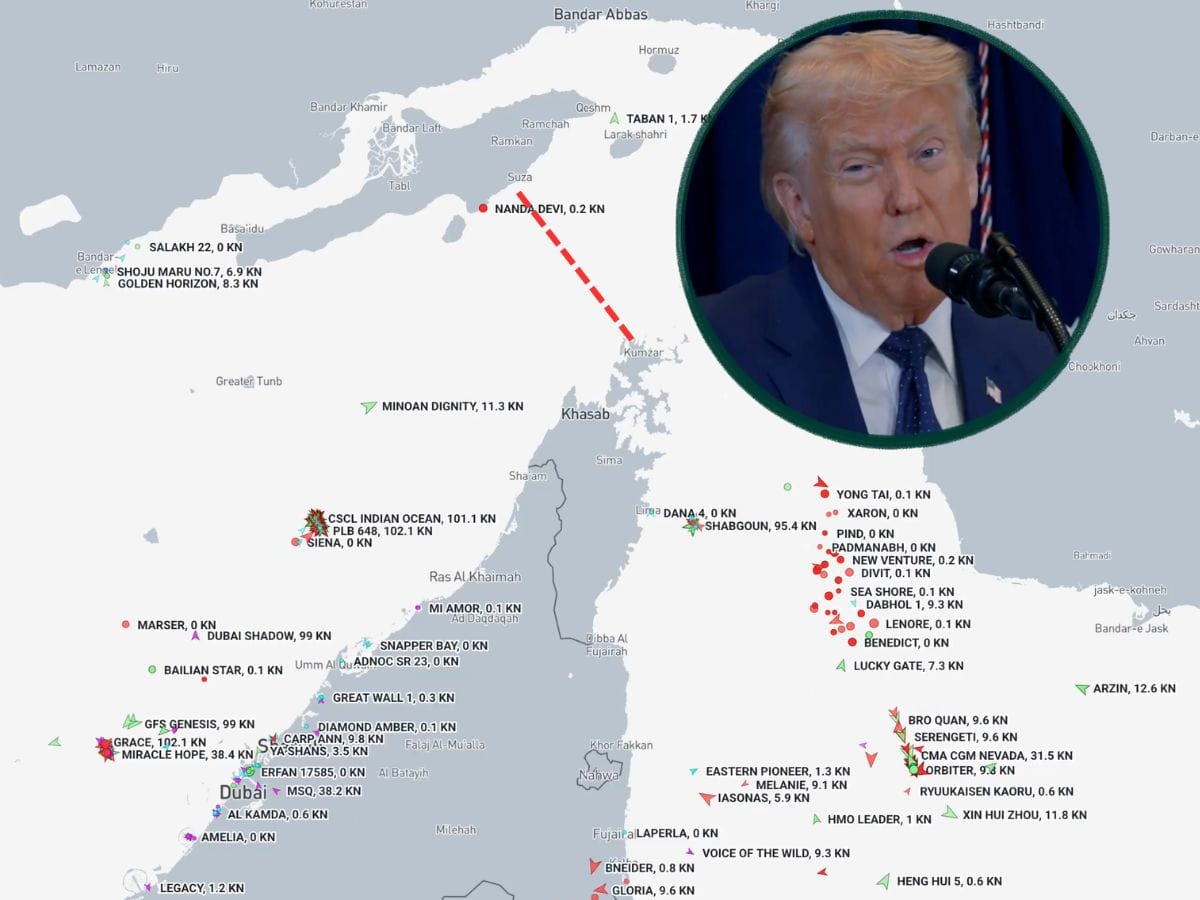
A geotagged map showing the absence of tanker traffic on the Strait of Hormuz with US President Donald Trump (inset).
Iran expands its 'Hormuz zone'
A separate report by The New York Times suggests Tehran is not merely threatening Hormuz anymore — it is actively trying to reshape how the waterway functions.
Iranian Revolutionary Guard Corps naval official Mohammad Akbarzadeh said Tehran now considers the strait to stretch “from the coasts of Jask and Sirik to beyond Greater Tunb Island,” vastly expanding what it defines as its operational zone.
According to the report, Iran has increasingly demanded that ships seek permission for passage, use Iranian-controlled routes and potentially pay transit fees.
What was the Cuban Missile crisis?
The Cuban Missile Crisis was a 13-day Cold War confrontation between the United States and the Soviet Union in October 1962.
The crisis began after the US discovered Soviet nuclear missile sites being built in Cuba, just 145km from Florida.
US President John F. Kennedy responded by imposing a naval blockade around Cuba and demanding the missiles be removed.
Soviet leader Nikita Khrushchev initially resisted, bringing the world to the brink of nuclear war.
After days of tense negotiations and military standoffs, the Soviet Union agreed to remove the missiles in exchange for US assurances not to invade Cuba and the later removal of US missiles from Turkey.
The crisis is widely regarded as one of the most dangerous moments in modern history and a defining example of high-stakes nuclear brinkmanship.
US Central Command said this week it had redirected 65 commercial vessels and disabled four ships amid the American blockade imposed on Iranian ports last month.
Not all the vessels were Iranian-linked, highlighting the growing confusion and uncertainty facing global shipping operators.
One tanker carrying Iraqi crude to Vietnam reportedly turned around after clearing Hormuz following intervention by US forces, according to maritime intelligence cited by The New York Times.
Iranian media later claimed the vessel had received Tehran’s permission to transit the strait, suggesting it may have complied with Iran’s new routing demands.
Iran sees Hormuz as economic leverage
Iranian officials are now increasingly framing control of the Strait of Hormuz not only as a military strategy but also as an economic opportunity.
According to AFP, military spokesman Mohammad Akraminia said Tehran’s oversight of Hormuz could generate “significant economic revenues” and potentially even double Iran’s oil income while strengthening the country’s international influence.
He said the Revolutionary Guards controlled the western side of the strait while Iran’s navy oversaw the eastern section.
The remarks add to growing indications that Tehran is attempting to normalise a new system in Hormuz involving controlled passage, routing demands and toll collection for commercial vessels.
Last month, Iranian deputy parliament speaker Hamidreza Hajibabaei claimed Tehran had already received its first revenues from transit tolls imposed on ships crossing the strategic waterway.
Ships go 'dark' in Hormuz
The worsening security environment is now reshaping maritime behaviour across the Gulf.
“There is a 600 per cent rise in dark activity,” Ami Daniel, chief executive of maritime intelligence firm Windward, told The New York Times.
According to the report, many vessels are switching off transponders and even radar systems to avoid detection while navigating the increasingly tense waterway.
Windward researchers also reported the presence of hundreds of IRGC patrol vessels operating across the region, contributing to fears among commercial shippers.
There have reportedly been more than three dozen retaliatory Iranian attacks on commercial vessels since the US-Israeli conflict with Tehran began in late February.
A dangerous stalemate
CNN noted that neither side currently appears willing to make concessions.
Iran continues to insist on asserting control over the strait despite international maritime principles guaranteeing freedom of navigation through international waterways.
The US, meanwhile, appears unwilling to accept a precedent that could embolden challenges to other strategic waterways globally, including the Taiwan Strait.
But military options also carry enormous risks.
CNN said that while Washington could attempt to forcibly secure maritime access, the threat from Iranian missiles and drones launched deep from inside Iranian territory would remain difficult to neutralise completely.
Iran has also repeatedly threatened retaliation against Gulf energy infrastructure if the conflict escalates further.
ملاحظة تحريرية | Editorial Note:
نُشر هذا المقال في الأصل بواسطة Gulf News.
خبر (Khabr) هي منصة إعلامية أردنية مرخّصة تعمل بالذكاء الاصطناعي.
نضيف قيمة تحريرية من خلال: تحليل ذكي للأخبار، ملخصات تلقائية، رواية صوتية بالذكاء الاصطناعي، ترجمة متعددة اللغات، وتدقيق الحقائق.
هدفنا جعل الأخبار أكثر وضوحاً وسهولةً للقارئ العربي.
This article was originally published by Gulf News.
Khabr is a licensed Jordanian AI-powered news platform (Registration #82086).
We add editorial value through: AI-powered news analysis, automated summaries, AI audio narration, multi-language translation (Arabic, English, French, Turkish), and AI fact-checking.
Our mission is to make news more accessible and understandable for Arabic-speaking audiences worldwide.
هذا الخبر ضمن تغطية خبر لقسم سياسة.
نقدّم لك تحليلات ذكية وملخصات يومية لأهم الأخبار من مصادر موثوقة متعددة.
المصدر: Gulf News.
يوجد 6 مقالات مرتبطة بهذا الموضوع.
This article is part of Khabr's coverage of Politics.
We provide AI-powered analysis, summaries, and multi-source aggregation to keep you informed.
Source: Gulf News.
Tags: Iran, Strait of Hormuz, geopolitics.
🍪 نستخدم ملفات تعريف الارتباط لتحسين تجربتك وعرض الإعلانات المخصصة. باستخدامك للموقع، فإنك توافق على سياسة ملفات تعريف الارتباط وسياسة الخصوصية.
We use cookies to enhance your experience and show personalized ads. By using this site, you agree to our Cookie Policy and Privacy Policy.
🔍
FREEFree 1GB Internet + Free International Calls
$1 trial — eSIM in 190+ countries — No roaming charges