📱حمّل تطبيق خبر الآن!— تابع الأخبار لحظة بلحظة
App Store
...|🕐--:--
------
عاجل
⚡ عاجل: كريستيانو رونالدو يُتوّج كأفضل لاعب كرة قدم في العالم●⚡ أخبار عاجلة تتابعونها لحظة بلحظة على خبر●⚡ تابعوا آخر المستجدات والأحداث من حول العالم●
AI اقتراحات ذكية
AI مباشر|--مشاهد مباشر
1,080,011مقال401مصدر نشط228قناة مباشرة4,067خبر اليوم
آخر تحديث:منذ ثانية
Counterstrike: US tightens Iran oil squeeze, Tehran chokes global shipping via Hormuz — what's the end game?
•On May 7, 2026, the US Central Command reported that Iranian forces — including IRGC missiles, drones, and small fast boats sometimes described as part of a “mosquito fleet” — attacked three American...
•‘Unprovoked' Iranian attacks trigger US Navy self-defence strikes in HormuzCENTCOM's was swift, overwhelming.It said that it "intercepted and neutralised" the threats and, in turn, carried out retalia...
•Bait-and-switchSome military observers argue that this operations (6 Iran fast-attack boats sunk) was less about direct confrontation and more about drawing Iran’s naval forces into the open.The aim:...
هذا الخبر من Gulf News. خبر يقدم أدوات ذكاء اصطناعي للتلخيص والترجمة والاستماع.
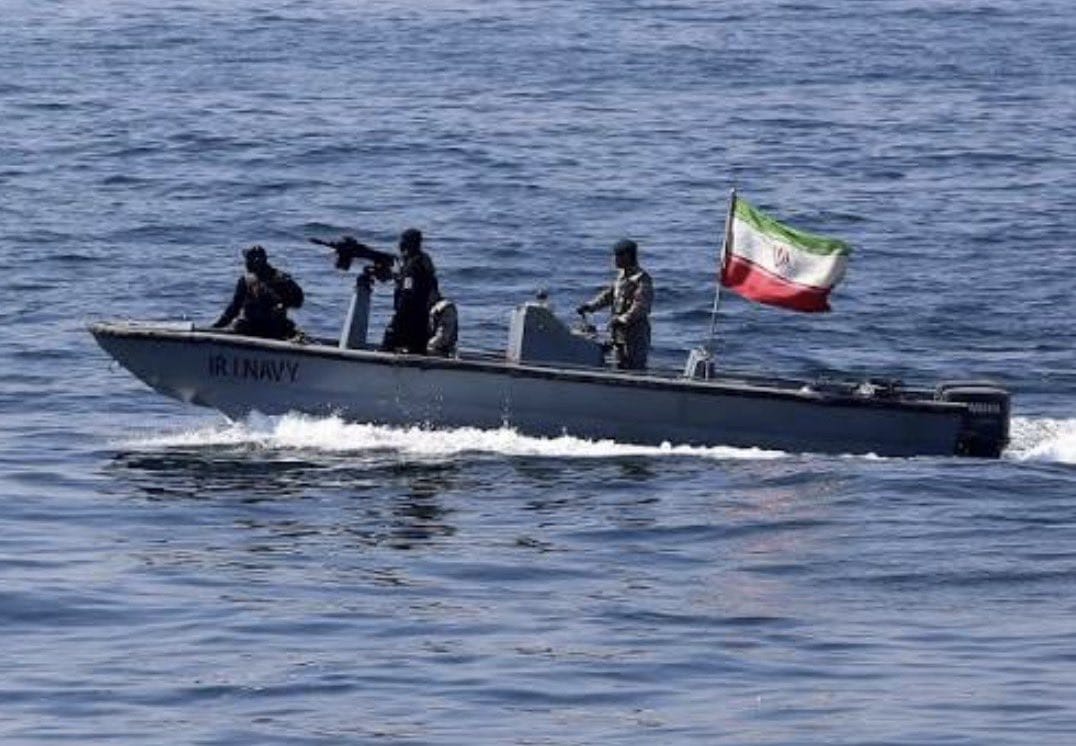
On May 7, 2026, the US Central Command reported that Iranian forces — including IRGC missiles, drones, and small fast boats sometimes described as part of a “mosquito fleet” — attacked three American guided-missile destroyers as they transited the Strait of Hormuz toward the Gulf of Oman.
CENTCOM's was swift, overwhelming.
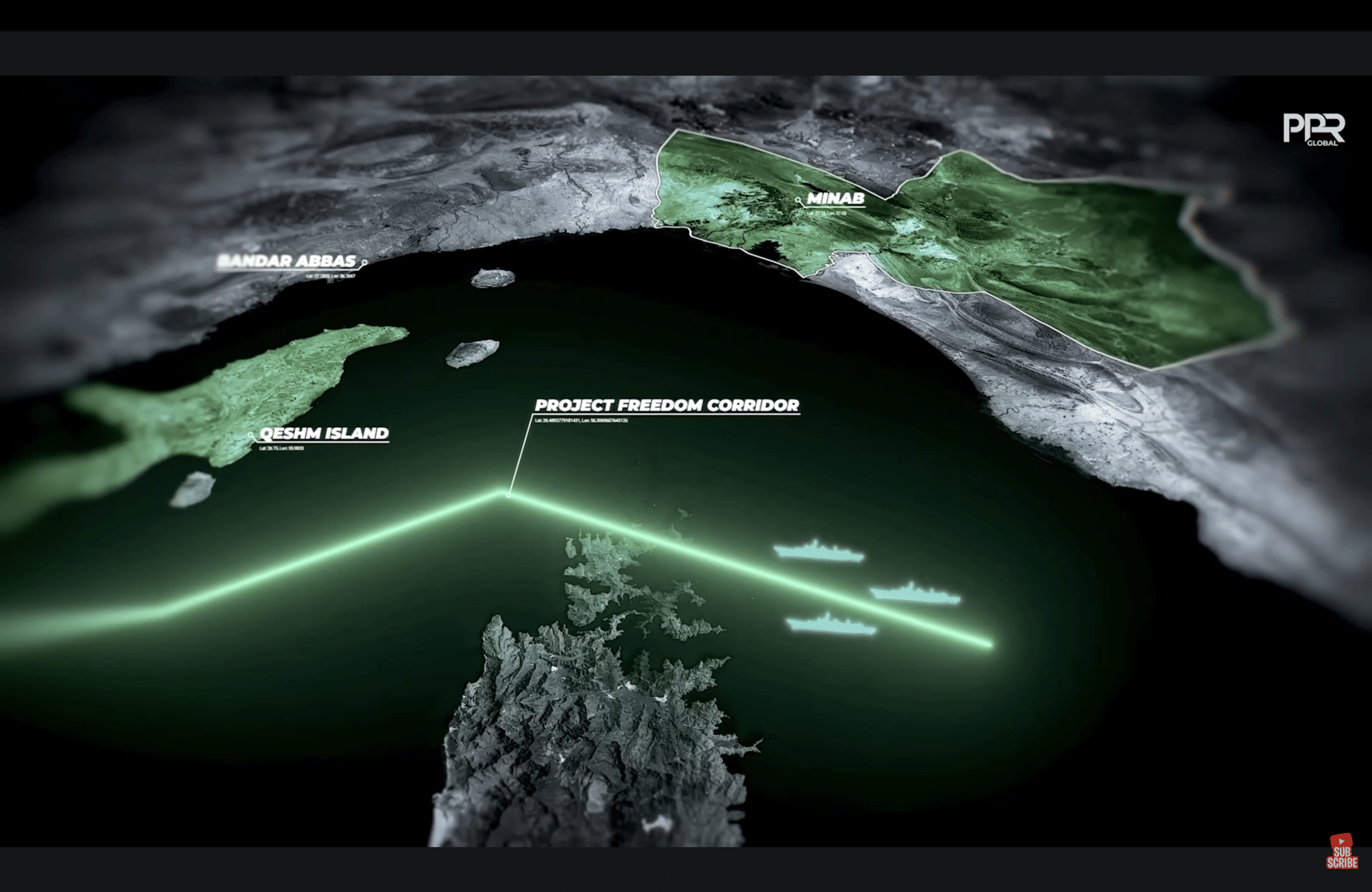
It said that it "intercepted and neutralised" the threats and, in turn, carried out retaliatory strikes on Iranian military facilities and launch sites in southern Iran, including:
Qeshm Island
Bandar Abbas (strategic ports)
Bandar Kargan area near Minab.
Bait-and-switch
Some military observers argue that this operations (6 Iran fast-attack boats sunk) was less about direct confrontation and more about drawing Iran’s naval forces into the open.
The aim: reveal defensive positions, stockpiles and fortified sites, a tactic critics describe as a “bait-and-switch.”
It's designed not only to "cancel" Iran's blockade of Hormuz but to "light up" — and expose — Iran's coastal missile and drone launchers, and knock them out.
According to this interpretation, the deployment of three US Navy destroyers in high-visibility sailing patterns — closely monitored by Iranian coastal forces — was intended to provoke Iran’s navy into responding from concealed positions.
The United States executed a brilliant military gambit that forced the Islamic Republic to expose parts of its hidden naval and missile network in the Persian Gulf.
As Sun Tzu wrote: “Offer the enemy a bait to lure him; feign disorder and strike him.”
Once Iranian units engaged or attempted to shadow the American vessels, those assets would effectively disclose the locations of silos, fortifications and other protective infrastructure that otherwise could remain hidden from satellite or distant reconnaissance.
Observers suggest the “bait” of US surface fleet movements achieved what military planners wanted: effectively coaxing the Iranian Navy to activate or reveal positions that would otherwise remain undetected.
This beefed up intelligence assessments at a relatively "low" operational cost.
These operations were methodical.
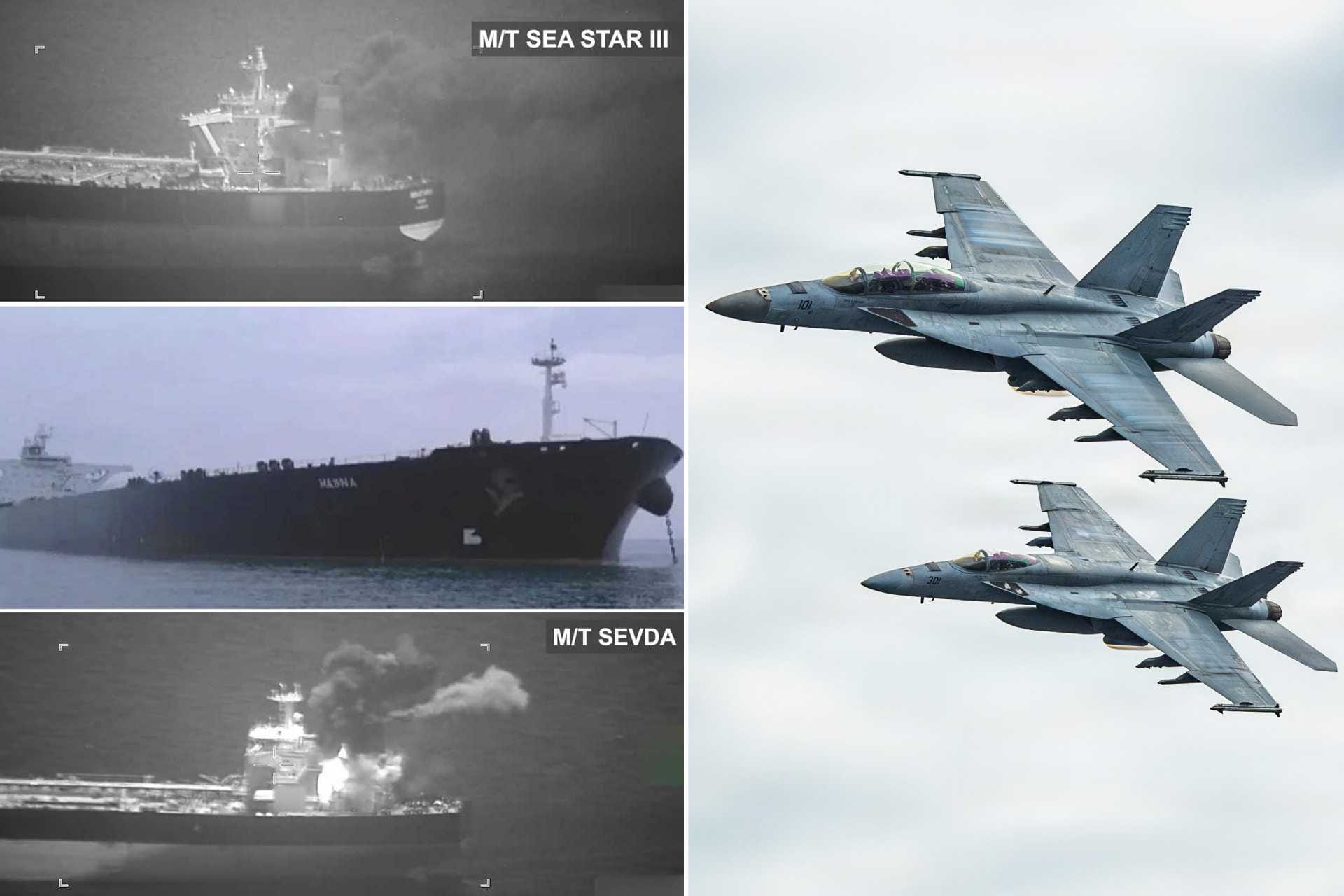
US forces have been actively enforcing a blockade on Iranian oil shipments, redirecting dozens of vessels and disabling multiple tankers attempting to enter or leave Iranian ports — actions that have sharply increased tensions and drawn missile and drone responses from Tehran.
'Self Defence'
US officials, including US Secretary of State Marco Rubio framed the May 7 operations as "self-defence" and not intended to drag the conflict back into full-scale war, even amid a fragile truce that had been brokered earlier in April.
The broader backdrop, however, remained one in which the US blockade and periodic military actions were exerting intense pressure on Iran’s economy and ability to move oil and maintain its asymmetric control over the Strait of Hormuz.
There are currently more than 70 tankers that U.S. forces are preventing from entering or leaving Iranian ports. These commercial ships have the capacity to transport over 166 million barrels of Iranian oil worth an estimated $13 billion-plus. pic.twitter.com/VBKfDwMwqJ
This makes the dispute at once economic, logistical, and kinetic in character.
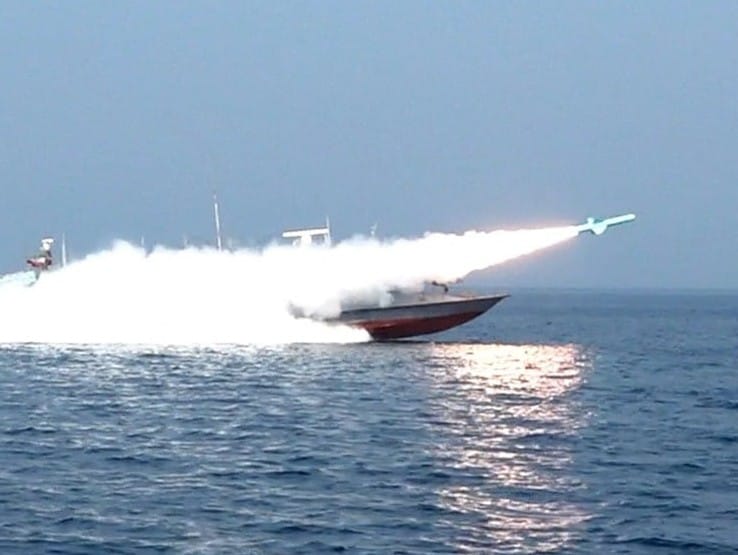
IRGC Navy's fast-attack boats modified to launch missiles.
Iran chokes the world, US squeezes Iran's oil lifeline
As Iran chokes the global trade through Hormuz (up to 1,800 commercial ships stranded in the Gulf), and tries to normalise a toll fee system, the US is choking Iran's oil lifeline, its cride tankers coming under threat.
The Iranians declared the period of tolerance is "over", warning that they would retaliate against US boats and facilities in the region if another Iran-linked tanker is hit.
This marks the hardening of battle lines amid the "dual blockade" -- one being imposed by Iran's Navy on commercial vessels crossing Hormuz, and another being imposed by the US Navy on Iran-linked ships in the broader Gulf of Oman.
The US naval blockade of Iranian ports marked a shift from financial sanctions to direct physical interdiction.
Tensions ignited when Iran disrupted shipping in the Strait of Hormuz, prompting the US — under Trump's renewed "maximum pressure" — to deploy warships, aircraft, and patrols across the Arabian Gulf, Gulf of Oman, and beyond.
This targets Iran's oil exports, which fund over 50% of its revenue, primarily to China via a "shadow fleet" of obscure tankers using tactics like AIS spoofing, flag-hopping, and ship-to-ship transfers.
Blockade mechanics
Unlike past sanctions, US forces actively hail, turn back, or disable vessels— especially empty "ballast" tankers inbound to ports like Kharg Island—creating a logistics stranglehold.
Without empties to load crude, onshore storage overflows rapidly (capacity ~20-30 million barrels), forcing costly floating storage and risking production shutdowns.
Reports indicate exports have plummeted, costing Iran $200-500 million daily, though some shadow vessels evade via distant manoeuvres.
Prior campaigns eroded slowly as Iran adapted; this kinetic approach harnesses America's naval superiority, attempting to keep broader Hormuz traffic open with escorts, but impartially hits Iran-bound ships.
Tehran has reportedly slipped 20+ vessels through early enforcement gaps, relies on resilient shadow fleets, and threatens retaliation like seizures.
Storage buffers weeks of output, but sustained blockade could force well shut-ins. There had been reports of deliberate dumping of oil in the Arabian Gulf, near Iran's Kharg island.
BREAKING: Islamic Terrorist Regime IS DUMPING OIL INTO THE SEA!
As we warned: the regime has run out of storage capacity.
For days now, they’ve been faking tanker transfers while pouring massive amounts of extracted oil straight into the ocean. Deliberate. Criminal.… pic.twitter.com/DryBpziffO
In a wide-ranging interview with podcaster Mario Nawfal, Norwegian political scientist Glenn Diesen laid out a stark interpretation of Washington’s strategy toward Iran: not a decisive war, but a prolonged squeeze.
“The US is trying to slowly suffocate Iran, which could only harm the global economy,” Diesen said, describing what he sees as a campaign designed less to win quickly than to weaken steadily. In his view, attacks on infrastructure, pressure on ports and a blockade on exports are all meant to erode Iran’s economic capacity over time.
“The war is weakening Iran now as well,” he said. “You can’t bomb its cities in this way, attack its infrastructure, destroy its ports, put a blockade on its exports without hurting Iran. In many ways, they are being weakened.”
Limits of US strategy
But Diesen argues the strategy comes with limits. If the United States disengages before achieving its objectives, and Iran retains control over the Strait of Hormuz, Tehran could regain leverage quickly.
He suggests Iranian leaders are determined to avoid the fate of countries like Syria and Iraq, where sanctions and intermittent airstrikes created long-term economic instability without regime change.
At the same time, Diesen contends that Iran is not allowing Washington to fight on predictable terms.
This is exactly why dozens of countries are co-sponsoring the GCC/Bahrain UN resolution condemn Iran for laying sea mines in international waters and trying to “toll” global shipping at gunpoint. They understand the danger of this precedent going forward https://t.co/ZCPhwWVCdp
— Ambassador Mike Waltz (@michaelgwaltz) May 10, 2026
High-intensity war vs 'slow-burn'
A short, high-intensity strike aimed at toppling the government could be attempted, he said, but if that failed, the conflict would likely revert to what he calls a “slow-burn” phase.
He places the confrontation in a broader geopolitical frame. If the U.S. walks away without clear success, he argues, it accelerates a shift away from American unipolar dominance.
He draws parallels to the war in Ukraine, saying efforts to weaken Russia there instead pushed Moscow closer to Beijing — a pattern he expects to repeat with Iran.
Diesen also questions whether a military victory is realistically attainable.
Iran, he notes, does not need a superior navy to create disruption.
“All they need is enough missiles, enough drones to shut down the Strait of Hormuz,” he said, pointing to the geography of a mountainous country with dispersed production and regional partnerships that complicate any invasion scenario.
A full-scale ground invasion, he suggests, would be far more difficult than past campaigns in Iraq — and therefore unlikely.
ملاحظة تحريرية | Editorial Note:
نُشر هذا المقال في الأصل بواسطة Gulf News.
خبر (Khabr) هي منصة إعلامية أردنية مرخّصة تعمل بالذكاء الاصطناعي.
نضيف قيمة تحريرية من خلال: تحليل ذكي للأخبار، ملخصات تلقائية، رواية صوتية بالذكاء الاصطناعي، ترجمة متعددة اللغات، وتدقيق الحقائق.
هدفنا جعل الأخبار أكثر وضوحاً وسهولةً للقارئ العربي.
This article was originally published by Gulf News.
Khabr is a licensed Jordanian AI-powered news platform (Registration #82086).
We add editorial value through: AI-powered news analysis, automated summaries, AI audio narration, multi-language translation (Arabic, English, French, Turkish), and AI fact-checking.
Our mission is to make news more accessible and understandable for Arabic-speaking audiences worldwide.
هذا الخبر ضمن تغطية خبر لقسم سياسة.
نقدّم لك تحليلات ذكية وملخصات يومية لأهم الأخبار من مصادر موثوقة متعددة.
المصدر: Gulf News.
يوجد 6 مقالات مرتبطة بهذا الموضوع.
This article is part of Khabr's coverage of Politics.
We provide AI-powered analysis, summaries, and multi-source aggregation to keep you informed.
Source: Gulf News.
Tags: Iran, oil, shipping, geopolitics.
🍪 نستخدم ملفات تعريف الارتباط لتحسين تجربتك وعرض الإعلانات المخصصة. باستخدامك للموقع، فإنك توافق على سياسة ملفات تعريف الارتباط وسياسة الخصوصية.
We use cookies to enhance your experience and show personalized ads. By using this site, you agree to our Cookie Policy and Privacy Policy.
🔍
FREEFree 1GB Internet + Free International Calls
$1 trial — eSIM in 190+ countries — No roaming charges