⚡ عاجل: كريستيانو رونالدو يُتوّج كأفضل لاعب كرة قدم في العالم●⚡ أخبار عاجلة تتابعونها لحظة بلحظة على خبر●⚡ تابعوا آخر المستجدات والأحداث من حول العالم●
AI اقتراحات ذكية
AI مباشر|--مشاهد مباشر
1,039,275مقال401مصدر نشط228قناة مباشرة3,311خبر اليوم
•Manila: Fiery attacks or protests against the Luzon Economic Corridor (LEC) and the idea of “Pax Silica” Initiative (PSI) tap into a familiar reflex in Philippine politics.Last week (April 2026), Mani...
•The country, however, is a top-five global source of cobalt and chromite, crucial components in electric vehicle (EV) batteries and renewable tech.
•The country has oil and gas too.All told, the Philippines has over $1 trillion in estimated untapped mineral resources.
هذا الخبر من Gulf News. خبر يقدم أدوات ذكاء اصطناعي للتلخيص والترجمة والاستماع.
Manila: Fiery attacks or protests against the Luzon Economic Corridor (LEC) and the idea of “Pax Silica” Initiative (PSI) tap into a familiar reflex in Philippine politics.
Last week (April 2026), Manila signed up as the 13th member of PSI, resulting in the planned establishment of a "giant" 16 km² (4,000-acre) industrial hub within LEC in Luzon.
For context, the 628.9 km² island of Polilio (about the same land area of Singapore) east off Luzon mainland is 42 times bigger than the planned hub.
'Sloganeering'
There's an instinct to cast any ambitious industrial policy, foreign investment, or mineral development as an instant act of betrayal — or a national “sellout” before the details are even weighed.
This is being peddled mostly by the hard Left, but also by some on the Right.
It ignores the real sellout: For decades, China has become the key processor of critical minerals mined from the Philippines, now being used to bolster its global power.
Get updated faster and for FREE: Download the Gulf News app now - simply click here.
Most Filipinos are poor, forced to find jobs overseas. The country, however, is a top-five global source of cobalt and chromite, crucial components in electric vehicle (EV) batteries and renewable tech. The country has oil and gas too.
All told, the Philippines has over $1 trillion in estimated untapped mineral resources. Without investments, knowledge and machinery, these raw materials are extracted inefficiently (often illegaly), or stay on the ground.
Example: Nickel miners in Tawi-Tawi, the southern-most Philippine island group, exported 2.34 million metric tonnes (MT) of high-grade ore, nearly 90% of 2.66 million MT of the high-grade material exports from the Philippines, in the first half of 2018 alone, official data shows.
Besides nickel (of which the Philippines is the world's top exporter), the Asian nation is also key producer of raw copper. Philippine exports to China reached approximately $1.04 billion in 2024 for copper ores and concentrates.
Is the 16 km² Pax Silican hub in Luzon a sellout, as charged by the Kilusang Mangbubukid ng Pilipinas (KMP)? Or is it another shot a sloganeering that ignores ground realities and exposes toxic rhetoric.
These are the key points to know about the LEC initittive.
10 key points:
#1. 'Pax Silica': Silicon is the foundation of computers
"Pax" means peace, and "silica" is a mineral which forms the foundation of computer chips. The Philippines became the 13th member to sign the US-led Pax Silica initiative, resulting in the planned establishment of a 4,000-acre (1,619-hectare) industrial "hub" within the Luzon Economic Corridor (LEC), in Pampanga.
The goal: To build a secure, trusted, and "positive-sum" network of allied supply chains for tech, reducing reliance on "coercive" or "rival" nations. It primarily targets as a counterpoint to Chinese dominance in semiconductor and rare earth processing.
Focus areas include the "silicon stack," ranging from raw critical minerals (nickel, copper, cobalt) to refined materials, advanced chip manufacturing, AI data centers, and 5G/6G communicaiton.As of April 2026, members include the US, Australia, Finland, India, Israel, Japan, Philippines, Qatar, Singapore, South Korea, Sweden, UAE, and the UK.
#2. The real scandal: Underused land
The Philippines still has substantial arable land that is underutilised or stuck in low-yield agriculture. Reformers often focus only on blocking new investment rather than improving productivity, irrigation, roads, storage, and credit.
Example: Drive 2 hours south of Manila, where you will be greeted by more coconut trees than inhabitants.
The PAX SILICA INITIATIVE (PSI): This is a US-led multilateral alliance launched in December 2025 to secure artificial intelligence (AI), semiconductor, and critical mineral supply chains among trusted partners. Aimed at reducing dependence on China and strengthening technological resilience, the partnership involves at least 14 nations, including the Philippines, Japan, and India.
There are an estimated only 4.94 million hectares of land considered "arable" in the Philippines. Most of it is considered underutilised: a significant portion of the 9.67 million hectares of agricultural land (out of 30 million hectares of total land area) is considered "under-productive" or "fallow".
#2. Land reform has been gamed for decades, and so is corruption
Powerful landlords, many of them lawmakers, have long skirted land reform through land-use conversion, corporate restructuring, subdivision schemes, and legal delay, leaving many rural communities trapped in unequal land ownership structures.
Still, the country has huge arable land left uncultivated. Example: Drive 12 hours south of Manila; millions more coconut trees will greet you, no humans for miles.
Coconut is called the “lazy man’s crop. Once the trees are established, they need relatively less day-to-day care than crops that must be replanted, weeded, and harvested frequently. In that sense, a farmer can plant coconut, wait for it to mature, and collect nuts at intervals rather than manage it intensively every season.
In between harvesting, coconut farmers do very little. A negative aspect of the coconut industry: farmers and policymakers neglect improved planting, fertilisation, replanting, and value-added processing.
More to it, intercropping is totally neglected. And modern agricultural methods, including hydroponics, precision farming and vertical farming are virtually non-existent.
And coconut farming remains widespread, low productivity, aging trees, and weak processing keep many growers poor. It's not because the tree is lazy, but because the system around it often is.
#3. Agriculture needs capital, innovation, actual work done, not slogans
If the fear is food security, the answer is not to freeze land in place forever; it is to make every hectare produce more food, more reliably, and with less waste.
In the Philippines, that means moving beyond symbolic land battles and investing in mechanisation, agronomy, post-harvest systems, and agro-processing so farmland becomes economically stronger and less vulnerable to climate shocks and price swings.
In places like the Bicol region, post-harvest facilities for rice are non-existence. Farmers dry their harvest of public highways. Result: up to 30% of harvest is wasted.
It is being held back by finance gaps, weak infrastructure, corruption, and limited technical know-how. Neighbouring countries, like Thailand and Vietnam, have completely cooperatised farming machinery acquisition, raising efficiency and reduce manual labour bottlenecks, in the Philippines, farming remains a backbreaking task, using human or animal/Carabao power. Result: Philippines has become a net rice importer.
At the same time, post-harvest losses and weak handling systems continue to erode farmer income, which means food security is not only about how much is planted, but also how much is saved, stored, processed, and sold at value.
Agronomy matters just as much.
Better soil management, crop rotation, water control, seed improvement, and localised extension services can raise yields without expanding into sensitive areas, while also making farms more resilient over time.
This is especially important in a country where smallholders dominate and fragmented landholding often makes modern equipment hard to use unless farmers pool resources through cooperatives or shared services.
This time of the year, most farmers are seen drying of fresh rice harvest on public roads, which leads to much waste.
Add to this corruption linked to flood control and/or lack of irrigation, the problem is compounded.
Agro-processing is the missing link in many rural economies. If farmers only sell raw crops, they capture little of the final value, but if the country invests in drying, milling, cold chain, packaging, and secondary processing, then farming becomes a business with jobs beyond the field.
That is how land stops being treated as a political symbol and starts functioning as productive national infrastructure.
The deeper point is that food security is not preserved by keeping land idle or underdeveloped.
It is secured by making agriculture more productive, more market-connected, and more technologically capable, so the same land can feed more people and support higher rural incomes.
#4. Strategic industrial policy is not 'war production' by default
A supply-chain hub for semiconductors, critical minerals, and advanced manufacturing can support civilian industry, exports, and higher wages. The Philippines cannot build prosperity by rejecting every sector linked to security-sensitive supply chains.
It's easy to dismiss the Pax Silica deal as "colonial", and a "military-industrial", "power projection" enterprise.
But this reflex is not a development plan. It is a posture.
The Left rightly points out that the Manila has governance issues.
The Philippines has millions of hectares of rich land that is underutilised due to underinvestment, a weak leasehold system, fragmentation, or low-productivity systems.
When policy debates are not reduced to slogans, Red-baiting, and nationalist theatre instead of serious non-judgmental questions, real talk about job creation, value addition, state strategy or building capacity can emerge.
#5. Hard left’s default model = economically stale
The cornerstone of the Left's ideology is envy.
Envy those who prosper. Those who do better. Tax the rich, the perceived rich, everyone. Burn the assets of those who don't pay revolutionary taxes. These are toxic ideas and practices.
They're a guarnatee development will fail. Socialist ideas, developed before AI and apps, have gained currency for a good part of the 20th century.
And led to millions of deaths. Thankfully, it's mostly behind us now.
Still, much of the hard Left in the Philippines still talks as if the only alternatives are dependency, nationalisation, or an "anti-imperialist", "Death to America" kind of development model.
This is not only impossible, or impractical. It is a retreat, a development model from hell.
Repeatedly wishing for or chanting the death of a nation deemed as the "enemy" does not guarantee the flourishing of one's motherland.
Death, or "from-each-according-to-capacity/to-each-according-to-need" Marxist idealism is archaic at best, devilish at worst — an illogical, impractical incoherent development strategy.
For a middle-income archipelago like the Philippines, with ambitions to be a high middle incole nation, competing in a multipolar economy, one should carefully plan and work hard against all odds.
Even the best slogans are no substitute to hard-work-good-planning repeat.
#6. Geostrategy matters, whether critics like it or not
The world is increasingly being organised around control of the inputs: critical minerals, battery materials, semiconductors, shipping lanes, energy supply, and the logistics systems that connect them.
Does the Philippines really want remain a supplier of raw materials ad infinitum, feeding China's industrial rise, and creating a security and supply chain imbalance?
This question matters because countries that only export raw ore, crops, or low-value commodities usually capture the smallest share of the profit. On the orher hand, countries that process, refine, design, and finance those goods capture the real gains.
For the Philippines, the risk is not just missing an economic opportunity.
It is being locked into a familiar trap: abundant natural resources, but weak industrial depth.
Strong labour force, but too little high-value manufacturing. Strategic location, but limited control over supply chains.
In that setup, other countries decide prices, technology standards, and market access, while the Philippines remains exposed to commodity swings and foreign demand.
Critical minerals make this even more urgent. Nickel, copper, cobalt, and rare earth-linked processing are no longer just mining issues; they are national strategy issues tied to electric vehicles, grid storage, chips, defense systems, and renewable energy.
As for rare earth elements (REE), deposits had been identified in northern Palawan, bauxite on Samar Island, and ionic clay deposits in various regions.
The same is true of ports, shipyards, power reliability, and industrial parks, because a country cannot move up the value chain without the physical and policy infrastructure to support it.
#7. China’s influence is already a policy fact, not a theory
Philippine mining has repeatedly been shaped by weak enforcement, capital shortages, and commodity dependence, while Chinese demand and trading networks have influenced nickel flows from areas such as Tawi-Tawi and Palawan. Pretending this influence does not exist only weakens Filipino leverage.
Example: The Philippines overtook Indonesia as the biggest nickel ore producer: both Asean countries are the top two suppliers to biggest buyer, China. In the Philippine Tawi-Tawi accounted for 27% of overall nickel ore exports to China.
Fact: China relies heavily on the Philippines for supply of the material for stainless steel and EV batteries. Another fact: The Philippines has no nickel processing capacity, vs Indonesia which mandated a ban on nickel ore, in order to force domestic a nickel processing ecosystem.
While Indonesia has succeeding, leading to its "nickel boom", the Philippines has been reduced to becoming a raw material exporter. Unless investments in nickel processing are encouraged and protected from sloganeering, it will be more of the same.
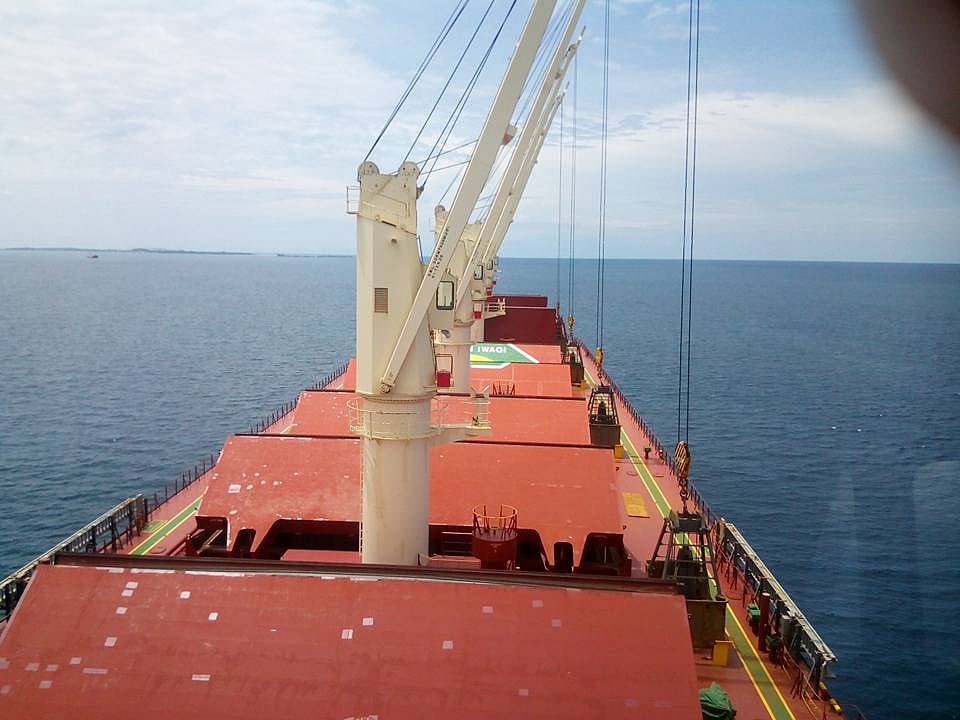
A cargo ship loading nickel ore in Tawi-Tawi.
Tawi-Tawi, which is beyond the control or influence of the hard Left, exported 2.34 million wet metric tonnes (wmt) of high-grade ore, or nearly 90% of 2.66 million wmt of the high-grade material the Philippines exported to China in the first half of 2018 alone, official data shows.
BARMM, the regional government, suspended the exports and mandated an audit, while the Bangsamoro Responsible Mining Law is being crafted to serve as a road map for the region’s mining industry. The BARMM suspension order covered four mining companies actively operating in Tawi-Tawi out of seven that have been given permits.
In other parts of the vast and highly mineralised country, most of the mining concessions are controlled by big Filipino families, often based in Manila.
#8. The mining sector remains underdeveloped
The Philippines is resource-rich nation. It is dubbed as a pauper "sitting on a pot of gold".
A trip to Aroroy, Paracale or Rapu-Rapu (all in the zero-free zone Bicol region, with a high incidence of malnutrition: 67.9% of households in the region are "food insecure", as per official 2025 data)reveals a deep contrast of premium resources but high poverty rates.
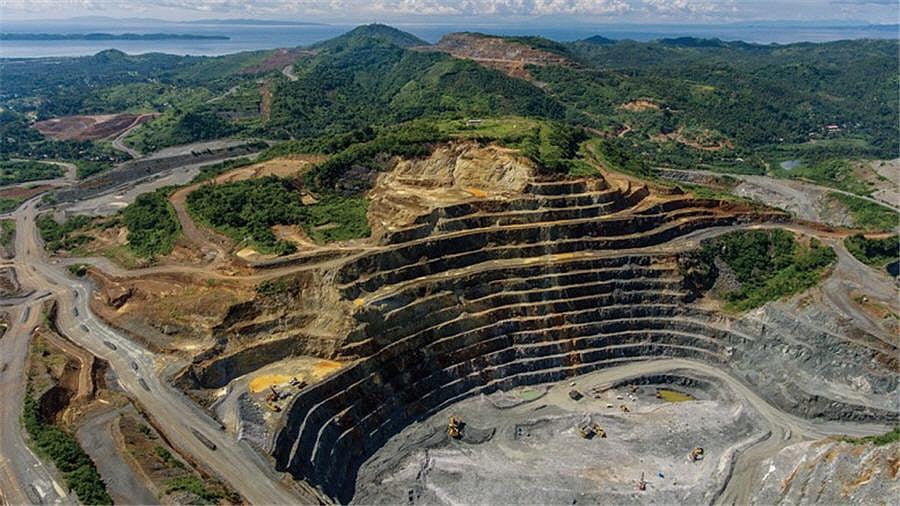
Sitting on a pot of gold: A view of a gold mine in Aroroy, a remote town northwest of the island of Masbate (land area: 4,152 km²). Out of 30 million hectares of land in the Philippines, about 9 million hectares have been identified as having deposits of various commodities, a senior official said.
The country struggles to move beyond extraction into refining, processing, and industrial "clustering". The country's dyed in the wool Leftist love to parrot the same line for the last 50 years: "nationalist industrialisation".
It's a slogan high in rhetoric, low in hard work, and practical roadmap.
The country's sub-par industrial policy is due to a lack of vision, elite capture, poverty of ideas, and the usual suspect — generations of government officials embracing the culture of kickbacks off of government projects.
There's a failure of policy, poor infrastructure and governance. These are not proof that development itself is THE problem.
#9. Environmental protection and industrialisation are not opposites
In the Philippine setting, environemtn protection concerns are real: land grabs can displace farmers and Indigenous communities, pollution can damage watersheds and fisheries, and weak enforcement can turn “development” into a license for abuse.
But the answer is not to reject every strategic investment outright; it is to build stronger rules that make investment serve the public interest.
That means tighter permitting, transparent consultations, clearer zoning and land-use planning, and real benefit-sharing with affected communities. It also means stricter environmental safeguards, credible monitoring, and penalties that are actually enforced when companies or officials cut corners.
Blanket hostility can sound principled. In reality, this often leaves the same communities stuck with low incomes, underinvestment, and no path to value-added industry.
The better test: a whole-of-nation quizz, to see whether or not a project protects land rights, raises local employment, adds domestic processing, and strengthens national capacity rather than merely extracting wealth.
In short: the goal should be disciplined development, not development by default — not paralysis by protest, or more of the same.
#10. Policy debates should not collapse into name-calling
Calling every pro-industrialisation effort “sellout” politics, "elitist" or "reactionary" — or tagging every critic as “Red” — are not only counter-productive.
They avoid the real issues: how to protect farms, how to raise rural incomes, how to ensure mineral value-addition stays in-country, and how to keep all parties, foreign or local accountable.
This is the hardest challenge. When power and authorities are concentrated in Manila, without any basic whistleblower protection, running the country's "industries" are left to the crooks and goons.
A serious strategy would balance investment with safeguards: protect land rights, enforce environmental rules, demand local processing where feasible, and link mining to manufacturing and technology transfer. That is how resource-rich countries avoid dependency and turn strategic assets into long-term national strength.
What serious policy should do
The better answer is not to choose between peasant land rights and strategic development.
It is to insist on both: stronger land tenure protection, tougher anti-conversion enforcement, transparent mining regulation, and a real industrial policy that turns natural endowments into domestic capability.
If the Philippines wants food security, it needs productive agriculture. If it wants sovereignty, it needs industry. If it wants to escape dependency, it must stop confusing anti-investment rhetoric with national development.
Policymakers must work with partners to create create jobs, boost efficiency, build skills, strengthen supply chains, raise competitiveness and kill corruption hiding behind platitudes and chants.
The point is not to choose sides in every geopolitical contest.
Rather, it is to ensure the Philippines is not reduced to a quarry for others’ industries while our own workers stay stuck at the lowest end of the chain, or forced to find work overseas.
A serious strategy would balance investment with safeguards: protect land rights, enforce environmental rules, demand local processing where feasible, and link mining to manufacturing and technology transfer.
That is how resource-rich countries avoid dependency and turn strategic assets into long-term national strength.
ملاحظة تحريرية | Editorial Note:
نُشر هذا المقال في الأصل بواسطة Gulf News.
خبر (Khabr) هي منصة إعلامية أردنية مرخّصة تعمل بالذكاء الاصطناعي.
نضيف قيمة تحريرية من خلال: تحليل ذكي للأخبار، ملخصات تلقائية، رواية صوتية بالذكاء الاصطناعي، ترجمة متعددة اللغات، وتدقيق الحقائق.
هدفنا جعل الأخبار أكثر وضوحاً وسهولةً للقارئ العربي.
This article was originally published by Gulf News.
Khabr is a licensed Jordanian AI-powered news platform (Registration #82086).
We add editorial value through: AI-powered news analysis, automated summaries, AI audio narration, multi-language translation (Arabic, English, French, Turkish), and AI fact-checking.
Our mission is to make news more accessible and understandable for Arabic-speaking audiences worldwide.
هذا الخبر ضمن تغطية خبر لقسم سياسة.
نقدّم لك تحليلات ذكية وملخصات يومية لأهم الأخبار من مصادر موثوقة متعددة.
المصدر: Gulf News.
يوجد 6 مقالات مرتبطة بهذا الموضوع.
This article is part of Khabr's coverage of Politics.
We provide AI-powered analysis, summaries, and multi-source aggregation to keep you informed.
Source: Gulf News.
Tags: politics, development, economy.
🍪 نستخدم ملفات تعريف الارتباط لتحسين تجربتك وعرض الإعلانات المخصصة. باستخدامك للموقع، فإنك توافق على سياسة ملفات تعريف الارتباط وسياسة الخصوصية.
We use cookies to enhance your experience and show personalized ads. By using this site, you agree to our Cookie Policy and Privacy Policy.
🔍
FREEFree 1GB Internet + Free International Calls
$1 trial — eSIM in 190+ countries — No roaming charges