⚡ عاجل: كريستيانو رونالدو يُتوّج كأفضل لاعب كرة قدم في العالم●⚡ أخبار عاجلة تتابعونها لحظة بلحظة على خبر●⚡ تابعوا آخر المستجدات والأحداث من حول العالم●
AI اقتراحات ذكية
AI مباشر|--مشاهد مباشر
885,791مقال404مصدر نشط228قناة مباشرة3,798خبر اليوم
آخر تحديث:منذ ثانيتين
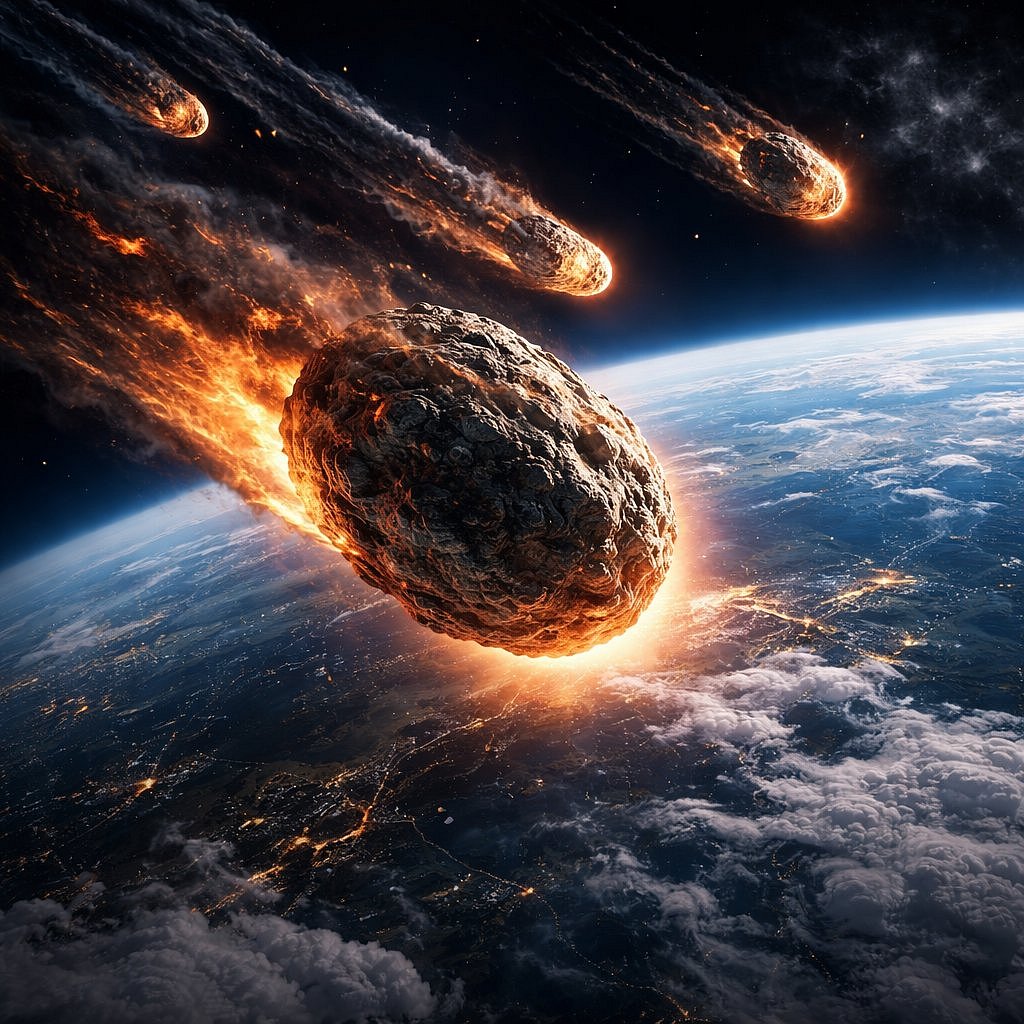
Could Earth be struck without warning? Nasa warns thousands of ‘city-killer’ asteroids still hidden
What if the next catastrophic cosmic impact wasn’t a Hollywood blockbuster plot, but an unseen reality quietly circling above us?
Scientists have warned that "thousands" of asteroids large enough to obliterate a city remain "undiscovered", and humanity might not know they’re headed our way until it’s too late.
Up to 25,000 asteroids
Recent estimates presented by planetary defence experts suggest that more than 15,000 of the roughly 25,000 asteroids capable of unleashing city-level destruction — each at least 140 metres across — are still untracked in our cosmic neighbourhood.
That means only about 40% of this dangerous population has been catalogued by current detection systems.
NASA scientist Kelly Fast says thousands of city killer asteroids remain undetected and there’s no reliable way to stop one if it heads toward Earth. pic.twitter.com/vMWoiFzrbI
“This is exactly what keeps me up at night,” said Dr. Kelly Fast, acting planetary defense officer at NASA, recalling her stark warning to a scientific audience in Arizona.
“Small stuff hits us all the time, and the massive ones from the movies we already know about. It’s the ones in between that could do regional — not global — damage, and we don’t know where they are.”
These so-called “city killers” don’t draw as much attention as the giant asteroids that wiped out the dinosaurs 66 million years ago — but they’re far more numerous and far harder to spot.
Hidden in glare
Most are too dim for conventional telescopes, often hidden in glare or masked by the vastness of space, making them extremely elusive.
Nasa’s current arsenal of detection infrastructure includes ground-based telescopes and space missions like the retired NEOWISE, which for years scanned the heavens for hazardous objects.
However, scientists acknowledge that without knowing an asteroid’s location far in advance, astronauts and engineers have no practical defense system ready to deflect a sudden threat.
“You can’t do anything about the asteroids if you don’t know where they are,” Dr. Nancy Chabot, a planetary scientist who helmed NASA’s Double Asteroid Redirection Test (DART) mission, told USA Today.
The 2022 DART mission successfully nudged a small asteroid to test planetary defence technology — but that capability is not on standby in space today.
NASA’s DART mission changed the motion of Dimorphos and its companion Didymos around the Sun, marking the first time a human-made spacecraft measurably altered the path of a celestial body. The spacecraft used our chemical propulsion to reach its target and demonstrate a new… https://t.co/cN4ndfn1sj
Experts say the real peril stems not from tiny rocks that burn up harmlessly in Earth’s atmosphere, nor from the exceptionally large asteroids that scientists already track.
Instead, it’s the intermediate-sized behemoths — large enough to obliterate an entire metropolitan area.
Many of them remain largely invisible, quietly orbiting and eluding detection until it’s too late.
In 2013, the world was reminded of this danger when a house-sized asteroid exploded over Chelyabinsk, Russia, with the force of hundreds of thousands of tonnes of TNT.
The blast injured more than 1,600 people, broke windows, and sent shockwaves across the region — and it arrived without any prior warning.
What’s being done
To close this dangerous blind spot, Nasa is building the Near-Earth Object Surveyor (NEO Surveyor) — the first space telescope specifically designed to detect and catalog hazardous asteroids that ground-based observatories commonly miss.
Scheduled for launch later this decade, the infrared telescope is expected to significantly increase discovery rates and provide astronomers crucial warning time.
But until NEO Surveyor becomes operational, scientists caution that the real threat isn’t the giant “planet killers” of science fiction — it’s the silent, unseen rocks that could hit with virtually no warning.
ملاحظة تحريرية | Editorial Note:
نُشر هذا المقال في الأصل بواسطة Gulf News.
خبر (Khabr) هي منصة إعلامية أردنية مرخّصة تعمل بالذكاء الاصطناعي.
نضيف قيمة تحريرية من خلال: تحليل ذكي للأخبار، ملخصات تلقائية، رواية صوتية بالذكاء الاصطناعي، ترجمة متعددة اللغات، وتدقيق الحقائق.
هدفنا جعل الأخبار أكثر وضوحاً وسهولةً للقارئ العربي.
This article was originally published by Gulf News.
Khabr is a licensed Jordanian AI-powered news platform (Registration #82086).
We add editorial value through: AI-powered news analysis, automated summaries, AI audio narration, multi-language translation (Arabic, English, French, Turkish), and AI fact-checking.
Our mission is to make news more accessible and understandable for Arabic-speaking audiences worldwide.
هذا الخبر ضمن تغطية خبر لقسم علوم.
نقدّم لك تحليلات ذكية وملخصات يومية لأهم الأخبار من مصادر موثوقة متعددة.
المصدر: Gulf News.
يوجد 6 مقالات مرتبطة بهذا الموضوع.
This article is part of Khabr's coverage of Science.
We provide AI-powered analysis, summaries, and multi-source aggregation to keep you informed.
Source: Gulf News.
Tags: NASA, asteroids, space.
🍪 نستخدم ملفات تعريف الارتباط لتحسين تجربتك وعرض الإعلانات المخصصة. باستخدامك للموقع، فإنك توافق على سياسة ملفات تعريف الارتباط وسياسة الخصوصية.
We use cookies to enhance your experience and show personalized ads. By using this site, you agree to our Cookie Policy and Privacy Policy.
🔍
FREEFree 1GB Internet + Free International Calls
$1 trial — eSIM in 190+ countries — No roaming charges